
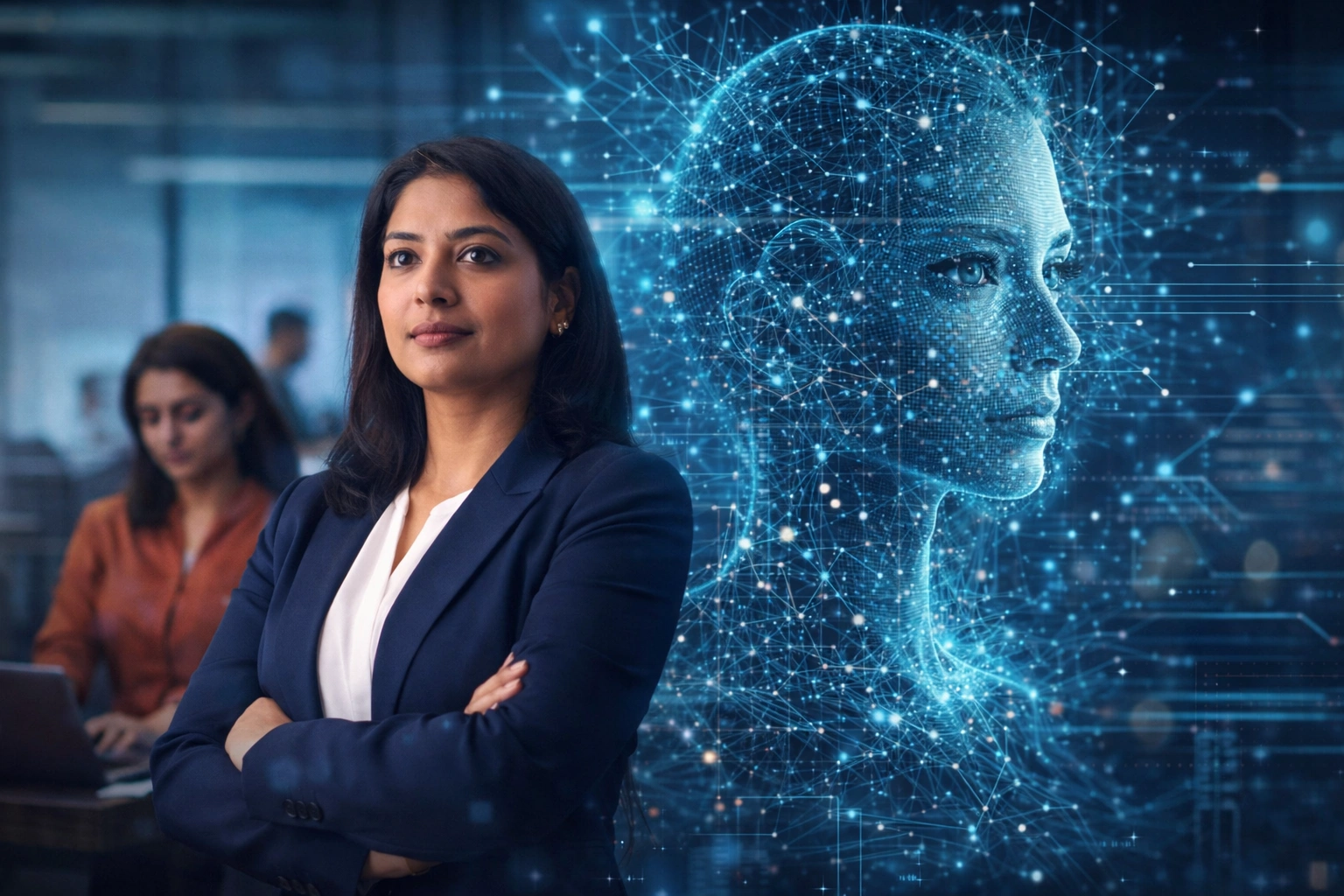
India’s technology sector employs one of the largest pools of women professionals in the world. Nearly 50% of India’s tech workforce is women, yet less than 20% reach leadership roles, compared to a global average of 28%. This leadership gap highlights deep-rooted systemic, cultural, and institutional challenges that continue to limit women’s advancement in technology and artificial intelligence (AI).
As conversations around ethical AI, diversity in tech, and inclusive leadership gain momentum, experts argue that representation is not about symbolic hiring—it is about transforming how technology is built, governed, and deployed.
The Leadership Gap in Indian Tech: A Structural Problem
While India produces a significant number of women engineers and technology professionals, many drop off mid-career. Studies indicate that nearly 50% of women in tech exit or plateau during mid-level roles, creating a pipeline issue at the senior leadership level.
Several systemic barriers contribute to this:
-
Workplace bias in hiring and promotions
-
Societal expectations around marriage and motherhood
-
Lack of mentorship and sponsorship
-
Gendered interview questions related to family planning
-
Limited role models in executive positions
Women leaders often report being labeled “aggressive” or “bossy” for traits celebrated in male counterparts. These unconscious biases reinforce structural inequality within organizations.
The Business Case for Gender Equity in Leadership
Diversity is no longer a matter of charity—it is a business imperative. Research shows that organizations with equitable leadership structures report:
-
Up to 25% higher productivity
-
Increased profitability
-
Stronger shareholder returns
-
Improved innovation outcomes
When leadership reflects diverse perspectives—including gender, regional, caste, socio-economic, and generational diversity—companies are better equipped to design products for real-world complexity.
Ethical AI and the Risk of Embedded Bias
As AI adoption accelerates across sectors, ethical concerns are becoming urgent. AI systems learn from historical datasets, which often contain existing social biases. Without intervention, these systems can:
-
Reinforce gender stereotypes
-
Amplify racial or caste-based discrimination
-
Produce skewed hiring recommendations
-
Generate biased professional role representations
For example, AI image generation and search tools have historically associated leadership roles with men and caregiving roles with women. Such distortions reflect skewed datasets rather than objective reality.
Ethical AI, therefore, does not depend solely on algorithms—it depends on the people building and training those systems. Without inclusive teams and neutral data frameworks, bias becomes automated at scale.
Beyond Gender: Redefining Diversity in India
In India, diversity conversations must move beyond gender alone. True inclusion must consider:
-
Urban-rural divides
-
Caste and socio-economic access
-
Regional representation
-
Neurodiversity
-
Generational inclusion (Gen Z to senior professionals)
Much of India’s innovation is concentrated in urban centers, while rural communities remain underrepresented in product design and technology development. Bridging this gap requires intentional outreach, localized innovation programs, and digital access initiatives.
The Role of Mentorship and Leadership Development
One key reason women stall mid-career is the absence of structured mentorship ecosystems. Unlike sponsorship—where leaders actively advocate for promotions—mentorship focuses on perspective, self-awareness, and leadership growth.
Experts recommend adopting a “mentorship bouquet” model:
-
Strategic mentors for business growth
-
Technical mentors for domain expertise
-
Leadership coaches for mindset development
-
Peer communities for emotional resilience
Importantly, mentorship should not offer ready-made solutions, but rather provide new perspectives and options.
Mental Health and Women Founders
Burnout among women founders and executives is rising. The invisible mental load—balancing work, caregiving, and societal expectations—adds emotional strain.
To make mental health part of growth strategy, leaders are encouraged to:
-
Prioritize physical wellness and resilience
-
Create structured downtime
-
Normalize smaller productivity goals
-
Invest in community and support systems
-
Seek therapy or coaching when needed
Mental well-being is not separate from performance—it directly impacts leadership effectiveness.
Strategic Allyship in AI-Driven Decision Making
With AI influencing hiring, financial approvals, marketing, and operational decisions, human oversight is critical. Experts emphasize the importance of maintaining a “human-in-the-loop” model, where AI assists but does not autonomously decide.
Key safeguards include:
-
Diverse review panels for AI outputs
-
Bias audits of datasets
-
Transparent governance frameworks
-
Strong privacy and cybersecurity protocols
AI should remain assistive, not autonomous in high-stakes strategic decisions.
Redefining Representation in 2026 and Beyond
Representation must move beyond token appointments. True leadership equity means:
-
Women owning narrative spaces
-
Leaders speaking openly about systemic barriers
-
Building sisterhood-based support networks
-
Encouraging financial independence
-
Promoting policy-level reforms
Empowered women leaders are often those who first dismantle internalized biases before challenging external systems.
Freedom, Autonomy, and the Future of Women in Tech
At its core, gender equity in technology is about freedom—the freedom to choose career paths, delay or reject marriage, build startups, lead AI research, or pivot careers without judgment.
When women are given access, opportunity, and institutional support, they are not just participants in tech—they become architects of its future.
Conclusion: Inclusion First, Innovation Follows
Women in technology can transform industries, reshape AI ethics, and redefine leadership models. But progress requires systemic change, inclusive hiring practices, mentorship ecosystems, and culturally aware diversity strategies.
Ethical AI and gender equity are not parallel conversations—they are interconnected. The future of responsible technology depends on who builds it, who governs it, and whose voices are included at the decision-making table.
In a rapidly evolving digital world, inclusive leadership is not optional. It is foundational.

Ruchi Kumar is the associate editor at Entrepreneur News Network and TVW News India, where she leads editorial strategy, brand storytelling, and startup ecosystem coverage. With a strong focus on innovation, business, and marketing insights, he curates impactful narratives that spotlight India’s evolving entrepreneurial landscape. She has written extensively on fintech, AI and emerging startups.