
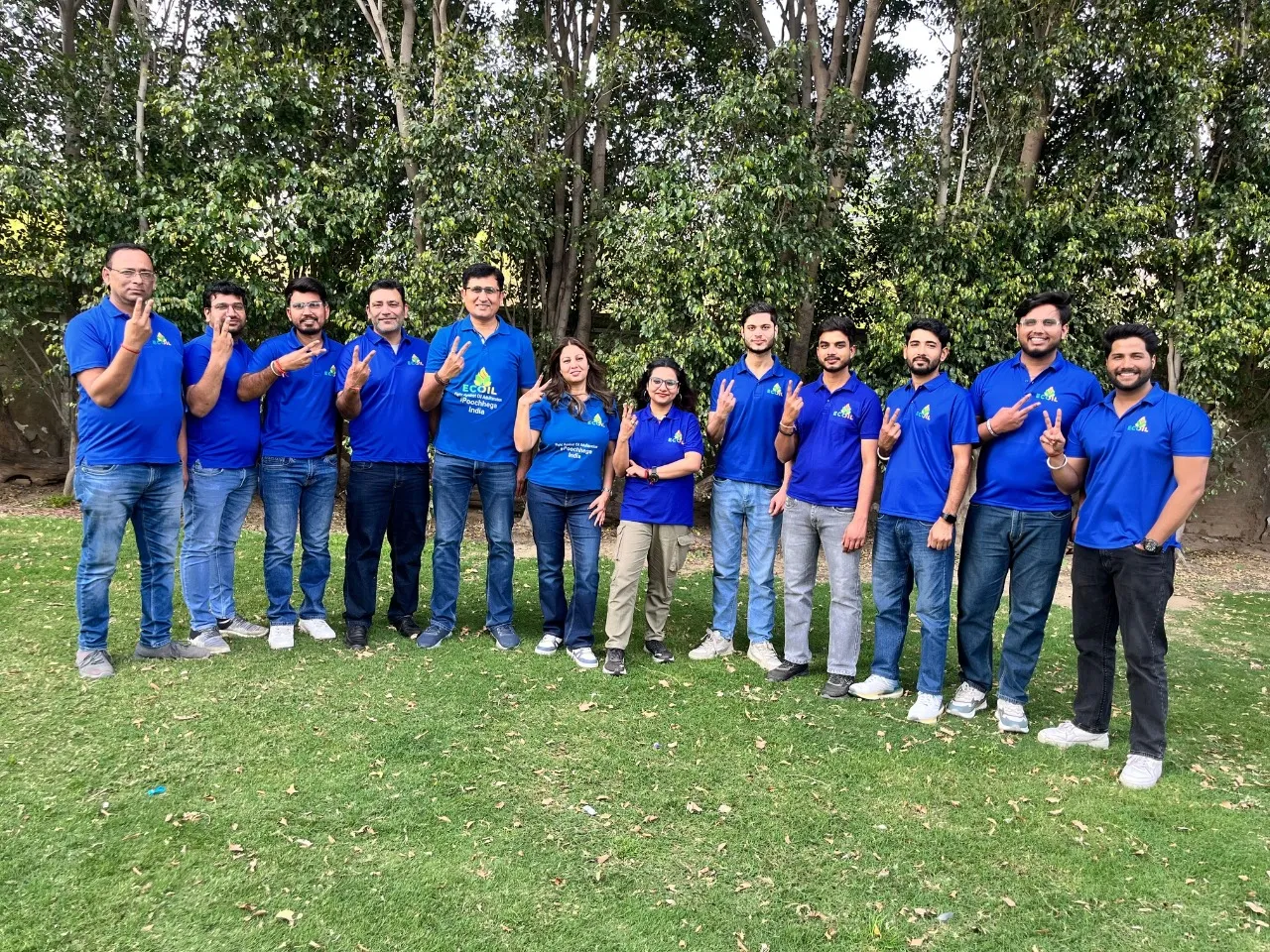
Ecoil Raises $2.5 Million Series A to Scale Used Cooking Oil–to–Biodiesel Operations Across India
The Jaipur-based cleantech startup is converting restaurant waste oil into sustainable biodiesel — and its latest funding round signals growing investor confidence in India's circular energy economy.
Funding details
Jaipur-based clean energy startup Ecoil has successfully closed a $2.5 million (approximately ₹23 crore) Series A funding round, marking a pivotal milestone in India's growing sustainable fuel ecosystem. The round was spearheaded by Fundalogical Ventures, with co-investments from Caspian Impact Investment, Momentum Capital, and renewed backing from existing investor The Chennai Angels.
The fresh capital will be channelled into three strategic priorities: scaling operational capacity, strengthening the company's proprietary technology platform, and deepening its presence across high-potential markets throughout India.
Investors in this round
About Ecoil
Established in 2018 by Sushil Vaishnav and Kirti Vaishnav, Ecoil is a sustainability-driven enterprise tackling one of India's most overlooked waste streams: used cooking oil. The company collects waste oil from restaurants, hotels, cloud kitchens, and food-service businesses, then transforms it into eco-friendly biodiesel — a cleaner, renewable alternative to conventional fossil diesel.
Used cooking oil is a critical raw material for biodiesel and sustainable aviation fuel (SAF). Yet without a structured collection system, it often finds its way back into the food supply chain — a practice that poses grave public health risks and contributes significantly to environmental pollution.
The problem Ecoil solves
India's food service industry generates vast volumes of used cooking oil every single day. This oil, dispersed across millions of small restaurants, street eateries, and institutional kitchens, is notoriously difficult to track and consolidate. In the absence of any formal collection infrastructure, much of it is illicitly re-refined and re-circulated as edible oil — exposing consumers to serious health hazards — or discarded in ways that damage local soil and water systems.
Ecoil bridges this critical gap by acting as an aggregator and logistics partner for these dispersed, small-volume producers. By establishing reliable collection routes, the company prevents waste oil from being misused and redirects it into a productive, green supply chain.
How the process works
Competitive landscape
The used cooking oil–to–biofuel sector in India is expanding, though still in its early stages. Ecoil competes alongside a growing cohort of players including:
Despite the rising number of entrants, the market remains significantly under-served. The majority of India's used cooking oil still flows through informal, unregulated channels — leaving ample runway for multiple players to grow simultaneously as the formal collection ecosystem matures.
India's cleantech opportunity
Propelled by national net-zero commitments, supportive policy frameworks, and deepening institutional investment, India's clean energy sector is rapidly maturing from a niche space into a core pillar of the national startup economy. With over 2 lakh registered startups in the country, sustainability-focused ventures are increasingly attracting serious capital and board-level strategic attention.
Artificial intelligence is accelerating this transition in meaningful ways — from predictive maintenance in renewable energy plants to real-time carbon accounting tools and AI-optimised logistics for waste oil collection networks of the kind Ecoil operates.
Ecoil's Series A raise reflects a compelling investor thesis: circular economy startups that address real, measurable waste streams — especially those generating dual benefits of pollution prevention and clean fuel production — represent high-impact, high-return opportunities at the intersection of climate urgency and commercial scalability.

Ruchi Kumar is the associate editor at Entrepreneur News Network and TVW News India, where she leads editorial strategy, brand storytelling, and startup ecosystem coverage. With a strong focus on innovation, business, and marketing insights, he curates impactful narratives that spotlight India’s evolving entrepreneurial landscape. She has written extensively on fintech, AI and emerging startups.