

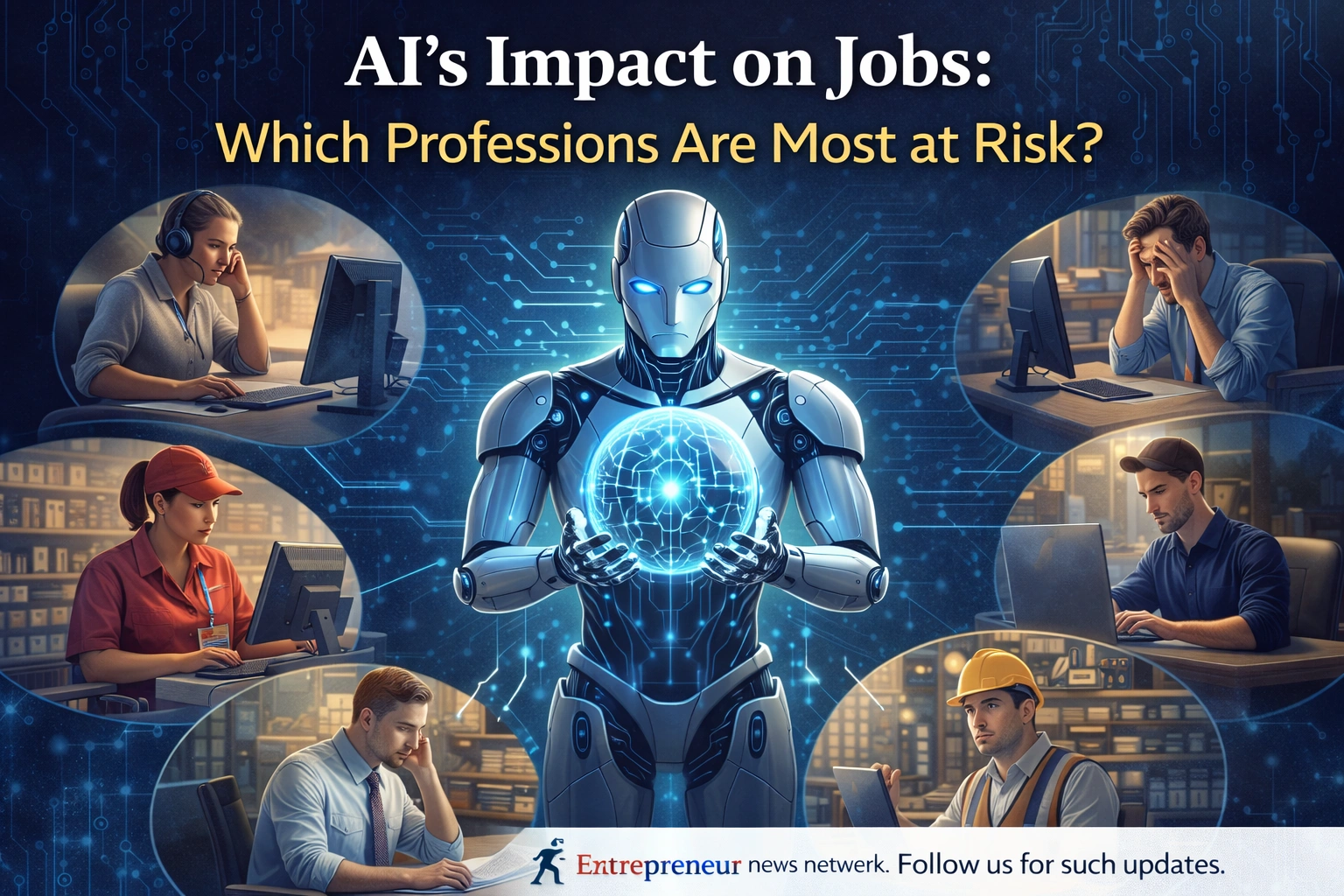
The rapid ascent of Artificial Intelligence (AI) is no longer a futuristic concept; it’s a present-day reality profoundly reshaping the global job market. From sophisticated algorithms to intuitive chatbots, AI technologies are integrating into nearly every sector, sparking both excitement about innovation and apprehension about job displacement. While the narrative often swings between utopian efficiency and dystopian unemployment, a closer, more nuanced examination reveals a complex interplay of disruption, transformation, and opportunity. Understanding which professions are most at risk, and why, is crucial for individuals, businesses, and policymakers navigating this unprecedented era of change. This article delves into the core capabilities of AI driving this transformation and maps out a spectrum of impact across various occupations, offering clarity on the evolving landscape of employment.
The AI Revolution: A New Era for Jobs and Employment
History is punctuated by technological revolutions that have fundamentally altered how we work. From the agricultural revolution to the industrial and digital ages, each wave brought about significant shifts in employment, rendering some occupations obsolete while creating entirely new categories of jobs. The current AI revolution, powered by advancements in machine learning, robotics, and natural language processing, is characterized by its speed, scope, and sophistication. AI’s ability to learn, adapt, and perform tasks once thought to be exclusively human is accelerating the pace of change in the job market. This transformation is not merely about automation replacing manual labor; it extends to cognitive tasks, data analysis, and creative processes, impacting a broader range of occupations than previous technological shifts.
Moving Beyond Hype: A Nuanced Perspective on Job Risk and Opportunity
It’s easy to get lost in sensational headlines about AI rendering entire professions obsolete overnight. However, the reality is far more nuanced. While certain job functions are indeed highly susceptible to automation, many more will be transformed rather than eliminated. AI technologies often excel at specific, well-defined tasks, particularly those that are repetitive or data-intensive. This means that rather than outright job replacement, we are more likely to see augmentation, where AI tools enhance human capabilities, increase efficiency, and shift the focus of human workers to higher-level cognitive and interpersonal skills. Understanding this distinction between automation, augmentation, and displacement is key to accurately assessing the real impact of AI on jobs and employment.
Understanding AI’s Capabilities: What Makes a Job “Vulnerable” to Automation?
The susceptibility of an occupation to AI automation is primarily determined by the nature of its core tasks and processes. AI’s strengths lie in specific areas where it can outperform humans in terms of speed, accuracy, and scalability.
Repetitive Tasks and Predictable Processes: The Foundation of AI Automation
At the forefront of AI’s automation capabilities are repetitive tasks and predictable processes. These are tasks that follow a clear set of rules, occur frequently, and require minimal decision-making or adaptation. Robotic Process Automation (RPA) platforms, for instance, can efficiently handle high volumes of structured data processing, form filling, and basic transaction processing with a speed and accuracy that far exceeds human capacity. Jobs heavily reliant on such routine operations are prime candidates for significant automation.
Data Processing and Analysis: AI’s Strength in Big Data and Pattern Recognition
The modern economy generates vast amounts of data. AI, particularly through machine learning algorithms, is exceptionally adept at processing, analyzing, and identifying patterns within this “big data.” AI can sift through enormous datasets to find correlations, predict trends, and flag anomalies far faster than human analysts. This capability makes many data-intensive occupations vulnerable, not necessarily to complete replacement, but to a significant shift in their responsibilities towards higher-level interpretation and strategic decision-making based on AI-generated insights.
Language and Content Generation: The Rise of Generative AI and Natural Language Processing
The advent of powerful generative AI models, such as ChatGPT, has brought natural language processing (NLP) to the forefront. These AI tools can understand, generate, and manipulate human language with remarkable fluency. They can draft emails, write reports, summarize documents, translate languages, and even generate creative content. This has direct implications for occupations involving writing, communication, research, and content creation, fundamentally altering how these tasks are approached and executed.
Vision, Robotics, and Physical Automation: AI in the Physical World
Beyond the digital realm, AI is increasingly integrated with robotics and computer vision to automate physical tasks. AI-powered robots can perform intricate assembly line work, navigate complex environments, and handle logistics in warehouses with increasing autonomy. Self-driving technologies, while still developing, represent a significant AI advancement in transportation and delivery occupations. This fusion of AI and robotics is poised to automate many roles in manufacturing, logistics, and other physically demanding sectors.
Cognitive Automation: Speed, Scale, Scope, and Sophistication
More broadly, AI is driving “cognitive automation,” a sophisticated form of automation that mimics human cognitive functions. This encompasses not just simple task execution but also complex decision-making within defined parameters, advanced problem-solving, and learning from experience. The increasing speed, scale, scope, and sophistication of AI means that its potential to automate tasks across a wider range of cognitive occupations is growing exponentially. This advanced capability is a key factor driving the vulnerability of many white-collar jobs.
The AI Job Risk Spectrum: A Framework for Understanding Impact
To better understand AI’s varied impact on jobs, it is helpful to conceptualize it across a spectrum, ranging from high risk of displacement to roles where AI acts as a powerful amplifier or is largely resistant to automation.
High Automation Risk: Jobs Highly Susceptible to Displacement
At one end of the spectrum are jobs where a significant proportion of tasks are repetitive, predictable, and data-intensive. These roles are highly susceptible to automation by current and near-future AI technologies. Occupations with a high degree of predictable physical labor or routine cognitive processing fall into this category.
Significant Transformation: Roles Where AI Will Augment and Demand New Skills
Many professions will not be replaced entirely but will undergo significant transformation. AI will automate certain tasks within these roles, freeing up human workers to focus on more complex, creative, or interpersonal aspects. This shift necessitates adaptation and the acquisition of new skills, particularly in how to effectively collaborate with AI tools.
AI Amplification: Professions Where AI Enhances Human Capabilities
In other roles, AI will act as a powerful amplifier, significantly boosting human productivity and capabilities. AI tools can provide professionals with advanced analytical insights, accelerate research, streamline workflows, and enable them to achieve outcomes that would be impossible without AI assistance. These professions will likely see increased demand for individuals who can effectively leverage AI.
AI-Resistant: Jobs Reliant on Uniquely Human Traits (World Economic Forum insights)
At the other end of the spectrum are jobs that are largely resistant to AI automation. These occupations typically require a high degree of emotional intelligence, complex social interaction, creativity, critical thinking, ethical judgment, and adaptability in unpredictable environments. Insights from organizations like the World Economic Forum consistently highlight these uniquely human traits as differentiators in an increasingly automated world.
Professions in the Crosshairs: High Automation Risk
Certain occupations are at the forefront of AI’s disruptive potential due to the nature of their tasks. These roles are experiencing or are projected to experience significant automation.
Administrative and Data Entry Roles: The Impact of RPA Platforms
Administrative support roles, including data entry clerks, receptionists, and administrative assistants, often involve a high volume of repetitive, rule-based tasks. The widespread adoption of Robotic Process Automation (RPA) platforms makes these positions highly vulnerable. It’s estimated that 60% of administrative tasks are automatable, and AI can handle data entry, scheduling, and basic communication with unparalleled efficiency.
Customer Service and Telemarketing: The Rise of AI Chatbots and NLP
The customer service sector is rapidly being transformed by AI chatbots and sophisticated Natural Language Processing (NLP) systems. AI can handle a large volume of customer inquiries, resolve common issues, and provide information 24/7. While complex problem-solving or empathetic interactions may still require human intervention, many routine customer service and telemarketing jobs face substantial automation risks, especially those involving scripted responses or basic information dissemination.
Manufacturing and Logistics: Robotics and Self-Driving Technologies
AI and robotics have long been impacting manufacturing, automating assembly lines and quality control. This trend is accelerating with more advanced AI. In logistics, AI powers warehouse robots for sorting and retrieval, and self-driving technologies are poised to automate delivery and transportation roles. It’s projected that AI could replace as many as two million manufacturing workers by 2026.
Routine Financial and Legal Tasks: AI for Efficiency
Occupations in finance and law that involve routine data processing, such as bookkeeping, basic financial modeling, paralegal work, contract drafting, and legal research, are increasingly being handled by AI tools. These AI tools can analyze vast legal documents, identify clauses, perform calculations, and generate reports with speed and precision, making many entry-level or process-driven roles in these fields susceptible to automation.
Evolving Roles: Where AI Will Transform, Not Replace
While some jobs face high automation risks, many others will be fundamentally reshaped, with AI acting as a powerful enhancer rather than a direct replacement.
Software Development and Engineering: AI as a Powerful Co-Pilot
AI is emerging as an indispensable co-pilot for software developers and engineers. AI tools can automate code generation, debug complex systems, identify security vulnerabilities, and optimize performance. This doesn’t replace the need for human developers but rather elevates their role to focus on architectural design, complex problem-solving, and strategic innovation, significantly increasing their productivity.
Creative Professions: Augmenting and Redefining Artistic Expression
Generative AI, particularly in image and text generation, is impacting creative fields like graphic design, writing, and art direction. While concerns about originality exist, AI can serve as a powerful tool for ideation, generating initial drafts, or creating unique assets. Professionals in these fields will need to learn to leverage AI to enhance their creative output, exploring new forms of artistic expression and focusing on conceptualization and refinement.
Healthcare Support and Diagnostics: AI for Enhanced Decision-Making
In healthcare, AI is revolutionizing diagnostics and support. Machine learning algorithms can analyze medical images with high accuracy, predict disease outbreaks, and assist in drug discovery. While AI cannot replace the empathy and complex judgment of doctors and nurses, it can augment their capabilities, improve diagnostic speed and accuracy, and personalize treatment plans, leading to better patient outcomes and transforming the roles of healthcare professionals.
Marketing and Sales Strategy: Leveraging AI for Insights and Personalization
AI provides marketers and sales professionals with unprecedented tools for customer segmentation, campaign personalization, and predictive analytics. AI can analyze consumer behavior to identify trends, optimize advertising spend, and automate outreach. This allows professionals to move beyond routine tasks to focus on strategic planning, creative campaign development, and building deeper customer relationships, enhancing their effectiveness.
The Human Advantage: AI-Amplified & AI-Resistant Professions
Certain professions are inherently less susceptible to AI automation due to their reliance on uniquely human skills that AI currently struggles to replicate.
Empathy-Driven Healthcare and Education: The Irreplaceable Human Touch
Roles that require deep empathy, emotional intelligence, and interpersonal connection, such as therapists, nurses, social workers, and early childhood educators, are highly AI-resistant. The ability to understand nuanced human emotions, build trust, and provide comfort and support is a cornerstone of these professions, making human interaction indispensable.
Strategic Leadership and Complex Problem-Solving: The Core of Human Cognition
High-level strategic decision-making, complex problem-solving in ambiguous environments, and leadership require a blend of intuition, foresight, and nuanced judgment that AI cannot currently match. Managers and leaders who can navigate uncertainty, inspire teams, and make ethical choices in uncharted territories will remain invaluable.
Creative Vision and Originality: The Uniquely Human Spark
While AI can generate content, true originality, innovation, and visionary creativity—the kind that pushes boundaries and defines new cultural movements—stem from human experience, intuition, and unique perspectives. Artists, innovators, and conceptual thinkers whose work relies on this deep wellspring of human creativity will continue to be essential.
Specialized Physical Roles: Requiring Dexterity and Unpredictable Adaptation
Certain physical occupations demand a high degree of dexterity, adaptability to unpredictable environments, and fine motor skills that are challenging for current robotics. Trades requiring intricate manual work in dynamic settings, such as specialized repair technicians or certain types of construction work, may remain largely human-domain for the foreseeable future.
Conclusion: Navigating a Future of Transformation, Not Despair
The impact of AI on the job market is undeniable, presenting both challenges and opportunities. While certain occupations face significant automation risks, particularly those involving repetitive and predictable tasks, many more will be transformed. AI is poised to act as a powerful co-pilot, augmenting human capabilities, boosting productivity, and creating new avenues for innovation. The key to navigating this evolving landscape lies in adaptation, continuous learning, and a proactive embrace of human-centric skills.
For individuals, this means focusing on developing critical thinking, creativity, emotional intelligence, and complex problem-solving abilities – skills that AI complements rather than replaces. For businesses, it means strategically integrating AI to enhance efficiency while investing in their workforce’s upskilling and reskilling. Policymakers have a crucial role in shaping educational systems and social safety nets to support workforce transitions. By understanding the nuances of AI’s impact and focusing on human-AI collaboration, we can move towards a future where technology amplifies human potential, rather than diminishes it, ensuring a more resilient and prosperous job market for all.

Ruchi Kumar is the associate editor at Entrepreneur News Network and TVW News India, where she leads editorial strategy, brand storytelling, and startup ecosystem coverage. With a strong focus on innovation, business, and marketing insights, he curates impactful narratives that spotlight India’s evolving entrepreneurial landscape. She has written extensively on fintech, AI and emerging startups.