

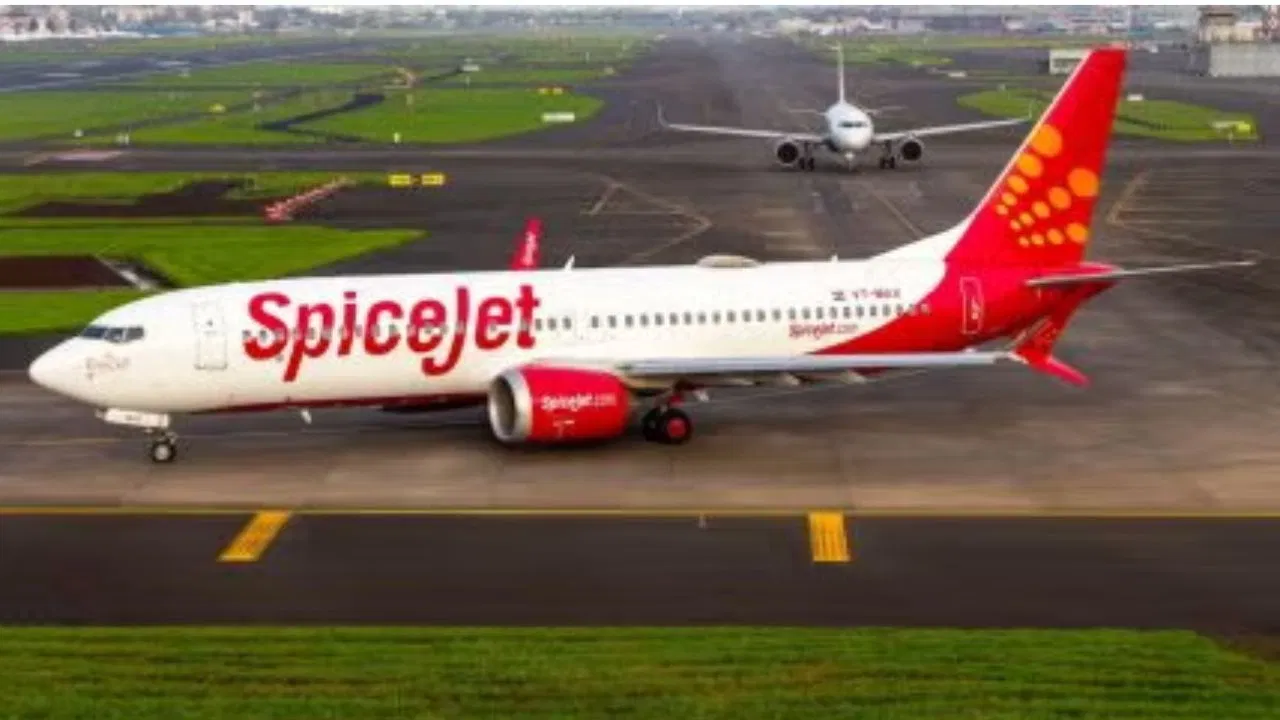
SpiceJet Begins Cutting Jobs as Fleet Shrinks to 13 Planes and Financial Pressure Deepens
Over 500 employees face layoffs, forced furloughs and unpaid leave in the first phase of workforce cuts as the budget carrier battles a cash crunch, salary delays stretching to three months, and total liabilities exceeding ₹4,500 crore.
India's budget aviation sector is watching one of its oldest names navigate what appears to be its most severe financial reckoning in recent years. SpiceJet, which once operated a fleet of roughly 50 aircraft, now flies just 13 of its own planes — and the human cost of that contraction has arrived in full force. More than 500 employees have been affected in the opening round of workforce reductions, a figure that insiders warn is only the beginning.
The airline currently supplements its shrunken owned fleet with around 14 wet-leased aircraft, which operate with external crew. That combined operational base still falls well short of what an airline employing roughly 6,800 people requires to run sustainably — and management has acknowledged that a structural mismatch between headcount and operational scale must now be corrected.
The cuts span three distinct categories. Layoffs represent direct terminations, while furloughs and leave without pay arrangements keep workers technically employed but remove any income. In a communication dated March 31, 2026, the airline's human resources department notified employees of a six-month furlough period running from April 1 through September 30, 2026. The letter cited "reduced operational capacity" and the need for what it described as cost-rationalisation and workforce-alignment measures.
A senior airline executive told the Economic Times that approximately 20 per cent of the total workforce could ultimately be affected across all phases — a figure that, applied to the current employee base, points toward a potential reduction of more than 1,300 people.
Some have just got married, some have diabetes, some have ailing parents. But nobody's plea is being heard.
— Airline official, quoted by Economic TimesFor those receiving furlough notices, the distinction from a layoff may be largely semantic. Employees told Economic Times that extended unpaid leave is financially unviable — particularly for those with health conditions, recent family commitments, or dependants. The language of temporary absence sits uneasily against the reality of receiving no salary for up to six months.
Among the groups most immediately affected are the airline's engineers. On the same day the furlough letter was issued, dozens of engineering staff were informed that their notice periods had been waived — making March 31 their effective last day of employment without advance warning. Around 62 engineers are believed to be on the initial list, drawn from an engineering division of approximately 800 people.
The abruptness of those exits has raised concerns within the engineering community. For an airline already operating a diminished fleet, the loss of licensed engineers compounds both the practical and reputational difficulties of maintaining airworthiness standards and sustaining any future fleet expansion.
Salary delays have become a persistent feature of working at SpiceJet over the past year, but the situation has worsened markedly in recent months. What was once a rolling one-month lag has extended to as much as three months for some employees. Several higher-paid staff members had not received their January 2026 salaries as of early April, according to reporting by the Economic Times.
"The negotiating power of engineers is gone; others are even worse off," one employee told the publication, characterising the overall outlook as grim. The comment reflects a broader sense among staff that the airline's financial distress has eroded the leverage workers might otherwise have in pushing for timely payment.
Pilots operating the Q400 turboprop fleet face their own form of financial adjustment. A revised scheduling contract introduces a 21-days-on, nine-days-off rotation. Management has positioned the change as an improvement to work-life balance, but pilots calculate it differently — estimating the new structure could reduce their monthly take-home pay by around 20 per cent, as fewer flight hours translate directly to lower variable earnings.
Beyond employee costs, SpiceJet carries a substantial and growing burden of statutory dues. Obligations relating to goods and services tax, provident fund contributions and tax deducted at source are estimated to exceed ₹100 crore. These are not discretionary liabilities — failure to remit them triggers regulatory and legal consequences that can compound quickly.
Total liabilities have been pegged at more than ₹4,500 crore, a figure that sits uncomfortably against the backdrop of a qualified institutional placement that raised over ₹3,000 crore in September 2024. That capital injection, significant as it was, has not proved sufficient to restore sustainable operations or arrest the accumulation of fresh obligations.
SpiceJet's current difficulties exist within a long arc of recurring stress. The airline's troubles accelerated after the global grounding of the Boeing 737 MAX in 2019, at a time when SpiceJet had more than 100 MAX jets on order. The COVID-19 pandemic followed immediately after, collapsing passenger revenue and forcing a near-total rethink of the business. Each subsequent recovery — and there have been several — has brought periods of relative stability before fresh pressure emerged.
What distinguishes the current moment from previous episodes is the scale of operational contraction. Flying 13 owned aircraft in a market where IndiGo alone operates more than 350 planes represents a marginal presence rather than a competitive one. The airline's domestic market share, which briefly climbed to 4.3 per cent in December 2025 — partly benefiting from disruptions at a rival — tells a more encouraging story than the underlying numbers warrant.
SpiceJet's path forward, if one exists in its current form, will require more than another round of cost reductions. The airline needs to restore liquidity, honour its statutory obligations, rebuild trust among the engineers and technicians it still employs, and accelerate the return of grounded aircraft to service — all simultaneously, and in a market that will not wait for it to find its footing. Whether it can do all of that, at this scale of financial stress, remains the central and unanswered question facing India's aviation sector heading into the second half of 2026.

Ruchi Kumar is the associate editor at Entrepreneur News Network and TVW News India, where she leads editorial strategy, brand storytelling, and startup ecosystem coverage. With a strong focus on innovation, business, and marketing insights, he curates impactful narratives that spotlight India’s evolving entrepreneurial landscape. She has written extensively on fintech, AI and emerging startups.