

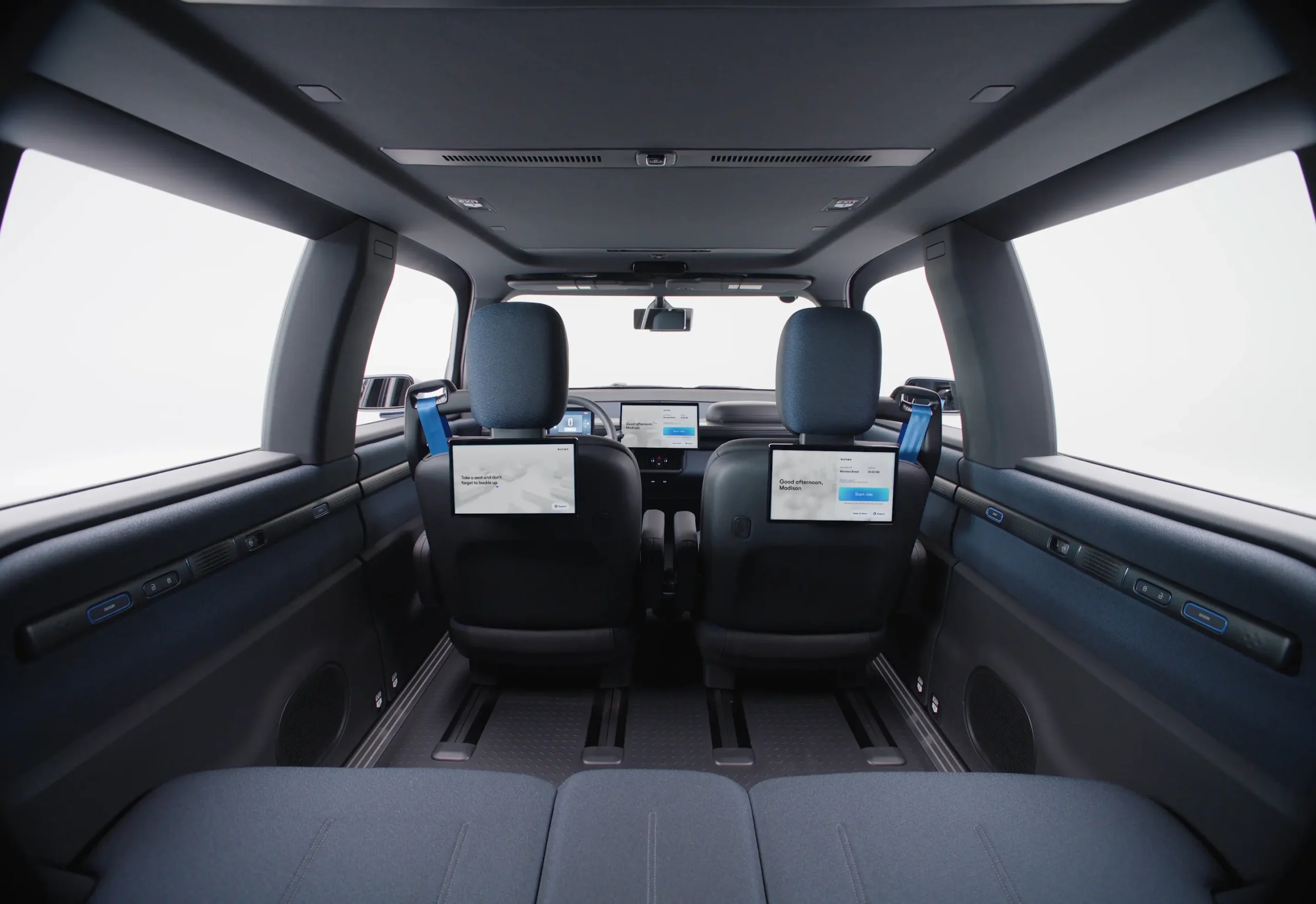
Alphabet’s self-driving division, Waymo, has officially announced the rollout of its next-generation autonomous vehicle: the Waymo Ojai. Marking a massive departure from the company’s historic strategy of retrofitting traditional human-driven consumer cars—like the Jaguar I-PACE and Chrysler Pacifica—the Ojai represents Waymo’s first purpose-built robotaxi designed from the ground up strictly for driverless ride-hailing.
The vehicle also breaks new ground for Waymo’s supply chain, serving as its first model constructed on a Chinese automotive platform. Manufactured by Geely’s premium electric vehicle brand, Zeekr, the base vehicles are built in China before being shipped to Mesa, Arizona, where Waymo integrates its proprietary autonomous driving hardware and software systems.
Inside the Ojai: An “Oasis on Wheels”
Waymo is pitching the Ojai less like a traditional passenger car and more like a premium, customizable “oasis on wheels” or a living room. Designed entirely around the passenger experience rather than a human driver, the vehicle aims to provide an expansive, unconfined cabin environment.
Key interior features include:
-
Elevator-Style Doors & Flat Floors: Moving away from standard swinging doors, the Ojai utilizes low step-in heights, sliding elevator-style doors, and a completely flat floor to make entry and exit seamless.
-
On-Board Personalization: The cabin is equipped with three large LED touchscreens, allowing riders to dynamically customize their trip parameters, ranging from interior climate control to media and music preferences.
-
Deep Accessibility Integration: Built with direct community partner feedback, the Ojai integrates inclusivity directly into its design framework. Touchpoints include embedded braille, screen-reader software compatibility, and a dedicated, seat-integrated stability handle to support passengers with mobility limitations.


Debuting the 6th-Generation Waymo Driver
While the Ojai presents a completely fresh silhouette on public roads, the technology steering it is an architectural evolution. The vehicle officially debuts the 6th-generation Waymo Driver platform. Waymo’s autonomous stack has already surpassed 20 million fully autonomous commercial trips across more than 11 cities.
The 6th-generation upgrade significantly improves the vehicle’s environmental resilience. Equipped with updated perception hardware—including upgraded radar algorithms, advanced long-range lidar, and high-performance cameras—the Ojai is engineered to navigate demanding weather conditions, including heavier snow and rain. This expanded weather capability paves the way for Waymo to scale beyond its traditional warm-weather operational hubs into harsher winter climates.
To support this aggressive footprint expansion, Waymo is ramping up operations at its Arizona facility, targeting a scalable manufacturing capacity of tens of thousands of autonomous units per year.
Multi-City Rollout Strategy
Waymo is utilizing a phased approach to scale its national footprint, starting with a trial phase before opening its doors to the general public.
Phase 1: Free Public Trials
In the coming weeks, select public riders in San Francisco, Phoenix, and Los Angeles will be invited to take free trips in the Ojai. While Waymo employees have already been logging fully autonomous trips in the vehicle for months, this public testing phase is designed to collect vital consumer feedback on the new cabin format.
Phase 2: National Expansion
Following the initial three-market launch, Waymo plans to gradually deploy the Ojai across an expanded roster of metropolitan regions, officially naming Denver, Las Vegas, and San Diego as the next cities in line for deployment. The company intends to open general public access to the Ojai fleet globally across its active territories later this year.
KBank and Ant International Join Hands to Improve Cross-Border Payments in Thailand

Ruchi Kumar is the associate editor at Entrepreneur News Network and TVW News India, where she leads editorial strategy, brand storytelling, and startup ecosystem coverage. With a strong focus on innovation, business, and marketing insights, he curates impactful narratives that spotlight India’s evolving entrepreneurial landscape. She has written extensively on fintech, AI and emerging startups.