

As the Class of 2026 enters one of the most challenging job markets for new graduates in recent years, new research from Autodesk suggests that artificial intelligence is creating fresh opportunities in industries focused on designing and building the physical world.
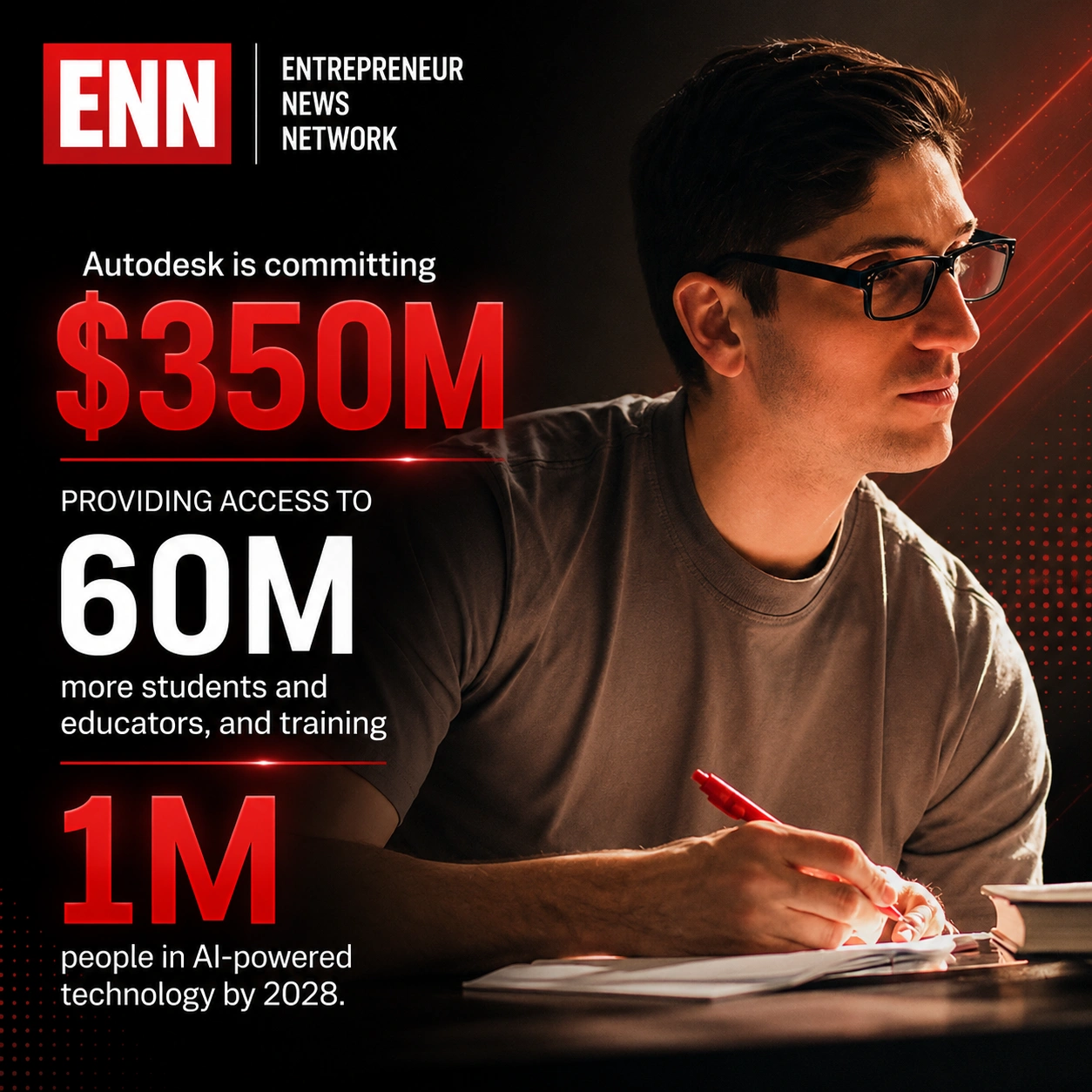
In response, Autodesk has announced a $350 million commitment over the next three years to provide free access to technology, training, and certifications for careers that combine AI with architecture, engineering, construction, manufacturing, design, creative industries, and skilled trades.
The initiative is designed to help students, educators, job seekers, and professionals develop the skills required for the next generation of AI-powered jobs. These industries collectively employ nearly 300 million professionals worldwide and are projected to represent approximately $30 trillion in global economic value by 2027.
Autodesk Expands Investment in Future Workforce Development
The company’s commitment focuses on helping bridge the gap between emerging AI technologies and workforce readiness.
Commenting on the initiative, Dara Treseder, Chief Marketing Officer at Autodesk, said:
“AI is raising the floor for everyone, but it is human ingenuity that will vault the ceiling. That is why access matters. The next generation already has the curiosity, creativity, and ambition to solve real problems. What too many young people still lack are the professional tools, training, and experiences that help turn that potential into a career. Preparing them for the future we’re building is a responsibility we all share, and one Autodesk is proud to help lead.”
The investment reflects Autodesk’s broader vision of ensuring that future workers have access to industry-standard tools and practical learning opportunities as AI becomes increasingly integrated into professional workflows.
Free Technology Access for Millions of Students and Educators
As part of the initiative, Autodesk plans to expand free access to its professional software and technology platforms for an additional 60 million students and educators by 2028.
Over the past decade, the company has already provided its technology to more than 150 million students and educators across over 160,000 colleges, universities, trade schools, and high schools worldwide.
Autodesk is working with educational institutions to integrate industry-relevant digital skills into academic programs.
Examples include:
- The University of Florida’s industrialized construction degree program
- Howard University’s upcoming construction engineering and management program
- Partnerships with technical training institutions globally
In India, Autodesk is supporting workforce development initiatives across:
- More than 14,500 Industrial Training Institutes (ITIs)
- 33 National Skill Training Institutes (NSTIs)
- Industry partnerships with organizations such as NAMTECH and ArcelorMittal Nippon Steel
These collaborations focus on curriculum development, faculty training, and certification pathways aligned with industry needs.
Training Nearly One Million People in AI-Powered Design and Make Technologies
Beyond software access, Autodesk plans to train nearly one million students, educators, job seekers, and working professionals in AI-powered Design and Make technologies.
The company intends to:
- Integrate its technologies into academic curricula
- Expand its network of Autodesk Learning Partners
- Strengthen Authorized Training Centers (ATCs)
- Support Membership Training Providers (MTPs)
- Train apprentices across multiple skilled trades
Training programs will cover both traditional and technology-enabled trades, including:
- Plumbing
- Pipefitting
- HVACR
- Welding
- Building Information Modeling (BIM)
- Architectural sheet metal
- Commercial electrical systems
Autodesk will also collaborate with governments, workforce organizations, and training partners to support reskilling and workforce transition programs.
Supporting Industry-Recognized Certifications
Another major objective of the initiative is helping more than 200,000 individuals earn industry-recognized certifications by the end of 2028.
According to Autodesk, certifications are becoming increasingly important as employers seek evidence of practical skills and AI competency.
Industry research cited by the company shows that:
- 92% of organizations prioritize or require certifications in workforce planning
- Only 27% of students are actively pursuing certifications
To address this gap, Autodesk is collaborating with Pearson and Certiport to create certification pathways ranging from foundational credentials to advanced professional certifications.
These programs will include:
- Tinkercad 3D Design Certificates
- Autodesk Certified User Certifications
- Autodesk Certified Professional Certifications
The certifications are designed to validate hands-on expertise in real-world industry workflows.
Autodesk AI Jobs Report Highlights Workforce Readiness Gap
The investment is supported by findings from Autodesk’s latest AI Jobs Report, which reveals a growing disconnect between student confidence and career readiness.
According to the report:
- 82% of students feel confident using consumer AI tools such as ChatGPT and Claude
- Only 36% feel confident using AI tools relevant to their future careers
- Nearly two-thirds say they possess only basic knowledge of career-specific AI technologies
- 80% of students are teaching themselves job-related skills online
- Fewer than one in five are gaining these skills through internships or workplace experiences
The report suggests that while students are enthusiastic about AI, many lack access to structured training and practical applications that employers increasingly demand.
AI Job Demand Continues to Accelerate
The report also found strong growth in AI-related employment opportunities across sectors linked to Autodesk’s Design and Make ecosystem.
AI-focused job listings in architecture, engineering, construction, manufacturing, and design have increased nearly 2.5 times over the past two years.
Interestingly, the fastest-growing demand is not limited to technical coding roles.
The report found that:
- Design is now the most sought-after skill in AI hiring
- Communication skills rank ahead of coding
- Leadership capabilities are increasingly valued alongside technical expertise
These findings highlight the importance of combining technical AI knowledge with human-centric skills such as creativity, collaboration, and problem-solving.
AI Is Driving Interest in Physical-World Careers
One of the most notable findings from Autodesk’s research challenges the perception that AI will push workers toward purely digital careers.
Instead, the data suggests that AI is increasing interest in hands-on professions connected to the physical world.
The report found that:
- More than 66% of students want careers that involve making things or working with their hands
- Interest in physical-world careers has increased six percentage points since 2024
- Students prefer physical-world careers over purely digital work by a margin of more than two-to-one
- Among working professionals, the preference rises to more than four-to-one
Autodesk believes this trend reinforces the growing importance of industries focused on designing, building, manufacturing, and maintaining the infrastructure and products that shape everyday life.
Preparing the Workforce for an AI-Driven Future
As AI continues to reshape industries worldwide, Autodesk’s $350 million investment represents one of the largest workforce development initiatives focused on the intersection of technology and physical-world professions.
By expanding access to professional tools, industry training, and certifications, the company aims to help individuals build careers in sectors that are expected to play a central role in the future global economy.
The initiative reflects a broader recognition that while AI can enhance productivity and automate routine tasks, long-term success will depend on combining advanced technology with human creativity, expertise, and practical problem-solving skills.

Ruchi Kumar is the associate editor at Entrepreneur News Network and TVW News India, where she leads editorial strategy, brand storytelling, and startup ecosystem coverage. With a strong focus on innovation, business, and marketing insights, he curates impactful narratives that spotlight India’s evolving entrepreneurial landscape. She has written extensively on fintech, AI and emerging startups.