

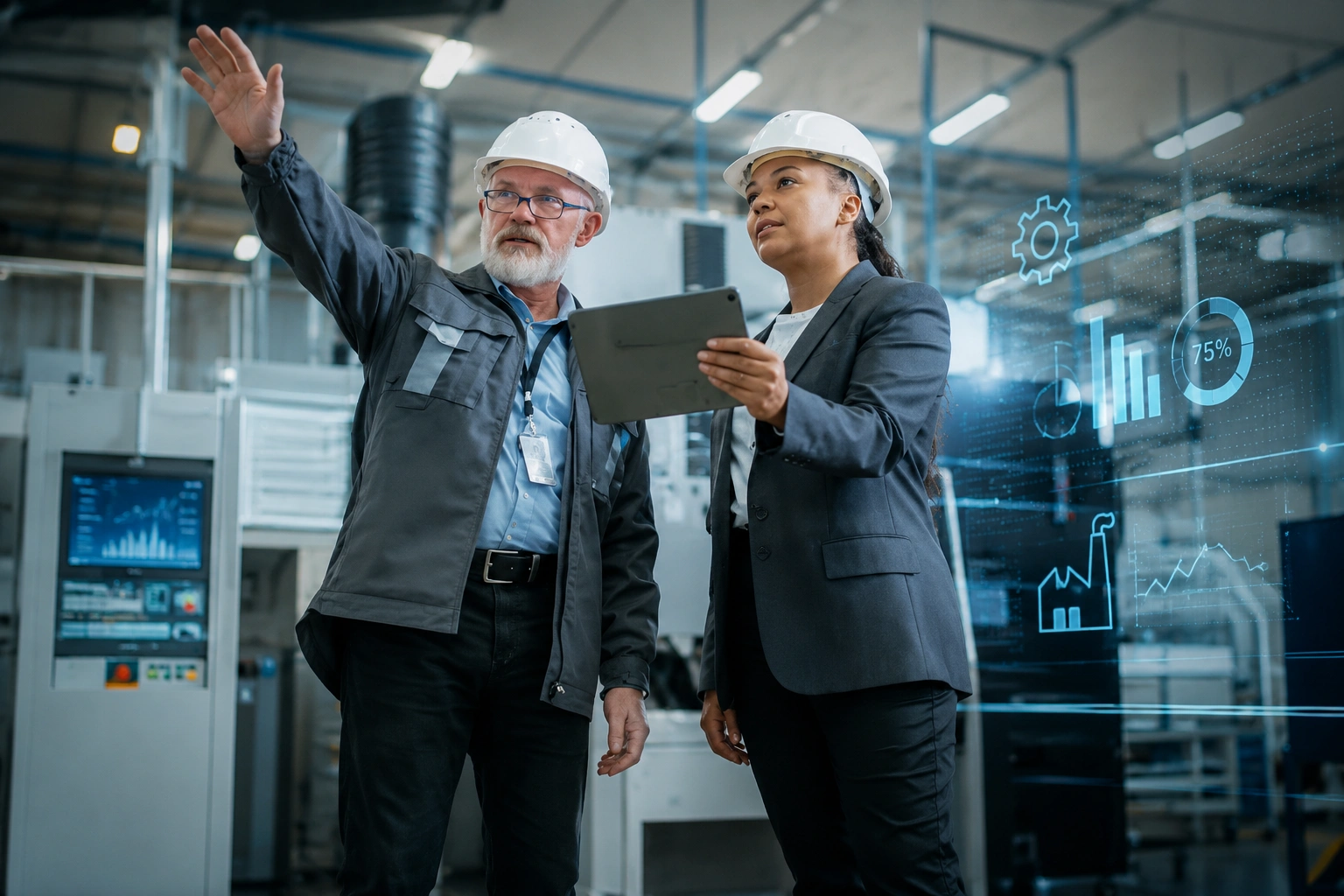
Artificial intelligence is rapidly moving from experimentation to enterprise-wide deployment across the global manufacturing sector. According to KPMG’s Global Tech Report 2026: Industrial Manufacturing, nearly 68% of industrial manufacturing leaders expect to deploy AI at scale within the next 12 months, highlighting a major shift in how manufacturers are approaching digital transformation.
The report, based on insights from 258 technology leaders across 22 countries and territories, reveals that manufacturers are increasingly investing in artificial intelligence, advanced analytics, cybersecurity, digital twins, edge computing, and automation technologies to strengthen competitiveness, improve operational performance, and build more resilient supply chains.
Technology Becomes a Competitive Differentiator
Industrial manufacturers are no longer viewing digital transformation as a future initiative. Instead, technology is becoming central to business strategy and long-term growth.
According to the report:
- 87% of manufacturing executives believe advanced technologies will be a key driver of future competitive advantage.
- 76% of organizations are investing more than US$50 million in digital transformation initiatives.
- 80% of respondents said technology investments frequently improve business value and returns.
- Nearly half of manufacturers are already reporting significant financial gains from their digital investments.
The findings suggest that manufacturers are increasingly treating technology as a core business asset rather than a support function.

AI Adoption Accelerates Across Manufacturing Operations
Artificial intelligence emerged as one of the strongest themes in the report, with manufacturers moving beyond pilot projects and early experimentation.
KPMG found that 49% of manufacturing executives are already deploying AI use cases that are delivering measurable business value, significantly higher than the cross-industry average of 28%.
This indicates that manufacturers are among the most advanced sectors when it comes to practical AI implementation.
Top AI Use Cases in Manufacturing
The report identified several high-impact AI applications currently being deployed across manufacturing organizations:
1. Predictive Quality Control (52%)
The most widely planned AI application involves using machine learning and predictive analytics to identify product defects before they occur.
Benefits include:
- Reduced production waste
- Improved product quality
- Lower manufacturing costs
- Enhanced customer satisfaction
2. Advanced Analytics for Downtime Reduction (40%)
Manufacturers are leveraging AI-powered analytics to monitor equipment performance and predict maintenance requirements before failures occur.
This helps organizations:
- Reduce unplanned downtime
- Improve operational efficiency
- Accelerate production cycles
- Improve time-to-market
3. Generative AI for Product Design (38%)
Generative AI is increasingly being used to support product innovation and customization.
Applications include:
- Product design optimization
- Engineering simulations
- Faster prototyping
- Customized product development
AI and Smart Factory Technologies Converge
The report highlights how manufacturers are combining AI with other emerging technologies to build smarter production environments.
Key technologies being integrated include:
- Industrial IoT sensors
- Equipment monitoring systems
- Digital twins
- Edge computing
- Advanced automation systems
Together, these technologies enable manufacturers to create highly responsive and predictive operating environments capable of making real-time decisions.
This convergence is helping businesses optimize production processes, reduce costs, improve asset utilization, and enhance overall operational performance.
Stronger AI Governance Takes Shape
As AI adoption expands, manufacturers are also strengthening governance frameworks to ensure responsible implementation.
According to KPMG:
- 70% of organizations are using a centralized approach to AI deployment.
- IT departments remain the primary drivers of AI implementation.
- 87% of respondents reported strong collaboration between IT, cybersecurity, and risk management teams.
The findings suggest that manufacturers increasingly recognize the importance of balancing innovation with governance, security, and risk management.
Data Quality Remains the Biggest Barrier
Despite growing confidence in AI adoption, data quality continues to be a major challenge.
While:
- 83% of executives believe they have built strong data foundations for AI,
a significant:
- 76% still identify unreliable data as one of the biggest risks to AI success.
Many organizations continue to struggle with fragmented data systems, inconsistent data quality, and limited enterprise-wide visibility.
The report emphasizes that successful AI deployment depends heavily on:
- Strong data governance
- Integrated data ecosystems
- Real-time data accessibility
- Elimination of data silos
Manufacturers are increasingly exploring advanced data management approaches such as data ontology and knowledge graphs to improve data usability and support more sophisticated AI applications.
Cybersecurity Spending Surges
As manufacturing operations become increasingly connected, cybersecurity is emerging as a strategic business priority.
The report found that nearly 50% of manufacturing executives plan significant increases in cybersecurity spending over the next 12 months.
Several factors are driving this trend:
- Increased use of connected devices
- Expansion of industrial IoT networks
- Greater reliance on cloud platforms
- AI-powered business operations
- Growing cyber threats targeting industrial infrastructure
Enhanced cybersecurity ranked as one of the most valuable outcomes generated through technology investments, second only to operational efficiency improvements.
Digital Technologies Strengthen Supply Chain Resilience
Manufacturers are also using advanced technologies to address growing supply chain challenges.
Geopolitical uncertainty, trade disruptions, inflation pressures, and climate-related risks have forced companies to rethink traditional supply chain models.
To improve resilience, organizations are deploying:
- AI-enabled demand forecasting
- Digital twin technology
- Predictive analytics
- Real-time supply chain visibility platforms
These solutions help manufacturers anticipate disruptions, optimize inventory, and make faster, more informed decisions.
The Future of Smart Manufacturing
Looking ahead, KPMG expects technologies such as artificial intelligence, edge computing, digital twins, advanced analytics, and software-driven automation to play an increasingly critical role in manufacturing operations.
The report concludes that organizations that successfully combine:
- Scalable AI platforms
- High-quality data foundations
- Workforce upskilling
- Strong cybersecurity frameworks
will be best positioned to unlock long-term value from digital transformation initiatives.
As industrial manufacturers move from technology experimentation to enterprise-wide deployment, AI is emerging as a key driver of operational excellence, innovation, and competitive advantage.
The next phase of manufacturing transformation will likely be defined not by whether companies adopt AI, but by how effectively they integrate it into every aspect of their business operations.

Ruchi Kumar is the associate editor at Entrepreneur News Network and TVW News India, where she leads editorial strategy, brand storytelling, and startup ecosystem coverage. With a strong focus on innovation, business, and marketing insights, he curates impactful narratives that spotlight India’s evolving entrepreneurial landscape. She has written extensively on fintech, AI and emerging startups.