

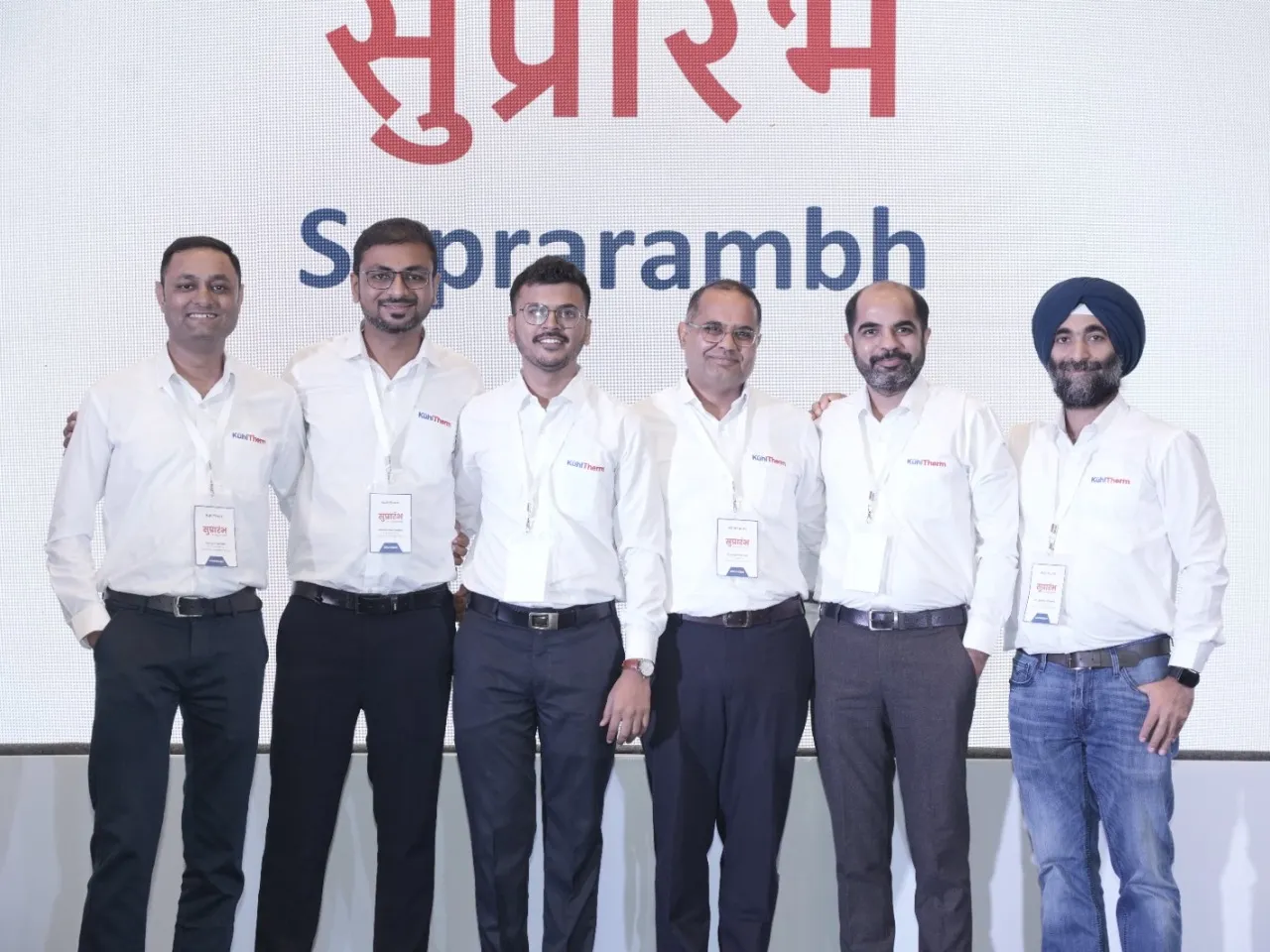
Ahmedabad, India | August 10, 2026: Ahmedabad-based thermal management startup KühlTherm has launched two locally developed liquid cooling solutions aimed at supporting the growing demand for high-density artificial intelligence (AI) workloads in India’s data centre industry.
The company has introduced a Rear Door Heat Exchanger (RDHx) and a Cooling Distribution Unit (CDU), alongside what it describes as India’s first integrated liquid cooling validation laboratory.
The launch comes as India enters a major data centre expansion cycle, driven by rising demand for AI computing, cloud infrastructure and high-performance workloads that require significantly more advanced thermal management than conventional air-cooling systems.
KühlTherm Targets AI Data Centre Cooling Demand
AI servers and high-performance computing infrastructure generate substantially more heat than traditional enterprise workloads. As rack densities increase, conventional air cooling can become less effective, creating demand for liquid cooling technologies capable of managing higher thermal loads.
KühlTherm’s new RDHx and CDU systems are designed to address these requirements while being developed specifically for Indian operating conditions.
The Rear Door Heat Exchanger captures heat from the back of server racks before it enters the wider data centre environment. This approach can help reduce the thermal burden placed on conventional cooling infrastructure.
The Cooling Distribution Unit, meanwhile, manages coolant flow, temperature and pressure, supporting more efficient thermal transfer across high-density computing environments.
New Liquid Cooling Validation Laboratory
Alongside the product launch, KühlTherm has opened an integrated liquid cooling validation laboratory in Ahmedabad.
The facility is designed to allow the company to test its cooling technologies under real-world operating conditions before they are deployed at customer sites.
This capability could become increasingly important as data centre operators adopt more complex cooling architectures for AI infrastructure, where thermal performance, reliability and energy efficiency are critical considerations.
KühlTherm said the laboratory will strengthen its ability to validate next-generation cooling technologies and support customers during deployment.
NexusFlow OS to Connect Cooling and Power Infrastructure
The company’s new cooling products will be integrated with NexusFlow OS, KühlTherm’s AI-powered thermal intelligence platform.
The platform is designed to connect power infrastructure from the grid to the server rack with cooling infrastructure extending from the chip to the chiller.
Through this approach, KühlTherm aims to monitor, optimise and automate thermal management across AI-focused data centres.
Founder and CEO Shailesh Bishnoi said the company’s objective is to help customers adopt next-generation cooling technologies while contributing to India’s position in the global thermal management ecosystem.
“The new RDHx and CDU is a part of our goal to help our customers confidently adopt next-generation cooling technologies, while strengthening India’s position in the global thermal management ecosystem,” Bishnoi said.
He added that decisions being made during India’s current data centre buildout cycle could influence the efficiency and sustainability of thermal management infrastructure for years to come.
KühlTherm Raises $1.1 Million to Expand Development
The product launch follows KühlTherm’s $1.1 million seed funding round, which was raised earlier this month.
The funding is being used to accelerate product development, strengthen research and testing capabilities, and expand the company’s engineering and business development teams.
The investment also comes at a time when demand for AI-ready data centre infrastructure is increasing across India, creating opportunities for companies developing technologies around power, cooling, networking and other critical infrastructure.
Manufacturing Capacity to Reach 2 GW
KühlTherm said its liquid cooling systems are designed and manufactured in India, with the company developing a complete thermal management stack spanning chip to chiller.
The company currently has manufacturing capacity of around 300 MW and plans to increase this to 2 GW by 2027.
The expansion reflects KühlTherm’s ambition to participate in the rapidly developing AI data centre infrastructure market while building domestic capabilities in advanced thermal management.
Why Liquid Cooling Matters for India’s AI Infrastructure
The growth of generative AI, machine learning and high-performance computing is changing the infrastructure requirements of data centres.
Higher-density processors and AI accelerators generate greater heat loads, increasing the importance of efficient cooling systems. Liquid cooling can provide a more targeted method of removing heat compared with relying solely on traditional air-based systems.
For India, the challenge is particularly relevant as operators build new facilities to support cloud computing and AI workloads while also facing pressure to improve energy efficiency and manage infrastructure costs.
KühlTherm’s focus on Indian operating conditions — including high ambient temperatures, grid fluctuations and local infrastructure requirements — is intended to address some of these challenges.
India’s Data Centre Cooling Market Enters a New Phase
KühlTherm’s product launch highlights a broader shift in India’s data centre ecosystem: cooling is increasingly becoming a strategic component of AI infrastructure rather than simply a facility-level requirement.
As rack densities rise and AI workloads expand, data centre operators will need thermal management systems capable of delivering reliable performance while controlling energy consumption and supporting increasingly sophisticated computing infrastructure.
With its new RDHx and CDU products, validation laboratory, NexusFlow OS platform and planned manufacturing expansion, KühlTherm is positioning itself to participate in this emerging market.

Ruchi Kumar is the associate editor at Entrepreneur News Network and TVW News India, where she leads editorial strategy, brand storytelling, and startup ecosystem coverage. With a strong focus on innovation, business, and marketing insights, he curates impactful narratives that spotlight India’s evolving entrepreneurial landscape. She has written extensively on fintech, AI and emerging startups.