
September 25, 2026, 12:30 PM IST, Hyderabad, Telangana – Telangana is targeting 5 GW of data centre capacity by 2029, as Hyderabad strengthens its position as a major destination for hyperscale cloud, artificial intelligence and digital infrastructure investment.
The state government estimates that the broader AI and digital infrastructure ecosystem could attract around $30 billion in potential investment as global technology companies expand their cloud and computing footprints.
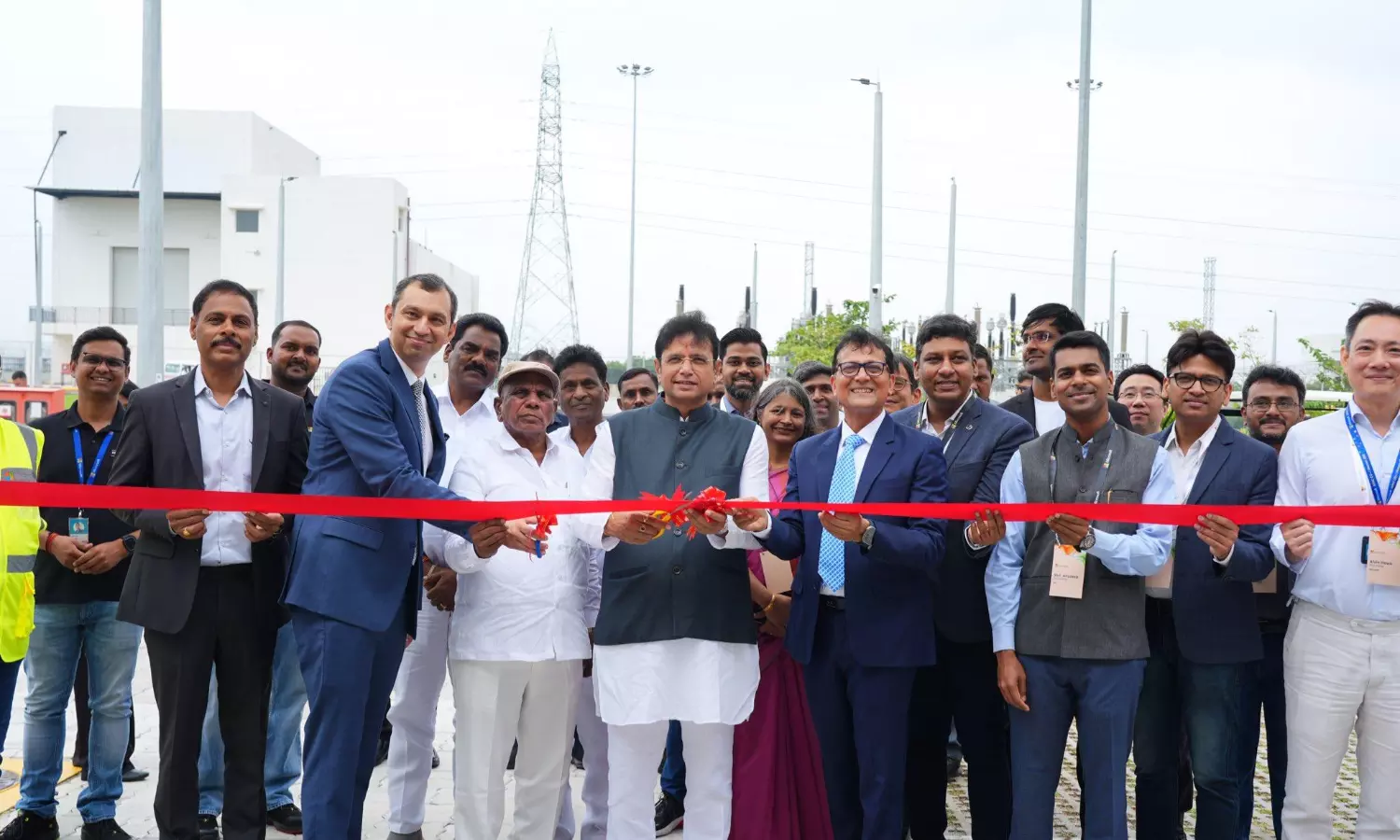
The latest development comes as Microsoft inaugurated its India South Central cloud region in Hyderabad on September 24, marking the company’s fourth cloud region in India.
According to the Telangana government, the state currently has more than 2.5 GW of data centre capacity either operational or under development.
Microsoft Expands Cloud Infrastructure in Hyderabad
Microsoft’s new India South Central cloud region is designed to support growing demand for cloud and AI services across India while also serving customers in the wider region.
The facility uses a three-zone architecture, providing resilience while allowing Microsoft to expand capacity as demand increases.
The launch comes at a time when Hyderabad’s data centre market is evolving beyond conventional enterprise computing. New infrastructure projects are increasingly being designed to support high-density GPU workloads, hyperscale cloud environments and advanced cooling systems required for AI applications.
Microsoft President for India and South Asia Puneet Chandok said Hyderabad’s technology ecosystem makes the city an important location for Microsoft’s AI and cloud expansion.
He highlighted the city’s combination of technology talent, innovation capabilities and AI-ready infrastructure as factors supporting the development of India’s next generation of AI-driven businesses.
Global Data Centre Operators Expand in Telangana
Hyderabad’s growing data centre ecosystem has attracted both global technology companies and Indian infrastructure operators.
Companies investing or expanding their presence in the state include:
- Microsoft
- AWS
- Iron Mountain
- CtrlS
- Sify
- TCL
- NTT DATA
- CapitaLand
The growing presence of hyperscale and data centre operators is also being supported by Hyderabad’s expanding Global Capability Centre (GCC) ecosystem.
The Telangana government cites more than 500 GCCs as part of the state’s wider technology base, creating a combination of digital infrastructure, engineering talent and enterprise demand.
Telangana’s $30 Billion AI and Digital Infrastructure Opportunity
Telangana IT Minister D. Sridhar Babu said the state is aiming to reach 5 GW of data centre capacity by 2029 while attracting approximately $30 billion in investment.
The state’s strategy is not limited to data centre construction.
Its broader technology roadmap includes initiatives such as:
AI City
A proposed ecosystem focused on artificial intelligence infrastructure and applications.
Global AI Innovation Hub
Designed to support AI innovation, research and industry collaboration.
AIKAM
An initiative supporting the state’s wider AI ecosystem.
TGDeX
A platform connected to Telangana’s digital and technology ecosystem.
Together, these initiatives are intended to connect compute infrastructure, research, enterprise AI adoption, talent and commercialisation.
Hyderabad’s Shift Toward AI-Ready Data Centres
The rapid development of generative and agentic AI is changing the requirements for data centre infrastructure.
Traditional enterprise workloads can operate with relatively conventional computing and cooling configurations. AI workloads, however, can require substantially higher computing density and specialised infrastructure.
This is driving greater attention toward:
- High-density GPU infrastructure
- Hyperscale computing
- Advanced cooling systems
- High-capacity power infrastructure
- Cloud platforms
- AI-focused computing environments
Hyderabad’s growing concentration of technology companies and GCCs provides an additional source of demand for this infrastructure.
The state’s strategy therefore places data centres at the intersection of AI, cloud computing, enterprise technology and digital transformation.
Microsoft’s Hyderabad Presence Expands Beyond Data Centres
Microsoft’s investment in Hyderabad also extends beyond cloud infrastructure.
Rajiv Kumar, Managing Director and President of Microsoft India Development Centre, said the company’s presence in the city has evolved from an engineering-focused operation toward a broader ecosystem involving cloud and AI infrastructure.
Microsoft said it is also investing in initiatives focused on skilling, workforce development, entrepreneurship and sustainability.
One example is its Datacenter Academy, developed in partnership with IIIT Hyderabad, Young India Skills University, the Telangana government and Don Bosco Tech Society.
The programme offers a 600-hour curriculum focused on data centre operations and infrastructure management.
Microsoft Expands Data Centre Skills Programmes
According to Microsoft, its community skilling programmes in the region have trained 556 young people, with 118 securing placements.
A separate Data Analytics programme conducted with Shadnagar Municipality trained 151 students, of whom 108 secured placements.
These programmes are intended to address the growing requirement for skilled professionals as data centre capacity and digital infrastructure expand across the state.
The development of a local talent pipeline could become increasingly important as AI infrastructure requires specialised skills spanning cloud operations, data centre management, cybersecurity, networking and advanced computing.
Sustainability Becomes Part of Hyderabad’s Data Centre Expansion
The rapid growth of data centres also brings environmental considerations, particularly around electricity and water consumption.
Microsoft said its South Central region operates with effectively zero water use for cooling and that the company is working with local partners on groundwater recharge, rainwater harvesting and watershed resilience.
Its Elikatta groundwater-recharge programme had added approximately five million litres of recharge capacity by June, according to Microsoft.
The company also said community programmes connected to its Hyderabad data centre operations have reached more than 22,400 people, covering areas including livelihoods, skills, governance and environmental sustainability.
These initiatives highlight how sustainability is increasingly becoming part of the infrastructure conversation as India’s data centre market scales.
Green Skills and AI Converge in Hyderabad
Microsoft is also supporting a Green Skills and Applied AI Centre of Excellence in Hyderabad in collaboration with the Telangana government, 1M1B and MeitY Startup Hub.
The initiative includes a Green Pharma track, bringing together AI, green skills and life-sciences applications.
This reflects a broader shift in India’s technology ecosystem, where AI infrastructure is increasingly being linked with sustainability-focused applications and industry transformation.
What Telangana’s 5 GW Target Means for India’s Data Centre Market
Telangana’s ambition to reach 5 GW of data centre capacity by 2029 comes as India experiences rising demand for cloud computing, AI infrastructure and digital services.
For Hyderabad, the combination of:
Data Centres + AI + Cloud + GCCs + Talent + Research
could create an increasingly interconnected technology ecosystem.
The state’s current capacity of more than 2.5 GW operational or under development means the 5 GW target would require substantial additional infrastructure over the next few years.
At the same time, the projected $30 billion investment opportunity could extend beyond data centre buildings themselves into power infrastructure, cooling technologies, networking, cloud services, AI computing, engineering and related technology services.
The Road Ahead
Microsoft’s new India South Central cloud region adds another major layer to Hyderabad’s growing digital infrastructure ecosystem.
For Telangana, the objective is broader than attracting individual data centre projects. The state’s strategy is increasingly focused on building an ecosystem where AI infrastructure, cloud computing, GCCs, research, skilled talent and enterprise adoption reinforce one another.
With more than 2.5 GW of capacity already operational or under development and a target of 5 GW by 2029, Hyderabad is positioning itself for a larger role in India’s rapidly expanding AI and cloud infrastructure market.
The next phase will depend on how effectively the state converts planned investments into operational capacity while simultaneously addressing power requirements, talent availability, connectivity and sustainable infrastructure.
Key Numbers at a Glance
| Metric | Figure |
|---|---|
| Telangana data centre target by 2029 | 5 GW |
| Current operational/under-development capacity | 2.5+ GW |
| Potential AI & digital infrastructure investment | ~$30 billion |
| Microsoft cloud regions in India | 4 |
| GCCs cited in Telangana | 500+ |
| Microsoft Datacenter Academy programme | 600 hours |
| Young people trained through community skilling | 556 |
| Placements from that programme | 118 |
| Elikatta groundwater recharge capacity added | ~5 million litres |
| People reached through Microsoft community programmes | 22,400+ |
Conclusion
Hyderabad is increasingly becoming an important node in India’s AI infrastructure story. Microsoft’s new cloud region, Telangana’s 5 GW data centre target and the state’s broader AI initiatives point toward a technology ecosystem increasingly built around high-performance computing, cloud platforms and enterprise AI.
As AI workloads grow, the competitive landscape will increasingly depend not only on computing capacity, but also on power, cooling, skilled talent, sustainability and the ability to build infrastructure at hyperscale.

Ruchi Kumar is the associate editor at Entrepreneur News Network and TVW News India, where she leads editorial strategy, brand storytelling, and startup ecosystem coverage. With a strong focus on innovation, business, and marketing insights, he curates impactful narratives that spotlight India’s evolving entrepreneurial landscape. She has written extensively on fintech, AI and emerging startups.