

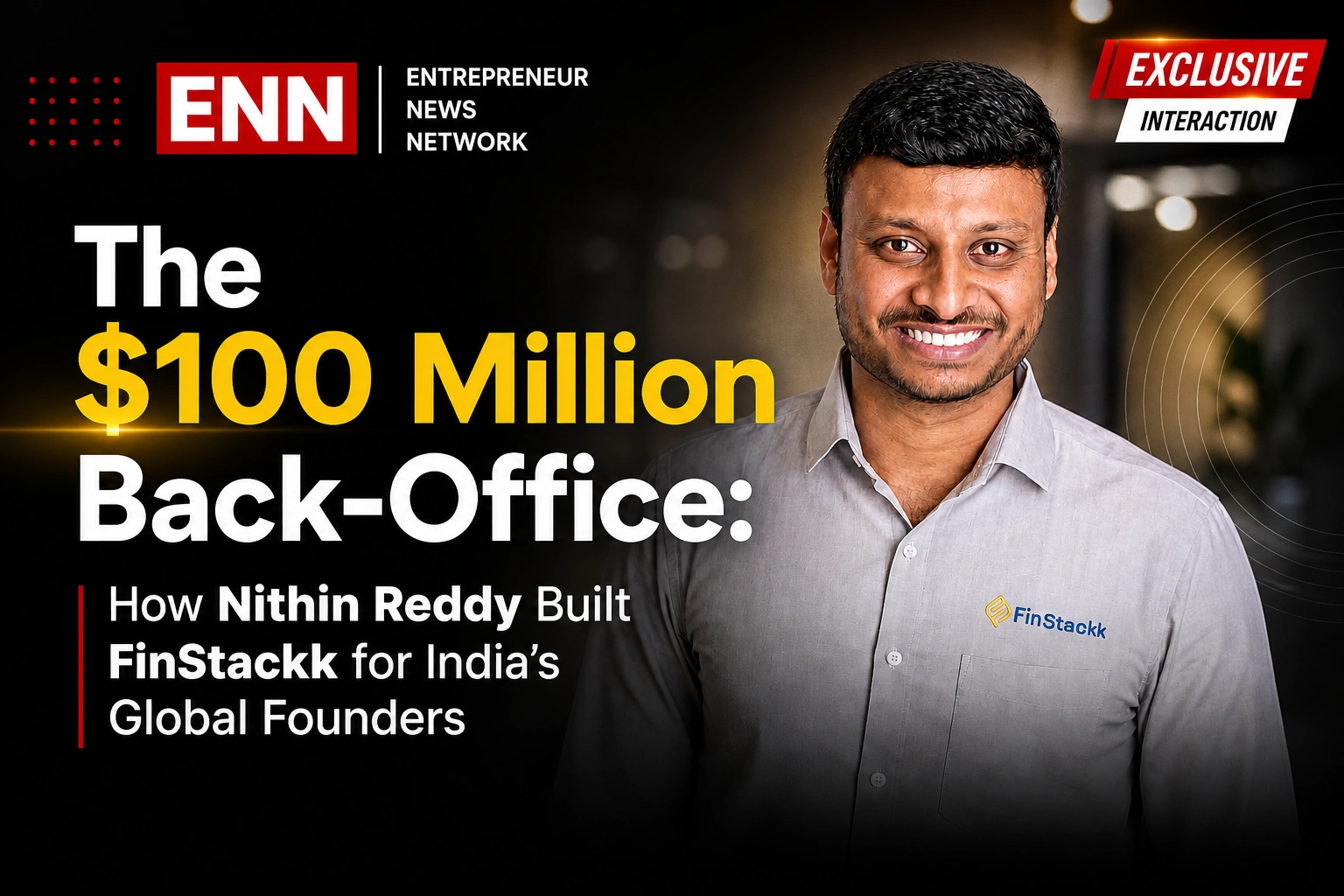
You built your reputation as one of India’s top sales performers at OYO and in the stone exports business—roles fueled by high-velocity growth. How did you mentally transition from a ‘growth-at-all-costs’ mindset to championing a ‘compliance-first’ philosophy at FinStackk?
At OYO and in exports, growth was always visible and immediate, you could see numbers move every day, but stepping into the US market made it clear that speed without structure eventually slows you down. When I started understanding accounting and compliance from scratch, I realised that in markets like the US, discipline is what sustains growth, not just momentum. Missing a filing or structuring things incorrectly can quietly compound into larger issues. That shift was less about slowing down and more about building a stronger base. At FinStackk, we see compliance as an enabler, not a constraint. When your books, filings, and structures are clean from day one, growth actually becomes faster and more predictable. It allows founders to move with confidence, knowing there are no hidden risks waiting to surface later.
Many founders view US incorporation and compliance as a ‘set-it-and-forget-it’ administrative task. What is the most dangerous misunderstanding you see early-stage founders harbor about their US back-office, and at what point does that ‘operational debt’ become fatal to a startup’s exit or funding prospects?
The risk starts when it is treated as a one time setup instead of a living system that needs constant attention. After incorporation, there is a continuous layer of Bookkeeping, tax filings, payroll, and legal compliance tracking that many teams underestimate. Early gaps feel harmless, but they quietly accumulate in the background while the business focuses on growth. The real inflection point comes during due diligence. Once investors or acquirers begin reviewing financial records, compliance history, and governance, even small inconsistencies get amplified. At that stage, it is not about correcting a few entries, it raises deeper questions around discipline and reliability. I have seen fundamentally strong companies lose leverage in funding conversations because their financial and compliance trail did not reflect the same maturity as their product or growth story.
FinStackk positions itself as tech-enabled but human-guided. In a world obsessed with full automation, why do you believe a purely algorithmic approach fails when dealing with cross-border financial governance?
Pure automation works well for speed and standardisation, but cross border financial governance is rarely standard. You are dealing with layered regulations across federal, state, and local levels, and often the context matters more than the rule itself. An algorithm can track deadlines or flag anomalies, but it cannot interpret intent, assess risk in a founder’s specific situation, or guide decisions when regulations are open to interpretation. We have seen cases where everything looks correct on the surface, but the structure itself creates downstream tax exposure or compliance risk. That is where human judgement becomes critical. At FinStackk, automation handles data flow and consistency, while experts bring context, accountability, and foresight. Without that layer, you may move fast, but you are also increasing the chances of making silent mistakes that only show up when it is too late.
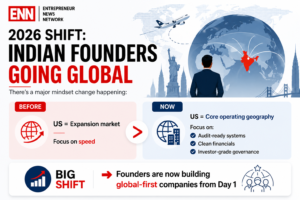
For years, Indian founders looked at the US purely as a market for talent arbitrage or sales. How is the narrative shifting in 2026? How do you see the next generation of ‘global-ready’ Indian founders changing their core architectural approach to finance and legal structures?
There is a clear shift from seeing the US as just a go to market extension to treating it as a core operating geography. Earlier, structures were often built around speed and cost efficiency, now founders are thinking in terms of long term credibility, capital readiness, and global scale from day one. The new generation is far more aware that how you set up your entity, manage books, structure equity, and stay compliant directly impacts valuation and investor trust. They are not retrofitting systems later, they are architecting them upfront with clean financials, transparent governance, and audit readiness built in. This changes the conversation completely because you are no longer just entering a market, you are building a globally investable company. That mindset shift is what will separate companies that scale smoothly from those that struggle when scrutiny increases.
You’ve been instrumental in hosting curated, informal founder lunches and ‘pickleball mornings’ rather than formal webinars. What is the tactical value of these ‘high-signal’ environments for founders, and why are formal business conferences failing to deliver that same value today?
What we have seen is that real value comes from context, not scale. In smaller, curated settings, founders drop the guard that usually comes with formal stages and scripted panels, and the conversation shifts to what is actually working and what is breaking. That honesty is where real learning happens. In a room with the right mix, a single insight on hiring, pricing, or compliance can be more actionable than hours of generic content. Large conferences optimise for reach and visibility, but they often dilute depth, everyone is speaking, very few are actually saying something useful. In contrast, high signal environments are designed for relevance and trust, which makes interactions sharper and outcomes more immediate. For founders, especially in early and growth stages, that kind of clarity and access often translates directly into better decisions and faster execution.
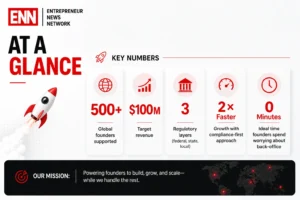
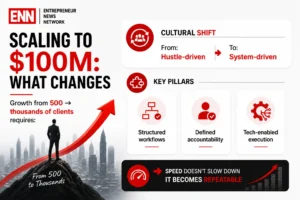
You have stated a goal of scaling FinStackk into a USD 100 million organization. How does the culture of a company change when you move from serving 500+ clients to aiming for the scale you’re targeting? How do you keep the ‘startup agility’ intact?
The shift is less about size and more about discipline. When you move from a few hundred clients to thinking at that scale, you cannot rely on individual effort or informal coordination, the organisation has to run on systems, clarity, and accountability. Culture evolves from being hustle driven to process driven, but without losing ownership. For us, agility comes from building strong internal frameworks early, clear workflows, defined responsibilities, and a tech layer that removes friction so teams can move fast without breaking things. At the same time, we stay close to customers and keep feedback loops tight, so decisions are still grounded and quick. The goal is not to slow down as you grow, it is to make speed more structured and repeatable, so quality and consistency scale along with it.
You maintain a rigorous weight training routine amidst the demands of scaling a company. How does the discipline required for physical transformation inform your decision-making as a Chief Growth Officer? Is there a direct parallel between the ‘grind’ of the gym and the ‘grind’ of business building?
For me the overlap is very real, both are about consistency over intensity. In the gym you do not see results from one great session, it comes from showing up every day, tracking progress, and making small adjustments. Growth works the same way. You build pipelines, test channels, refine messaging, and stay patient while compounding results. It also teaches you to respect fundamentals. Form matters more than weight, just like clean processes and clear numbers matter more than chasing vanity metrics. There is also a mental aspect, you learn to stay steady through plateaus, not overreact to short term fluctuations, and keep pushing with discipline. That carries directly into decision making, where you balance ambition with structure. In both cases, the real progress happens when you commit to the process even when the results are not immediately visible.
Whether it’s scuba diving or poker, you pursue interests that require intense focus and high-stakes decision-making. Which specific lessons from your ‘poker table’—calculating risk, reading the room, or knowing when to fold—do you apply most frequently in the boardroom?
The biggest one is knowing when not to play a hand. In business, there is a tendency to chase every opportunity, but not every deal, market, or partnership deserves capital and attention. Poker teaches you to be selective, to wait for the right odds, and to stay comfortable sitting out when the signals are not strong. The second is reading intent beyond what is being said. Whether it is a partner conversation or a negotiation, understanding incentives and hidden pressures often matters more than the numbers on the table. And finally, managing downside is critical. You do not need to win every hand, you just need to avoid the ones that can hurt you disproportionately. That mindset helps in making sharper, more measured decisions while still staying aggressive where it truly counts.
If we look back five years from now, and FinStackk has successfully become the ‘financial backbone’ for thousands of global founders, what will have been the biggest victory? Is it the valuation, or is it the fact that Indian startups no longer fear the complexity of global expansion?
Valuation will be an outcome, not the real win. The bigger shift would be if founders stop seeing global expansion, especially into the US, as something operationally heavy or risky. If we can get to a point where a founder’s default mindset is that the back office will just work, that compliance, accounting, and tax are predictable and transparent, then we have done something meaningful. Today a lot of hesitation comes from uncertainty and lack of visibility, not from ambition. If that friction disappears and founders can focus purely on building product, acquiring customers, and raising capital with confidence, that changes how companies are built from day one. For us, becoming that invisible but reliable layer behind thousands of businesses would matter far more than any headline number.

Ruchi Kumar is the associate editor at Entrepreneur News Network and TVW News India, where she leads editorial strategy, brand storytelling, and startup ecosystem coverage. With a strong focus on innovation, business, and marketing insights, he curates impactful narratives that spotlight India’s evolving entrepreneurial landscape. She has written extensively on fintech, AI and emerging startups.