

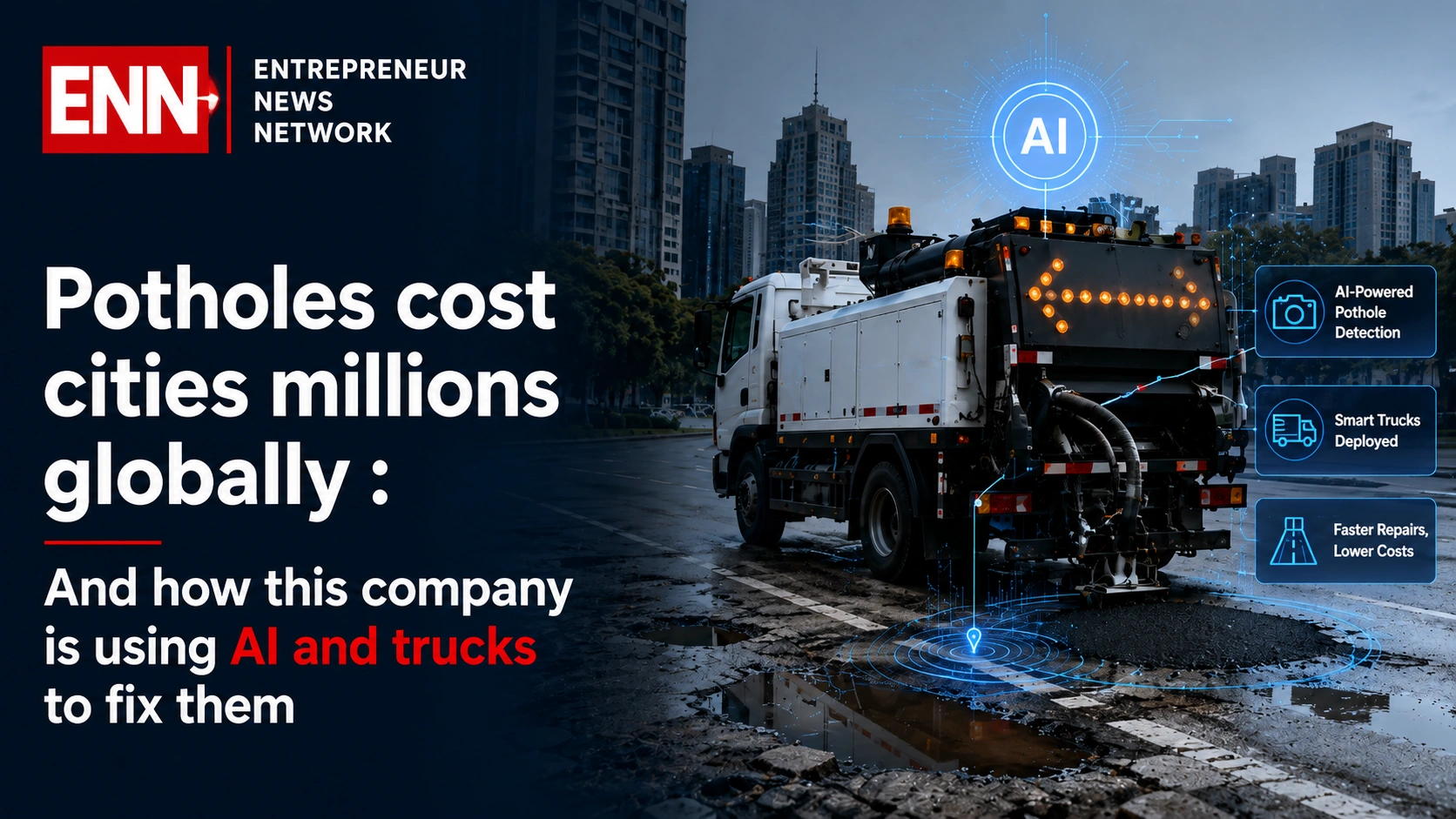
Potholes remain one of the most persistent urban challenges worldwide—impacting mobility, safety, and even business operations. In fact, mobility companies like Lime have identified potholes as a material business risk.
Now, a new AI-driven solution from Samsara aims to change how cities detect and fix road damage—potentially offering a scalable model that could be highly relevant for India.
AI Meets Infrastructure: What Is Samsara’s Ground Intelligence?
Samsara has launched an AI-powered platform called Ground Intelligence, which uses data from millions of fleet-mounted cameras to detect potholes and other infrastructure issues in real time.
The system leverages:
- AI models trained on vehicle camera data
- Continuous monitoring through commercial fleets
- Repeat data collection to track pothole deterioration over time
Unlike traditional methods that rely on citizen complaints or manual inspections, this system provides proactive, data-driven insights through a centralized dashboard.
Cities can identify and prioritize repairs efficiently, moving from reactive fixes to planned infrastructure maintenance.
Why This Matters Globally
Companies like Waymo and Waze have already begun pilot programs to share road condition data with governments.
However, Samsara’s edge lies in scale—its network of commercial trucks generates far more frequent and repeat data, enabling better tracking of infrastructure degradation.
Beyond potholes, the platform can also detect:
- Broken guardrails
- Graffiti
- Low-hanging power lines
- Sewer blockages
India Context: A Massive Opportunity for AI-Driven Road Intelligence
While the technology is being deployed globally, its relevance in India is even more significant.
The Scale of the Problem
- India has over 6.3 million km of road network—the second largest in the world
- Potholes contribute to thousands of road accidents annually
- Municipal bodies rely heavily on manual inspections and citizen complaints (e.g., 311-style systems or apps)
This leads to:
👉 Delayed response times
👉 Inefficient resource allocation
👉 Poor road quality in urban and semi-urban areas
Why AI-Based Solutions Can Work in India
1. Massive Commercial Fleet Data
India has millions of:
- Delivery vehicles (Amazon, Flipkart, logistics players)
- Public transport buses
- Ride-hailing fleets
These can act as real-time data collectors, similar to Samsara’s model.
Smart Cities Mission Alignment
Under the Smart Cities Mission, India is already investing in:
- IoT infrastructure
- Data-driven governance
- Urban digitization
AI-powered road intelligence fits directly into this vision.
Cost Efficiency & Preventive Maintenance
Instead of fixing potholes individually, cities can:
- Map entire damaged zones
- Plan repairs in clusters
- Reduce long-term maintenance costs
ESG & Sustainability Impact
AI-driven infrastructure monitoring supports:
- Environmental (E): Lower fuel wastage due to smoother roads
- Social (S): Improved road safety and reduced accidents
- Governance (G): Data-backed municipal decision-making
The Future: From Reactive to Predictive Cities
Samsara’s model highlights a broader shift in urban management:
👉 From complaint-driven governance
👉 To predictive, AI-powered infrastructure management
The company is already expanding use cases with solutions like:
- Waste collection verification
- Public transport monitoring
- Infrastructure anomaly detection
Conclusion
As cities globally adopt AI for infrastructure management, India stands at a unique advantage due to its scale and digital push.
If implemented effectively, solutions like Samsara’s Ground Intelligence could:
✔ Reduce accidents
✔ Improve road quality
✔ Optimize public spending
✔ Accelerate smart city transformation
In a country where roads are the backbone of economic activity, AI-powered infrastructure intelligence may be the next big leap.
Source: Adapted with insights from TechCrunch
Read more
Cybersecurity investment fund Skinos Ventures raises $26 million round

Ruchi Kumar is the associate editor at Entrepreneur News Network and TVW News India, where she leads editorial strategy, brand storytelling, and startup ecosystem coverage. With a strong focus on innovation, business, and marketing insights, he curates impactful narratives that spotlight India’s evolving entrepreneurial landscape. She has written extensively on fintech, AI and emerging startups.