

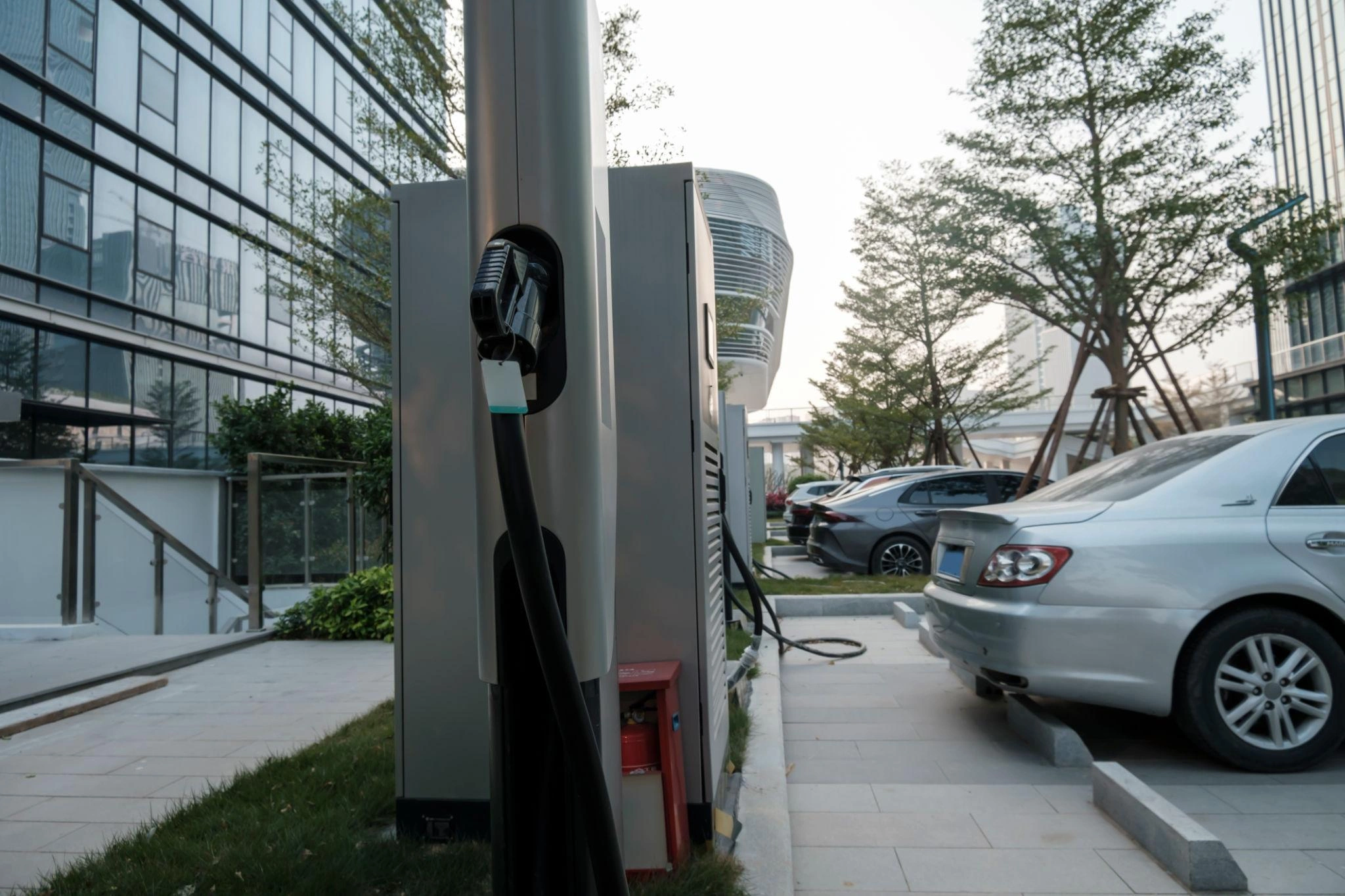
As India targets 30% EV penetration by 2030, one Hyderabad tech company is putting money directly in employees’ pockets to accelerate the shift
India’s corporate EV adoption story just got a compelling new chapter — and it’s coming out of Hyderabad’s booming IT corridor.
Aza Consulting Services, a Hyderabad-based technology and consulting firm, has formally launched what it calls a Green EV Policy — a structured financial incentive programme designed to help employees transition from petrol and diesel vehicles to electric alternatives. The move positions the company among a still-small but growing cohort of Indian corporates treating employee commute sustainability as a business priority, not just a reporting footnote.
What the Policy Offers
The framework is straightforward and immediately actionable. Employees purchasing a new electric four-wheeler receive a direct cash subsidy of ₹10,000. Those opting for an electric two-wheeler — an e-bike or e-scooter — receive ₹5,000 upfront.
These are not reimbursement schemes requiring lengthy paperwork. They are direct cash payouts, structured to lower the psychological and financial barrier to switching at the point of purchase.
To put this in context: India’s electric two-wheeler segment sold over 9.5 lakh units in FY2024, growing nearly 30% year-on-year, according to VAHAN data. The average price of a popular e-scooter like the Ola S1 or TVS iQube sits between ₹1 lakh and ₹1.5 lakh. A ₹5,000 subsidy on top of existing FAME and state government incentives meaningfully shifts the on-road cost calculus for a mid-level employee.
For four-wheelers, where entry-level EVs like the Tata Punch EV start at approximately ₹10 lakh, a ₹10,000 corporate top-up adds to a growing stack of demand-side incentives — including central government benefits and Telangana’s own EV policy, which offers road tax exemptions and registration fee waivers.
The Macro Context Driving the Decision
Aza Consulting’s management was explicit about the timing. The policy launch is directly linked to rising anxiety around global crude oil price volatility, fuel supply chain risk tied to geopolitical tensions in West Asia, and the downstream impact on employee commuting costs.
This is not an abstract concern. Brent crude has remained above $80 per barrel through much of 2024–25, and petrol prices in Hyderabad have hovered around ₹107–₹110 per litre — a sustained pressure point for the city’s large workforce of IT and consulting professionals, many of whom commute daily from peripheral areas like Kondapur, Bachupally, and Kompally.
By anchoring the Green EV Policy to energy security as much as environmental values, Aza Consulting has made a decision that resonates with both the financial realities its employees are navigating and the broader national push to reduce India’s fossil fuel import dependency — which stood at over $132 billion in FY2024.
Aligned With National Direction
The initiative lands in deliberate alignment with Prime Minister Narendra Modi’s ongoing push for corporate India to actively participate in the country’s green energy transition. India has committed to achieving 500 GW of renewable energy capacity by 2030 and reducing the emissions intensity of its GDP by 45% from 2005 levels — targets that require demand-side action, not just supply-side infrastructure investment.
Alongside the cash incentives, Aza Consulting has encouraged employees to adopt carpooling practices and make greater use of Hyderabad’s public transit infrastructure — including the Hyderabad Metro Rail, which currently serves over 4.5 lakh daily commuters across its 69.2 km network. The company has also upgraded its internal corporate fleet, replacing conventional vehicles with electric cars and scooters for office logistics and operations — signalling that leadership is walking the same path it is asking employees to take.
Why HITEC City Is Watching
Hyderabad’s IT ecosystem is one of the most concentrated clusters of knowledge workers in Asia. HITEC City and Gachibowli together house the India offices of hundreds of multinational technology companies alongside a dense layer of domestic IT services, consulting, and startup firms. The corridor employs an estimated 6 lakh-plus professionals, a large proportion of whom are vehicle-dependent due to uneven last-mile connectivity.
If Aza Consulting’s model demonstrates measurable impact — reduced commuter carbon footprint, improved employee financial wellbeing, and visible ESG reporting value — it creates a replicable template that larger firms in the same geography could adopt with relatively low incremental cost.
India’s SEBI BRSR framework, which mandates ESG disclosures for the top 1,000 listed companies by market capitalisation, is already pushing large corporates to track and report Scope 3 emissions — which include employee commuting. A policy like Aza’s directly addresses that reporting category while also creating a genuine culture of sustainability ownership, rather than a compliance checkbox.
The Broader Signal
India registered over 1.9 million EVs across all categories in FY2024. The government’s PM E-DRIVE scheme has allocated ₹10,900 crore to accelerate EV adoption through FY2026. Public charging infrastructure has crossed 12,000 operational stations nationally, with Telangana among the states actively expanding its network.
Corporate green mobility policies like Aza Consulting’s represent the next layer of the ecosystem — one where employers become active participants in shifting commuting behaviour, rather than passive observers of government-led infrastructure rollout.
The financial case for employees is already strong. An electric two-wheeler costs approximately ₹1–1.5 per kilometre to run, compared to ₹4–5 per kilometre for a petrol equivalent at current fuel prices. For a Hyderabad professional commuting 30 kilometres daily, the annual fuel saving alone can exceed ₹30,000–₹40,000.
Add a corporate subsidy, state incentives, and lower maintenance costs — and the switch becomes a financial decision as much as an environmental one.
That is precisely the framing that makes Aza Consulting’s Green EV Policy worth watching beyond Telangana.

Ruchi Kumar is the associate editor at Entrepreneur News Network and TVW News India, where she leads editorial strategy, brand storytelling, and startup ecosystem coverage. With a strong focus on innovation, business, and marketing insights, he curates impactful narratives that spotlight India’s evolving entrepreneurial landscape. She has written extensively on fintech, AI and emerging startups.