
At Beyond Expo 2026, amid a buzzing floor of hardware innovations, one booth kept drawing curious hands and lingering glances. Makera, the Shenzhen-based desktop CNC machine company, had something rare on display — not just a product, but a philosophy. Founded by a maker for makers, Makera has spent over seven years quietly solving a problem that hobbyists, engineers, and small studios know all too well: how do you get industrial-grade precision without the industrial footprint or price tag? With machines now shipped to 67 countries and a Kickstarter campaign that raised over $10.24 million in just 45 days, the answer is clearly resonating.
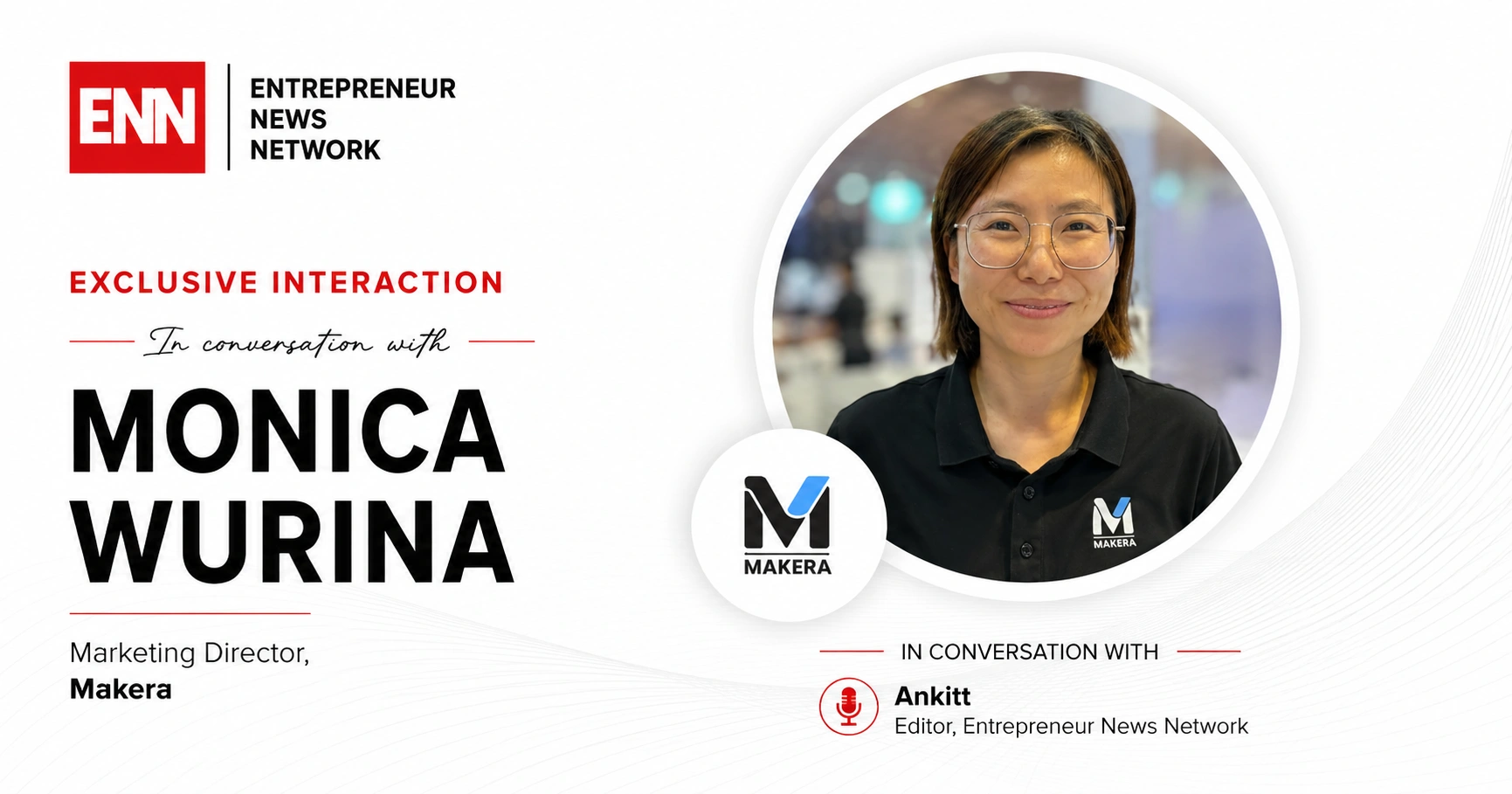
We sat down with a Monica Wurina, Marketing Director, Makera on the expo floor to dig into what makes their machines tick — from AI-powered design tools and cyclone dust collection to their bold new Makera Z1, launching at under $1,000. Here’s what they had to say.
Q: What is the biggest selling point of the Makera product? Is it price, quality, or durability? Why do customers keep coming back?
It has to be both the quality and the service. I can say that confidently because I’m part of the team — I see it firsthand. Everyone here works incredibly hard, and we genuinely treat our customers like friends. That mindset flows into every interaction and every machine we ship. But it also starts with the makers themselves. When the people building the product truly care about what they’re creating, that spirit comes through. That’s really the soul of this company.
Q: AI is everywhere these days, and I noticed you’ve mentioned AIcraft.gallery and AI modelling in your brochure. How are you integrating AI into your machines and products?
We have a community called Makarabos, and within that community we’ve built in AI tools that let users generate 3D models from text prompts or images. So if someone has no background in 3D modelling or design, they can simply describe what they want — or even upload a photo — and the AI will generate the model for them. For those who already have their own models, we have what we call Material Studio, which converts those designs into machine-readable files. Think of it like a programming language the machine understands. It tells the CNC exactly what to cut, where, and how deep.
Q: How many products can one of your machines produce in a day? How do you measure production output?
It really depends on the material and the size of the project. For something like a fully three-dimensional part — say, a rotary carving — each piece needs to be machined individually. But for flatter work, like metal reliefs or sheet-based parts, you’re working from a stock plate and can batch multiple pieces at once. The work area on a three-axis machine, for example, is 200mm by 200mm by 100mm. So if your project is small relative to that area, you can fit several pieces on one plate and run them together. The stock size and project size are really the two variables that determine throughput.
Q: Dust is a well-known challenge in CNC machining — a lot of it gets generated during operation. How does Makera address that?
We actually developed our own cyclone dust collector, and it’s designed to integrate directly with the machine. What makes it smart is that it doesn’t need to be manually adjusted — it communicates with the machine through a data connector, so the two systems talk to each other and automatically regulate the suction power as needed. On top of that, the machine has a full enclosure — a cover — that keeps dust contained inside. The cyclone collector then pulls nearly all of that dust into the collection bin. We’ve also built in what we call an aerial dust collection system, which blows dust from the top of the workpiece down to the base of the machine, making it much easier to collect and clean up. It keeps the workspace remarkably tidy.
Q: Are your competitors also offering dust collection solutions, or is this unique to Makera?
You can technically connect any compatible third-party dust collector to our machines — we don’t lock you in. But we do recommend our own system because the integration is seamless. The automatic power adjustment, the data connection between the machine and the collector, the dual-function blowing and suction — that level of coordination is something you won’t get by mixing and matching brands.
Q: If a customer runs into a technical issue, how does your support team help them resolve it — do you use video tools or remote diagnostics?
We have a dedicated global support team — we even have colleagues based in South Africa. If a customer encounters a serious issue, our team can jump on a video call and diagnose the problem in real time. We can watch them operate the machine, identify what’s going wrong, and walk them through a fix. Beyond live support, we also run a YouTube channel where we regularly post tutorials — everything from how to use the machine to how to troubleshoot common issues. It’s a growing knowledge base that customers can tap into anytime.
Q: Since you have customers in 67 countries, are your tutorial videos only in English? Have you considered localising content for different regions?
Right now most of our videos are in English, but we do provide subtitles. YouTube also has its own built-in AI translation features, and our customers do use those. We’re aware that AI-generated translations can sometimes be imperfect, so we’re being thoughtful about how we approach it — but it’s definitely something we’re actively exploring. Our sister brand, Fnmaker, already offers support in more languages, so we’re learning from that experience.
Q: Many Chinese companies scale globally through channel partners. Is that part of Makera’s strategy too?
Absolutely. We already have a strong and growing network of channel partners around the world. If you search “Makera” on YouTube, you’ll find dozens of videos from independent creators and resellers who’ve bought the machines, tested them, and shared their honest experiences. That organic community has been one of our most powerful growth channels. And for anyone interested in becoming a channel partner or simply wanting to learn more, the best starting point is our website — there’s a live chat that connects you with the right person on our team.
Q: What inspired the creation of Makera, and how has the vision evolved since the beginning?
The company was founded by Josh, and the story starts with him being a maker himself. He was building a radio-controlled plane model and needed custom parts — parts that were strong enough to survive a crash but light enough to fly. The traditional process was painfully slow: design something, send it to a factory, wait for it to come back, test it, find a problem, send it back again. That back-and-forth cycle was killing his momentum. He thought, what if I could have a small CNC machine right here on my desk? He looked at what was available — there were some DIY desktop CNC kits — but the precision was unreliable, and they were open-frame designs, which meant they were loud and produced a cloud of dust. They weren’t suitable for a workspace. So he set out to build something better: enclosed, quiet, clean, and precise. That’s where Makera began. The company started developing in 2019, and we officially launched our first product, the Makera Carvera, in 2023.
Q: Can you walk us through the three products you have on display here today?
Of course. Our flagship product is the Makera Carvera — our first and still our most celebrated machine. It features an automatic tool changer, which means the machine can swap between different cutting tools on its own during a job without any manual intervention. The precision reaches up to 0.005mm, which is remarkable for a desktop machine. It can work with over 500 materials — wood, metal, plastic, PCB boards, composites, foam, and more.
The second product is the Carvera Air. As the name suggests, it’s lighter and more accessible. We removed the automatic tool changer to bring down the weight and price, but we replaced it with a quick-change system — a simple lever mechanism that lets you swap tools manually in seconds. It’s actually faster in some cases, and very intuitive.
And our newest product — the one we’re launching here at Beyond Expo — is the Makera Z1. It’ll officially be available from June 9th. The Z1 is priced at around $1,000, making it our most accessible machine yet. Like all our products, we took it to Kickstarter first. In October last year, the campaign raised over $10.24 million in just 45 days, which tells you there’s a real hunger in the market for this kind of tool.
Q: $5,999 for the Carvera and now $1,000 for the Z1 — that’s a significant price journey. Was making the machines more affordable always the goal?
Yes, that was always the direction. The Carvera at $5,999 is already dramatically cheaper than industrial CNC machines, which can cost tens of thousands of dollars. For professional makers and small studios, it’s a serious tool at a fraction of the industrial price. But we knew there were even more makers who needed something like this and couldn’t stretch to that price point. The Z1 is our answer to that. The challenge was making it affordable without making it feel like a toy. Some professional engineers, when they see a compact desktop CNC machine, assume it can’t do serious work. We want to prove that wrong. The Z1 is small, but it’s no less precise or capable — it just took years of engineering to get there.
Q: Are you looking to expand into India and neighbouring markets like Bangladesh?
We’re already there, actually — we have customers in India. You may know Fablab; they’re using our machines. We’d love to grow that presence further, and we’re actively looking for channel partners across South Asia and the broader region. If anyone reading this is interested, please do reach out through our website.
Q: Final question — why Makera? What’s your message to someone who’s considering their first CNC machine?
Makera is a genuinely versatile tool for anyone who wants to make something. Whether you’re a student doing STEM projects, a hobbyist who loves carving wood, an engineer doing rapid prototyping, or an entrepreneur building a product — this machine meets you where you are. Our slogan is “Be a Maker, Shape an Era.” We believe everyone has something worth creating. The Z1, at around $1,000, makes that more achievable than ever. And with support for over 500 materials, the possibilities are almost endless. If you want one machine that can do it all — including laser work — Makera is that machine.

Ruchi Kumar is the associate editor at Entrepreneur News Network and TVW News India, where she leads editorial strategy, brand storytelling, and startup ecosystem coverage. With a strong focus on innovation, business, and marketing insights, he curates impactful narratives that spotlight India’s evolving entrepreneurial landscape. She has written extensively on fintech, AI and emerging startups.