

The past seven days delivered a concentrated burst of robotics news that, taken together, paint a picture of an industry shifting from proof-of-concept to mass deployment. From factory floors to living rooms, from Chinese EV boardrooms to a sprawling Arizona desert test track, the machines are advancing on every front.
XPeng’s CEO Takes Personal Control of Humanoid Robot Push
The clearest signal of how seriously Chinese automakers are treating humanoid robotics came on June 10, when XPeng founder and CEO He Xiaopeng announced he would personally take the helm of the company’s robotics division — effective immediately, in addition to his existing role running the group.
He stated that the move comes as XPeng Robotics approaches mass production and commercialization, marking a critical step in the group’s strategic transformation from a “smart EV company” to a “physical AI company.” The message was unambiguous: this is no longer a side project.
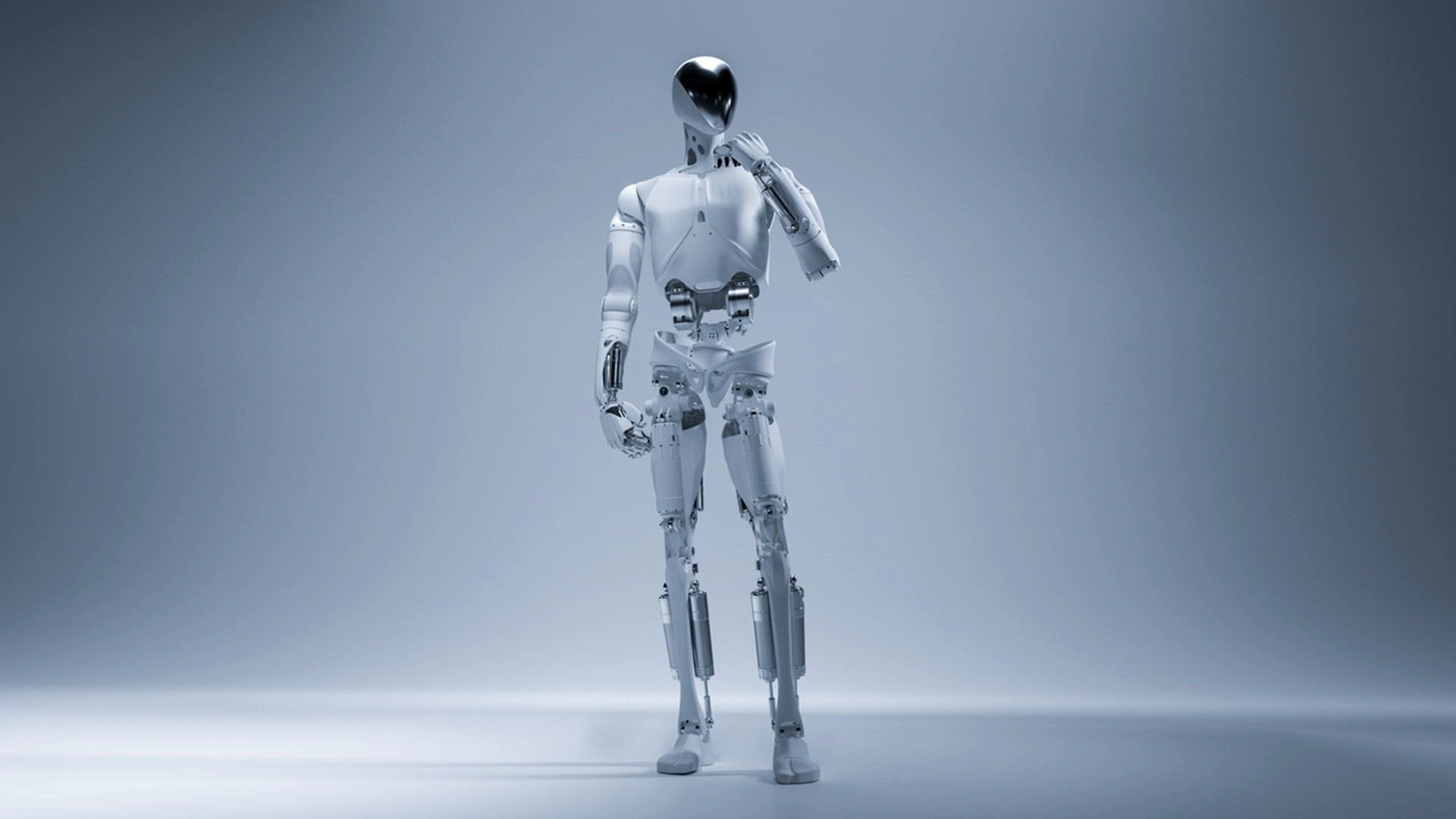
XPeng is emerging as a frontrunner in humanoid robotics among automakers, pushing toward mass production by year-end. The company’s IRON humanoid robot — which debuted in November 2025 with a fluid catwalk demonstration that drew both admiration and scepticism — is at the centre of that push. Construction of its mass-production facility began in Q1 2025, with monthly production capacity expected to exceed 1,000 units by year-end, with initial deployments prioritised in XPeng stores and campuses.
What makes He’s direct involvement significant is the strategic logic behind it. XPeng Group will leverage its automotive supply chain and manufacturing capabilities to significantly increase investment in robotics and accelerate customer deliveries. In other words, the same industrial infrastructure that builds cars will build humanoid robots — a manufacturing advantage that pure-play robotics startups simply cannot replicate.
The competitive backdrop is fierce. Globally, more than 20 major automakers have entered the humanoid robotics space. Tesla’s Optimus is advancing rapidly, and Chinese rivals including BYD and Xiaomi are close behind. By putting himself personally in charge, He is placing a very public bet on IRON’s commercial potential — and his own reputation on the line if it does not deliver.
Europe Finally Opens Its Roads to Robotaxis
For years, self-driving vehicles operated commercially in the US and China while Europe watched from the sidelines, tangled in regulatory caution. That is now changing rapidly.
In Madrid, Chinese company WeRide has announced a trial with Uber, while Munich is set to host robotaxis powered by technology from Chinese firm Momenta. In Switzerland, Apollo Go has partnered with Swiss Post on a pilot programme, while Stellantis and Pony.ai are planning a trial in Luxembourg.
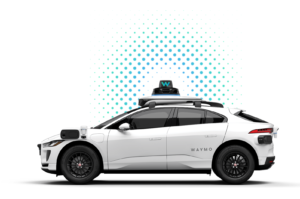
The scale of ambition is considerable. Waymo says it operates around 3,000 driverless taxis across a dozen US cities. Apollo Go reports a similar-sized fleet operating in 27 Chinese cities and Dubai. Pony.ai has about 1,700 vehicles and aims to expand to 3,500 by the end of 2026, while WeRide operates around 1,000.
Europe’s opening is being facilitated largely through ride-hailing platforms. Uber, Pony.ai, and Rimac-backed Verne have announced a partnership to launch Europe’s first commercial robotaxi service, starting in Zagreb. CEO Dara Khosrowshahi has said Uber aims to offer robotaxi services in more than ten countries by late 2026.
London is shaping up as the most watched market. Waymo has confirmed it is planning trials there using Jaguar I-Pace vehicles, while Apollo Go has partnered with Lyft to launch its sixth-generation vehicles in Germany and the UK in 2026, with plans to scale to thousands across Europe.
The geopolitical dimension here is worth noting. Chinese robotaxi companies — WeRide, Apollo Go, and Pony.ai — are moving into Europe at pace, while American incumbents have largely prioritised their domestic markets. Europe’s regulators and governments will soon face a strategic question about whose autonomous vehicle technology they want embedded in their transport infrastructure.
UBTECH Launches UWORLD — and Points Humanoid Robots Toward Your Living Room
Industrial robots have been operating in factories for decades. What is new in 2026 is the serious attempt to bring humanoid robots into people’s homes — and UBTECH’s launch of its UWORLD consumer brand this week is the most significant move yet in that direction.
Chinese robotics company UBTECH has launched UWORLD, a new consumer-focused brand, along with its U1 series of humanoid robots. The move marks the company’s expansion from industrial automation into the home robotics market.
Full-size humanoid products brought in RMB 820.6 million (approximately $113 million) in 2025, accounting for 41.1% of UBTECH’s total revenue. The company shipped 1,079 humanoid units during 2025. That commercial foundation in industrial settings is now being leveraged for consumer ambition.
The U1 series brings technologies developed for safe human interaction, precision work, and autonomous operation in complex industrial environments into everyday household settings. The robots come in male and female variants, standing 183 cm and 168 cm respectively, featuring lifelike silicone skin, realistic hair, expressive facial features, and 88 degrees of freedom throughout the body.
UBTECH is working to slash manufacturing costs for household adoption, with a long-term goal of driving humanoid manufacturing costs down by 20% to 30% annually, targeting a sub-$20,000 unit production cost by 2030. At current costs of around 500,000 yuan per unit, consumer adoption remains a distant prospect for most households — but the trajectory of cost reduction in robotics is following a familiar technology curve.
The deeper story here is strategic. China is making a deliberate play to ensure that when humanoid robots become a mass-market product category, they carry Chinese brand names. UBTECH, having already proven its technology in automotive and logistics settings for Airbus, NIO, and FAW-Volkswagen, is better positioned than most to cross that gap.
Wing and Walmart Bring Drone Delivery to 7 New US Cities
Drone delivery has been a persistent “next year” story for over a decade. This week’s announcement from Wing and Walmart suggests it is finally becoming a this-year reality.
Wing Aviation and Walmart announced a major expansion of their drone delivery partnership, adding seven metropolitan areas to Walmart’s growing network: Memphis, New Orleans, Philadelphia, Phoenix, San Diego, the San Francisco Bay Area, and Salt Lake City.
This expansion will bring Wing and Walmart’s total service footprint to nearly 20 US markets nationwide, as part of a plan to build a network of over 270 locations to reach more than 40 million Americans by 2027. The partnership has already crossed a meaningful milestone — the companies have completed over one million commercial deliveries together to date.
The operational specs are notable. Wing’s drones can deliver goods in as quick as 30 minutes and travel up to 60 miles per hour, delivering items ranging from ingredients and electronics to household goods. The aircraft hover over a drop zone and lower packages on a tether system rather than landing — a design that allows deliveries to single-family homes, apartment buildings, and commercial zones alike.
“Our work with Walmart has shown that drone delivery isn’t just a novelty — it’s a service many customers count on multiple times per week,” said Heather Rivera, Wing’s chief business officer.
The broader significance of this expansion is that it normalises aerial logistics at a scale that makes the underlying economics viable. Once a network covers 40 million Americans across 270 locations, it becomes the kind of infrastructure that competitors must match or cede ground on.
Waymo Buys Apple’s Failed Car Dream — for $220 Million
The most symbolically loaded deal of the week came not from a startup but from a property transaction that tells a defining story about where autonomous vehicle development has ended up.
Waymo, the robotaxi company owned by Alphabet, has acquired the 5,500-acre proving ground in Wittmann, Arizona, that Apple used to test prototypes for Project Titan, according to Maricopa County filings. Waymo purchased the massive site for $220 million from Route 14 Investment Partners, a shell company linked to Apple.
Apple acquired the property in 2021 for $125 million, after leasing it for years for its now-discontinued electric vehicle project. Project Titan — Apple’s secretive, decade-long, multi-billion-dollar attempt to build a self-driving car — was shut down in early 2024 without ever producing a commercial vehicle. Waymo, which has spent 15 years methodically building and deploying actual autonomous driving technology, now owns the very facility where Apple’s ambitions were quietly buried.
The Arizona test site has become the largest closed-course testing facility in Waymo’s network, featuring a 115-acre urban driving training area, a 35-acre vehicle dynamics test zone, a four-mile-long high-speed oval track, and highway simulation segments designed for autonomous driving tests.
Waymo needs the space. The company currently runs more than 500,000 weekly rides across 11 cities and is valued at $126 billion following a $16 billion funding round in February. Its fleet currently numbers almost 4,000 vehicles, with plans to scale to tens of thousands per year.
The symbolism is hard to miss. Apple — one of the wealthiest companies on the planet — poured billions into developing a self-driving car and came away with nothing to show for it. Waymo, which has been methodically building actual autonomous driving technology for over 15 years, now owns the very facility where Apple’s ambitions went to die.
The Bigger Picture
Read together, this week’s developments tell a coherent story. Humanoid robots are moving from demonstration to deployment. Autonomous vehicles are expanding from controlled markets into new geographies. Drone logistics are crossing the threshold from novelty to infrastructure. And the companies winning these races — whether Waymo in autonomous driving, Wing in aerial delivery, or UBTECH and XPeng in humanoids — are those that made patient, long-term bets on operational scale rather than splashy concepts.
The robotics revolution has been arriving for years. This week, it arrived a little faster.
NEURA Closes One Of The Largest Funding Rounds In Humanoid Robotics History

Ruchi Kumar is the associate editor at Entrepreneur News Network and TVW News India, where she leads editorial strategy, brand storytelling, and startup ecosystem coverage. With a strong focus on innovation, business, and marketing insights, he curates impactful narratives that spotlight India’s evolving entrepreneurial landscape. She has written extensively on fintech, AI and emerging startups.