

What if the next interface you use isn’t a screen, a button, or your voice — but a blink, a clenched jaw, or the subtle tilt of your head? That’s the premise behind Naqi Logix, a neurotechnology company that has turned an ordinary-looking earbud into what it calls an “Invisible User Interface” — a way to control phones, computers, robots, and AR glasses using nothing but the electrical signals your face and head already produce. Born out of a request from a quadriplegic user who was one step away from considering a brain implant, the technology has since outgrown its original purpose: Naqi Logix now believes able-bodied users — anyone wearing gloves, working in a noisy warehouse, or simply too busy to look at a screen — are just as much its market as the accessibility community it was built for. In this exclusive conversation with Ankitt Y, Editor ENN, Naqi Logix’s Chief Business Officer Sandeep Arya — talks about why India is already part of the company’s roadmap, how Naqi Logix plans to scale without ever becoming a hardware company, and why the firm is deliberately staying flexible on pricing, partnerships, and even the insurance question that could decide whether the technology spreads in markets like India at all.

THE INTERVIEW
ENN: Sandeep, thank you for joining us. For our readers who are hearing about Naqi Logix for the first time, can you tell us about yourself and your background?
Sandeep Arya: Hi everyone, my name is Sandeep Arya. I’m the Chief Business Officer at Naqi Logix. I have more than two decades of commercialisation, strategic partnership, and management consulting experience. I’ve worked mainly with large tech companies — Hewlett-Packard, Dell, and most recently Samsung Electronics, where I spent 7.5 years in South Korea followed by another 5 years in Silicon Valley at Samsung’s office there. I joined Naqi Logix two years ago as Chief Business Officer, mainly to take the product and the technology to market and to build strategic partnerships with companies around the world.
ENN: India is a massive market for almost every consumer product category. Do you see India as a market for Naqi’s technology specifically?
Sandeep Arya: Definitely. In fact, India is one of the largest consumer markets in the world, without doubt, simply by population. But beyond that, we’re already very close to India — our engineering team is based out of Hyderabad, and we’ve been working with them from day one. Our intent has always been to take this technology global, and having a team in India makes it a very obvious market of choice for us.
ENN: Tell us more about who this product is actually for. Since it’s neurological in nature, is it solving a problem specifically for people who want to multitask or control devices just through subtle expressions?
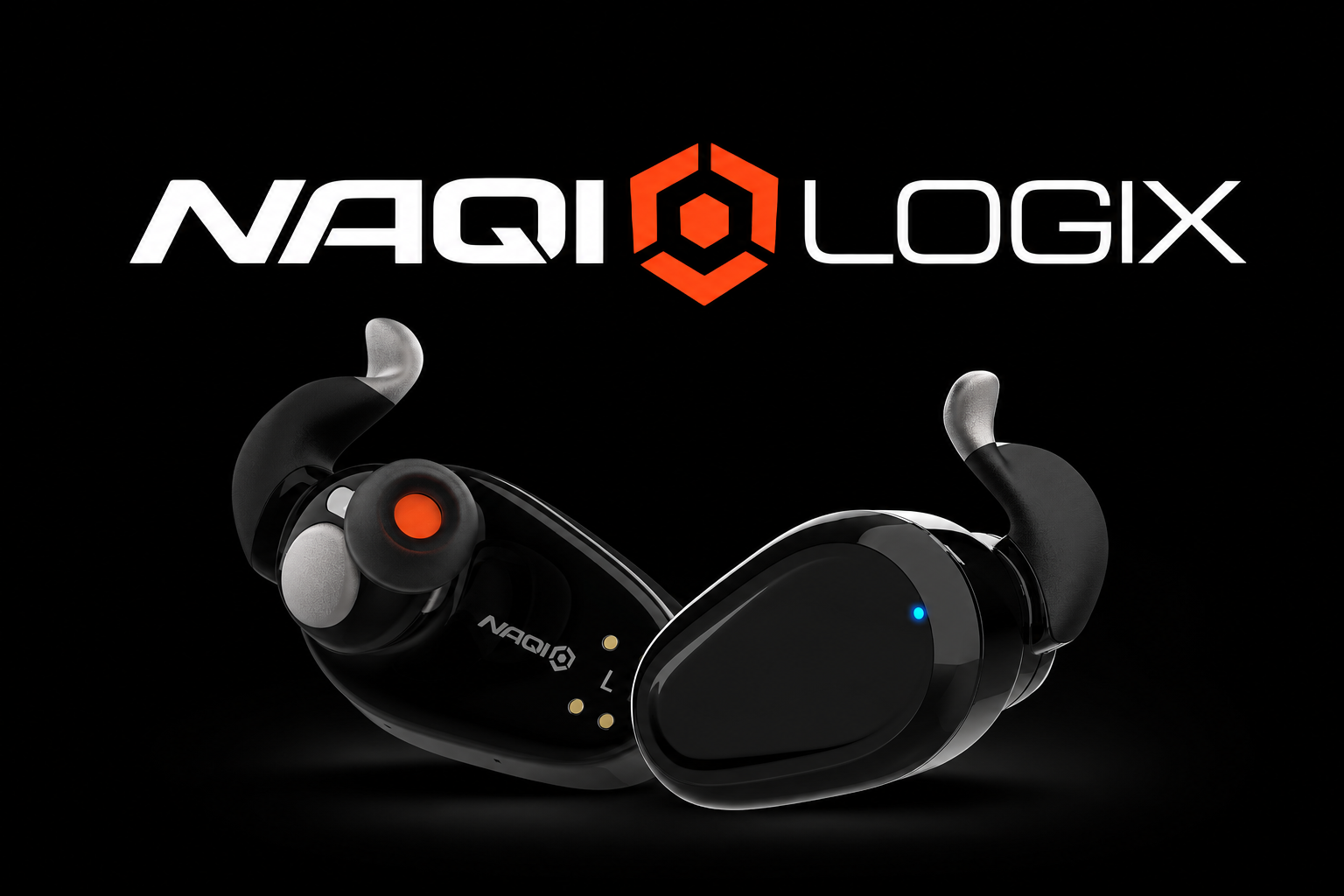
Sandeep Arya: The need for this innovation originally came from someone who was quadriplegic — meaning they couldn’t move anything below their neck. The way the technology works is: as long as you have any movement above the neck — you can chew, breathe, swallow — we capture those signals, along with subtle head movements, and our AI engine converts all of that into precise signals and controls that get sent to devices.
While it started with an accessibility need, what we realised is that able-bodied people can use this too. For example, if someone is wearing gloves, they can’t use a touchscreen — how do they interact with their device? If you’re thinking about AR glasses, how do you actually control them? Even with the humanoid robots around us today, they’re all controlled using a joystick — how do you do that without one? If you’re in a noisy environment, voice commands don’t work — how do you control things there? If your phone is in your pocket and your hands are full, how do you change a song without even looking at your phone? Or even in this interview right now — if someone called you mid-conversation, you could silently let them know you’re busy with just a blink, using Naqi, without disrupting anything.
ENN: You mentioned India is a market for you — will you be selling this directly to individuals, or partnering with healthcare institutions?
Sandeep Arya: Naqi is not a hardware company. Naqi is a platform — the earbud happens to be one form factor. Naqi technology captures human bio-signal data, and through our Naqi Hub software platform, it distributes that data to any device. The data can be captured from an earbud, from AR/VR glasses, from headphones, wrist watches, rings — whatever the form factor. We’re not going to set up a factory and run distribution ourselves. We’d rather make the platform available so others can build on top of it. We’re also working on licensing the technology so it can reach billions of people through existing networks. That’s actually why we’re here at the Lenovo Innovation Accelerator Program — we’re looking for exactly these kinds of strategic partnerships.
ENN: In healthcare specifically, the existing ecosystem already has the data and the audience. Do you see entering a new market through a partner who already has that audience as the easier path, versus building your own audience from scratch?
Sandeep Arya: I don’t think it makes sense to reinvent the wheel. If there’s an ecosystem and a partnership that’s possible, we’re definitely open to it — and that varies from country to country. We’re a North American company, so our primary first market is the US. Given that we already have a team in India, that becomes an obvious extension of our plans. But depending on how the healthcare system works, how insurance works in a given country, the right partnership looks different market to market — it’s never the same. That said, we don’t want to reinvent the wheel where partnerships are possible. Wherever we can partner, we will. Where we can’t, we’ll go direct-to-consumer. I’ve launched a lot of technologies across different markets in my career, and every market is different — so we want to stay open and flexible depending on what each market actually needs.
ENN: If someone in Dubai, the Middle East, or India wants to get in touch with the Naqi team after this interview, what’s the easiest way to reach you?
Sandeep Arya: There are multiple ways. First, you can reach out to me directly — my email is sandeep@naqilogix.com. You can also go to our website, naqilogix.com, where there are web forms our team actively monitors — I personally look at every request that comes in. We’re very proactive about responding. And of course, you can call us — the numbers listed route directly to our leadership, including myself. We’re always reachable.
ENN: One last question. India is a very price-sensitive market. How is Naqi positioned on pricing — is it subscription-based, or can people try it before committing to something longer-term?
Sandeep Arya: This product isn’t in the market yet — it hasn’t been commercialised. We’ve completed our fourth-generation prototype and are now looking at commercialisation. When it comes to pricing and go-to-market, it really varies market to market. Certain business models that exist in North America may not exist in India or Europe. Having launched global products at companies like Samsung, HP, and Dell, I’ve seen all of these models play out, and we remain flexible and open to whichever one fits. For instance, if a market has government support or insurance coverage, the pricing model can look very different.
Our intent is to bring this technology to billions of people — and that doesn’t necessarily mean we’re the ones selling it directly. It could also be a “Naqi Inside” model, where the technology powers someone else’s hardware. A company already making earbuds, with their own distribution and consumer base, could have Naqi inside their product — we don’t need to build that ourselves. We remain open and flexible to that model too.
ENN: You mentioned insurance — and that’s significant, because India’s insurance system works very differently from the US. Would Naqi work directly with India’s healthcare system so that a subscription could be covered under insurance, given how much that could affect consumer adoption?
Sandeep Arya: As I mentioned, every market and every system is different, and we remain open and flexible to whatever each market needs. If India’s system requires us to work with certain partners in a certain way to penetrate the ecosystem, we’re open to that.
I should clarify — I didn’t say we’re necessarily selling this as a subscription product. We remain open on pricing entirely. It could be hardware-based pricing, subscription-based, or both, depending on what makes sense for that local market. Sometimes people don’t want to go through insurance because it’s too much hassle, or they simply can’t access it. We want to make sure the technology first solves the basic problem that exists — and it’s worth remembering this isn’t only an accessibility or healthcare solution. It goes well beyond that. For industrial use cases, for example, there’s no healthcare system involved at all — those B2B partnerships look completely different and aren’t necessarily tied to a single pricing model. It really depends on the use case and the market.
Can India’s $60 Billion Home Services Playbook Work in Southeast Asia? Inside the Numbers

Ruchi Kumar is the associate editor at Entrepreneur News Network and TVW News India, where she leads editorial strategy, brand storytelling, and startup ecosystem coverage. With a strong focus on innovation, business, and marketing insights, he curates impactful narratives that spotlight India’s evolving entrepreneurial landscape. She has written extensively on fintech, AI and emerging startups.