

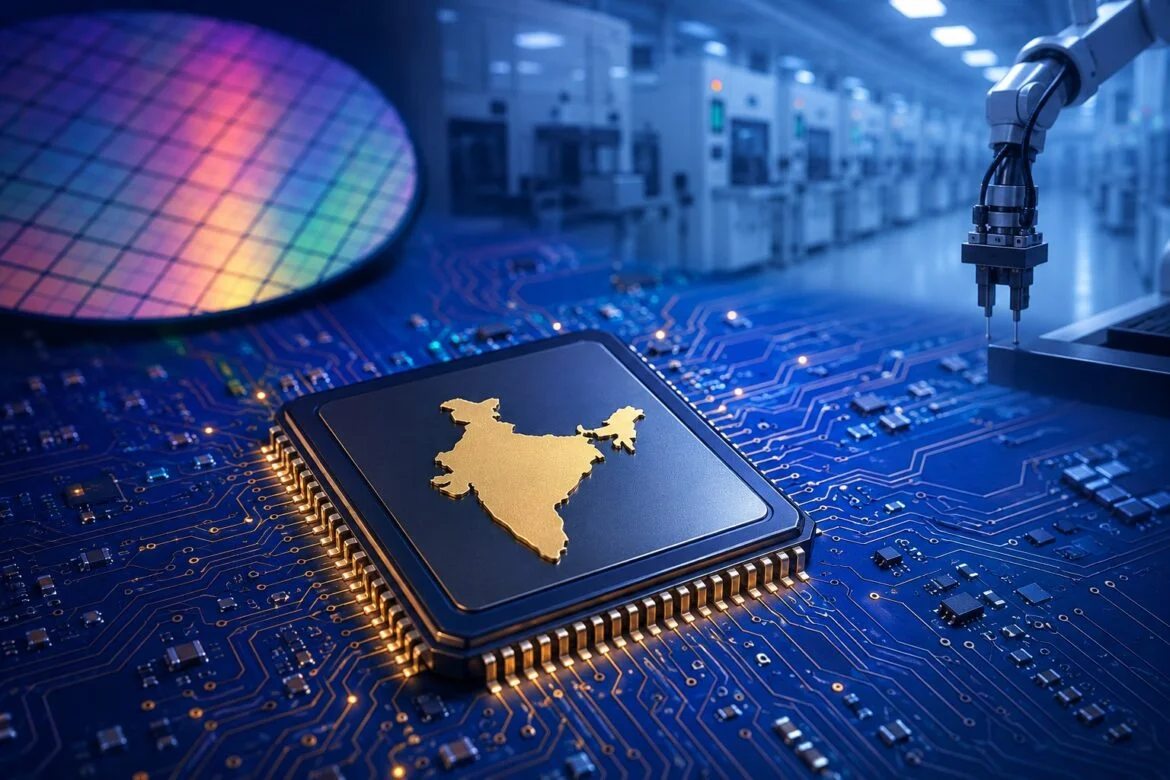
New Delhi: In a major push towards making India a global semiconductor manufacturing and design hub, the Union Cabinet, chaired by Prime Minister Narendra Modi, has approved Semicon 2.0, the next phase of the India Semiconductor Programme under the India Semiconductor Mission (ISM).
The initiative comes with a total budget outlay of ₹1,27,500 crore, aimed at strengthening India’s semiconductor design, manufacturing, research, talent development, and supply chain ecosystem.
The approval marks a significant milestone in India’s ambition to become a trusted global destination for semiconductor innovation and advanced electronics manufacturing.
Semicon 2.0 to Build a Comprehensive Semiconductor Ecosystem
According to details released under the India Semiconductor Mission, Semicon 2.0 has been designed with a holistic approach to develop a resilient and globally competitive semiconductor ecosystem.
The programme will focus on six strategic pillars covering the complete semiconductor value chain.
1. Semiconductor Chip Design
The programme will support the development of both strategic and commercial semiconductor chips, encouraging innovation in indigenous chip design while strengthening India’s fabless semiconductor ecosystem.
2. Machines and Materials
Semicon 2.0 will promote investments in semiconductor manufacturing equipment and critical materials, including:
- Chemicals
- Industrial gases
- Semiconductor materials
- Manufacturing equipment
Developing these capabilities is expected to reduce import dependence and strengthen domestic supply chains.
3. Expansion of Semiconductor Fabrication Facilities
The government plans to support the establishment of additional semiconductor fabrication plants (fabs) covering:
- Silicon chips
- Display technologies
- Compound semiconductors
- Advanced semiconductor manufacturing
The expansion aims to increase domestic production capacity and enhance India’s role in the global semiconductor supply chain.
4. Strengthening the ATMP/OSAT Industry
Semicon 2.0 also focuses on expanding India’s Assembly, Testing, Marking and Packaging (ATMP) and Outsourced Semiconductor Assembly and Test (OSAT) capabilities.
The programme will support both:
- Advanced semiconductor packaging
- Legacy packaging technologies
This segment plays a critical role in semiconductor manufacturing and export competitiveness.
5. Research and Development
Recognising innovation as a key growth driver, the programme places significant emphasis on:
- Advanced semiconductor research
- Next-generation technologies
- Innovation-driven product development
Enhanced R&D investments are expected to support India’s long-term technological competitiveness.
6. Talent Development
The initiative also prioritises the development of a highly skilled semiconductor workforce by strengthening education, design capabilities, manufacturing expertise, and industry-ready talent.
Building a strong talent pipeline will be critical as India scales semiconductor manufacturing and attracts global investments.
Strengthening India’s Semiconductor Mission
The approval of Semicon 2.0 builds upon the government’s ongoing efforts under the India Semiconductor Mission, which seeks to establish India as a global hub for semiconductor design, fabrication, packaging, and electronics manufacturing.
The programme aligns with broader national initiatives such as:
- Digital India
- Make in India
- Atmanirbhar Bharat
- Electronics Manufacturing Growth
With global semiconductor demand expected to rise significantly over the coming decade, India is positioning itself to become an important player in strategic chip manufacturing and advanced electronics production.
Driving India’s Technology Future
The ₹1.27 lakh crore programme is expected to accelerate investments across semiconductor manufacturing, attract global technology companies, strengthen domestic capabilities, and create thousands of high-skilled jobs.
By supporting chip design, manufacturing infrastructure, advanced packaging, research, and talent development simultaneously, Semicon 2.0 aims to establish a robust and resilient semiconductor ecosystem capable of supporting India’s digital economy and emerging technologies such as artificial intelligence, electric vehicles, telecommunications, defence electronics, and advanced computing.
Godrej Agrovet appoints Gaurav Pande as CEO of Creamline Dairy

Ruchi Kumar is the associate editor at Entrepreneur News Network and TVW News India, where she leads editorial strategy, brand storytelling, and startup ecosystem coverage. With a strong focus on innovation, business, and marketing insights, he curates impactful narratives that spotlight India’s evolving entrepreneurial landscape. She has written extensively on fintech, AI and emerging startups.