

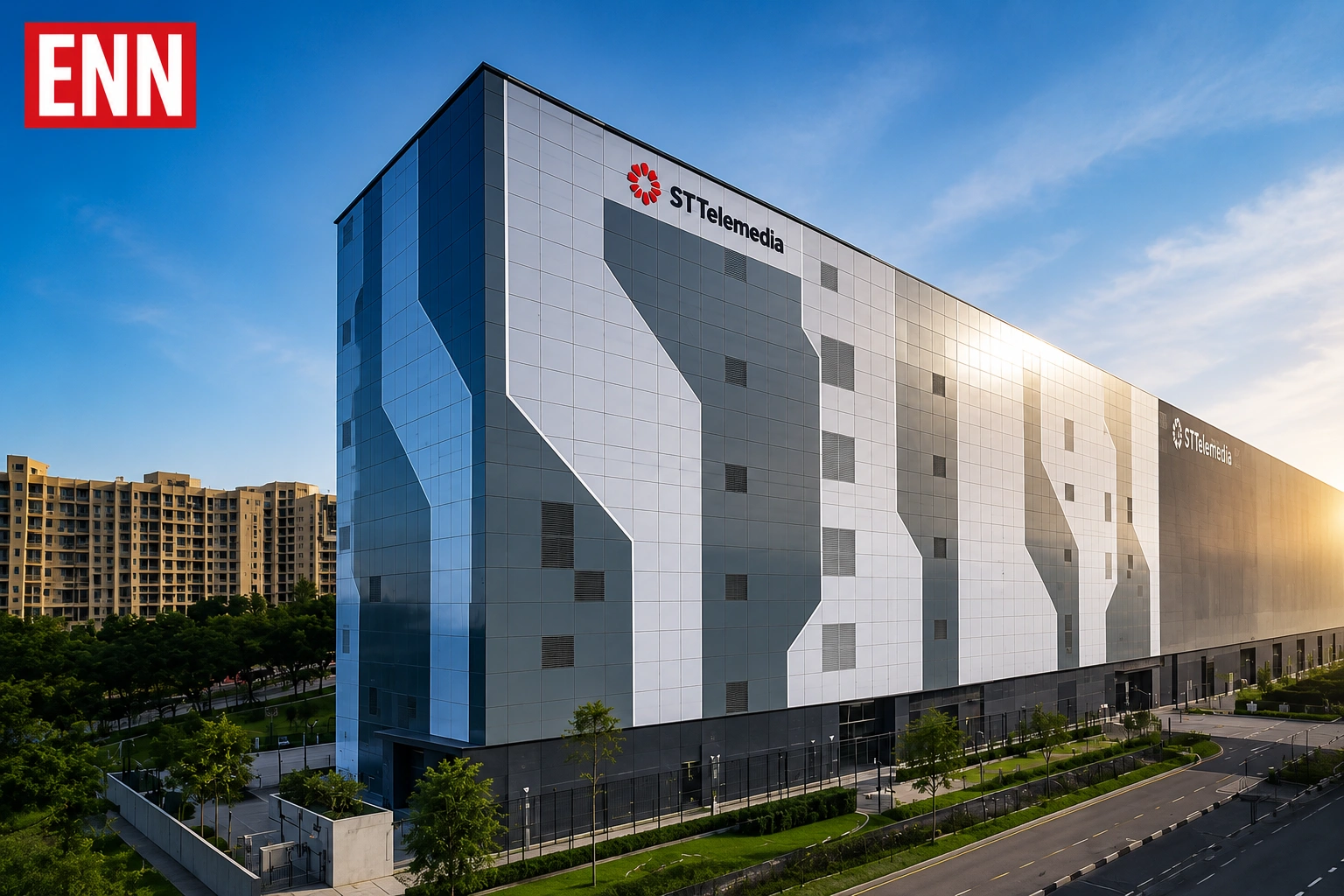
ST Telemedia Global Data Centres (India) (STT GDC India) is doubling down on India’s digital infrastructure boom with the launch of STT Jaipur 1, the first enterprise-grade colocation data centre in Rajasthan.
The new facility positions Jaipur as an emerging destination for AI infrastructure, cloud computing, and enterprise digital transformation, while extending STT GDC India’s network to 34 data centres across 10 Indian cities.
The announcement comes as demand for artificial intelligence workloads, hyperscale cloud deployments, and high-performance computing continues to drive record investments in India’s data centre sector.
A Strategic Bet on Emerging Digital Markets
Unlike previous waves of data centre development that largely focused on Mumbai, Chennai, Bengaluru, Hyderabad, and Delhi NCR, STT GDC India is now targeting high-growth regional markets.
With Jaipur rapidly evolving into a technology and business hub, the company believes the city is well positioned to support enterprises, government agencies, cloud providers, and digital-native businesses seeking low-latency infrastructure closer to users.
The launch also aligns with India’s broader push to decentralize digital infrastructure beyond traditional Tier-1 markets.
Designed for AI and High-Performance Computing
STT Jaipur 1 has been purpose-built to support next-generation enterprise workloads, including:
- Artificial Intelligence (AI)
- Machine Learning (ML)
- High-Performance Computing (HPC)
- Cloud Computing
- Enterprise Applications
- Data-intensive Digital Services
The facility has an IT design capacity of 6 MW, supported by a 10 MVA total power load, and is housed within a three-storey campus spanning 5,971 square metres.
According to the company, the infrastructure has been engineered to deliver high availability, scalability, and operational resilience required for mission-critical workloads.
Strengthening India’s AI Infrastructure
The launch further expands STT GDC India’s nationwide footprint to:
- 10 cities
- 34 data centres
- 613 MW of IT load capacity
The expansion reflects growing enterprise demand for AI-ready digital infrastructure as organisations increasingly deploy compute-intensive applications across sectors including banking, manufacturing, healthcare, retail, government, and digital services.
Industry analysts expect India’s data centre capacity to grow significantly over the coming years, fuelled by rapid cloud adoption, generative AI, enterprise digitisation, and increasing data localisation requirements.
Sustainability Built Into the Facility
Beyond computing capacity, STT Jaipur 1 has been designed with sustainability at its core.
The company said the facility incorporates energy-efficient infrastructure, operational resilience, and ESG-focused design principles to help customers expand digital operations while reducing environmental impact.
Energy efficiency has become a critical differentiator for modern data centres as operators seek to balance rising computing demand with sustainability goals and lower carbon emissions.
CEO: Infrastructure Will Define India’s Next Growth Phase
Commenting on the launch, Bimal Khandelwal, Chief Executive Officer of STT GDC India, said:
“India’s digital growth is being driven by increasing demand for data-intensive applications, cloud adoption and high-performance computing capabilities. Infrastructure will be critical in enabling this next phase of growth.”
He added that STT Jaipur 1 represents a long-term investment in Rajasthan’s digital economy.
“The launch of STT Jaipur 1 represents a strategic investment in Rajasthan’s digital future and reflects our conviction that the next wave of digital infrastructure growth will extend well beyond India’s Tier 1 cities. Rajasthan is emerging as an important destination for technology-led investment and innovation. With STT Jaipur 1, we are bringing high-performance data centre capabilities to the region, enabling enterprises, cloud providers, and public sector organisations to scale securely and efficiently. As the state’s first enterprise-grade data centre, this facility will play a pivotal role in supporting Rajasthan’s digital economy and strengthening India’s broader AI infrastructure ecosystem.”
Why It Matters
India’s digital economy is entering a new phase where infrastructure is becoming as critical as software innovation.
The rapid adoption of generative AI, cloud-native applications, edge computing, and enterprise digital transformation is creating unprecedented demand for secure, scalable, and AI-ready data centres.
While major metro cities continue to dominate capacity additions, operators are increasingly expanding into emerging technology hubs such as Jaipur to meet growing regional demand and improve network resilience.
The launch of STT Jaipur 1 reflects this broader industry shift toward distributed digital infrastructure capable of supporting India’s next wave of economic growth.
About STT GDC India
ST Telemedia Global Data Centres (India) is one of India’s largest AI-ready colocation data centre providers and a majority-owned subsidiary of ST Telemedia Global Data Centres, Singapore.
With more than two decades of experience, the company operates one of the country’s largest data centre platforms, managing over 613 MW of critical IT load across 34 facilities, including those under development, in 10 cities.
Its customer base includes numerous Fortune 500 enterprises, hyperscalers, cloud providers, financial institutions, and digital businesses requiring mission-critical infrastructure.
Looking Ahead
As enterprises increasingly adopt AI, cloud computing, and advanced digital technologies, investments in regional digital infrastructure are expected to accelerate.
With STT Jaipur 1, STT GDC India is positioning Rajasthan as an important node in India’s expanding digital economy while strengthening the country’s AI-ready infrastructure for the next decade of innovation and enterprise growth.

Ruchi Kumar is the associate editor at Entrepreneur News Network and TVW News India, where she leads editorial strategy, brand storytelling, and startup ecosystem coverage. With a strong focus on innovation, business, and marketing insights, he curates impactful narratives that spotlight India’s evolving entrepreneurial landscape. She has written extensively on fintech, AI and emerging startups.