
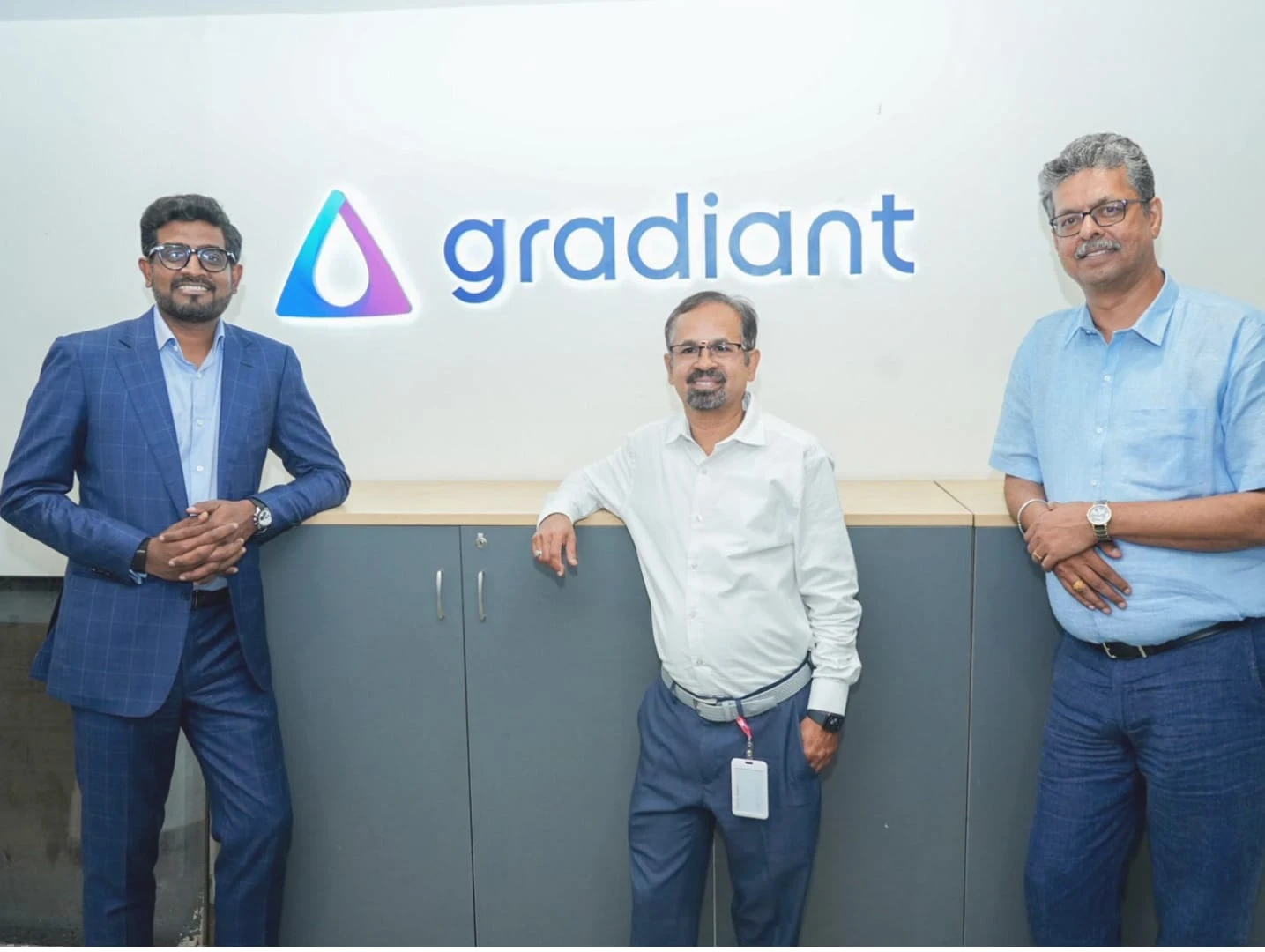
7 October 2026 – Water technology company Gradiant is expanding its presence in India with a new country leadership appointment, five new design-build contracts across semiconductor, printed circuit board (PCB) and solar manufacturing, and plans to increase its India workforce by more than 40% this year.
The company has appointed Hari Prasad as Managing Director, India, as it looks to strengthen its business across semiconductors, data centres and energy.
The expansion comes as India accelerates investments in semiconductor manufacturing, electronics and clean energy, increasing demand for reliable industrial water systems and advanced wastewater treatment.
Hari Prasad Named Gradiant India Managing Director
Hari Prasad brings nearly 30 years of experience in water technology and industrial water management to his new role.
Before joining Gradiant, he served as General Manager, Industrial Water at Pentair. His career has also included senior leadership positions across India, the Middle East and Africa.
At Gradiant, Prasad will lead the company’s India growth strategy across key industrial sectors, including semiconductor manufacturing, data centres and energy.
Five New Contracts Across High-Growth Manufacturing Sectors
Gradiant has secured five new design-build contracts covering semiconductor, PCB and solar manufacturing.
One of the contracts represents a repeat award from a global chipmaker expanding its fabrication facility, highlighting continued demand for Gradiant’s water-management solutions from semiconductor manufacturers.
Under the new projects, Gradiant will provide technologies covering:
- Ultrapure water systems
- Industrial wastewater treatment
- Zero liquid discharge (ZLD) systems
- High-water-recovery solutions
These systems are designed to support continuous manufacturing operations while helping industrial facilities meet India’s stringent wastewater discharge requirements.
According to Gradiant, customers selected the company based on its high water recovery, ZLD performance and speed of project execution.
Water Becomes Critical to India’s Manufacturing Expansion
As India builds out semiconductor fabs, electronics facilities and renewable-energy manufacturing capacity, water availability is emerging as an increasingly important infrastructure consideration.
Semiconductor manufacturing in particular requires highly purified water for multiple stages of production. At the same time, industrial facilities must manage wastewater while complying with regulatory requirements.
Gradiant’s business is focused on providing the water infrastructure required to support these industrial operations.
The company describes its role as building and operating the water layer supporting the AI economy, spanning chips, data centres, energy and other industrial applications.
Gradiant to Increase India Workforce by More Than 40%
To support its growing project pipeline, Gradiant plans to expand its India workforce by more than 40% this year.
Hiring will cover areas including:
- Engineering
- Project execution
- Operations
- Digital technologies
The company’s Gradiant Engineering Center in Coimbatore will also play a role in supporting projects in India and international markets.
The expansion reflects the company’s broader strategy of using India as both a project market and an engineering base serving customers globally.
India Orders Expected to More Than Double
Hari Prasad said Gradiant’s orders in India are expected to more than double this year, while revenue is projected to more than triple.
The company’s India growth strategy is closely tied to the country’s expanding manufacturing ecosystem.
As semiconductor fabs, solar plants and electronics facilities require continuous access to water, advanced treatment and ZLD systems are becoming important components of industrial infrastructure.
India and the AI Supply Chain
Gradiant CEO Prakash Govindan said India is becoming increasingly important to the global AI supply chain, particularly as the country develops capabilities across chips, circuit boards and solar cells.
The company’s strategy is to provide a single water infrastructure partner across these industrial projects, from water treatment and recovery to wastewater management and ZLD.
The repeat contract from a global chipmaker also provides an indication of the company’s efforts to build long-term relationships with semiconductor manufacturers operating in India’s growing industrial ecosystem.
ESG Significance of Industrial Water Management
The expansion also highlights the growing connection between industrial growth and water sustainability.
Manufacturing facilities require reliable water supplies, but increasing industrial activity can place additional pressure on local water resources. Technologies that improve water recovery, recycle wastewater and enable zero liquid discharge can help reduce the environmental footprint of industrial operations.
For sectors such as semiconductors, electronics and clean energy, effective water management is increasingly becoming part of the broader sustainability and resource-efficiency strategy.
The Bigger Picture
India’s manufacturing ambitions are creating demand for infrastructure beyond factories, machinery and power.
Water treatment, recycling, recovery and wastewater management are becoming strategic components of the country’s semiconductor, electronics, data centre and clean-energy expansion.
Gradiant’s latest contracts, leadership appointment and planned workforce expansion position the company to participate in that emerging industrial water opportunity while using its Indian engineering capabilities to support projects globally.

Ruchi Kumar is the associate editor at Entrepreneur News Network and TVW News India, where she leads editorial strategy, brand storytelling, and startup ecosystem coverage. With a strong focus on innovation, business, and marketing insights, he curates impactful narratives that spotlight India’s evolving entrepreneurial landscape. She has written extensively on fintech, AI and emerging startups.
1 thought on “Gradiant Expands India Operations With New Leadership and Five Water Infrastructure Contracts”