

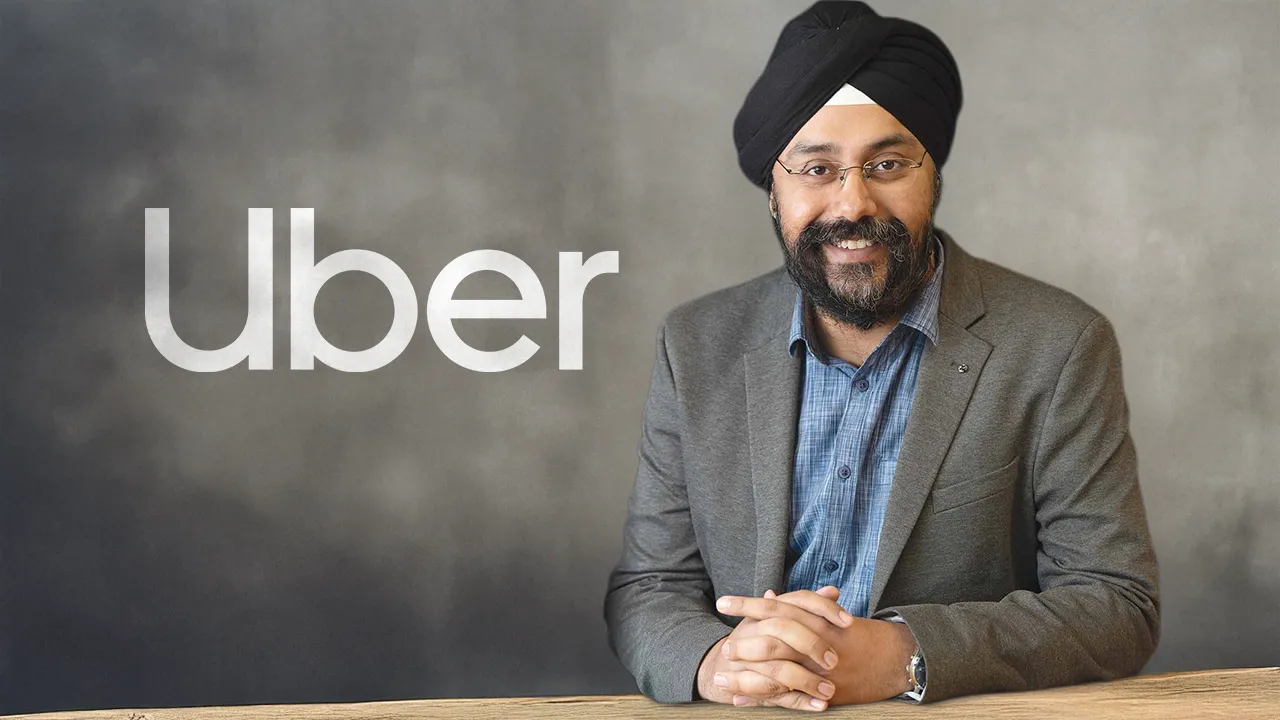
Uber India and South Asia President Prabhjeet Singh has stepped down after nearly 11 years with the global ride-hailing company, marking the end of a leadership tenure that oversaw the company’s expansion across mobility, multimodal transportation, and digital public infrastructure initiatives in the region.
The development was confirmed by an Uber spokesperson, who acknowledged Singh’s contributions while reaffirming the company’s long-term commitment to the Indian market.
“India is one of Uber’s most important markets globally, an important driver of innovation and long-term growth. The strength of our business today reflects the incredible team and foundation built over the years. We thank Prabhjeet for his leadership and lasting contributions in his decade-long journey with Uber. We remain deeply committed to our next phase of growth in India.”
According to media reports, Singh is expected to join OpenAI as its Managing Director for India, a move that would place him at the forefront of one of the world’s fastest-growing artificial intelligence companies as it expands its presence in the country.
A Decade of Leadership at Uber
Prabhjeet Singh joined Uber in August 2015 after serving as an Associate Partner at McKinsey & Company. During his tenure, he held several senior leadership positions before being appointed President of Uber India and South Asia in July 2020.
In his role, Singh led Uber’s operations across India, Bangladesh, and Sri Lanka, overseeing one of the company’s largest and fastest-growing regional businesses.
Driving Expansion Beyond Ride-Hailing
Under Singh’s leadership, Uber broadened its portfolio beyond traditional four-wheeler ride-hailing services by expanding offerings such as Uber Auto, Uber Moto, and Uber Shuttle.
The company also strengthened partnerships with public transportation authorities while supporting India’s evolving digital public infrastructure ecosystem, helping improve multimodal mobility solutions for millions of commuters.
These initiatives formed part of Uber’s broader strategy to diversify its mobility services while increasing accessibility across urban and emerging markets.
Leadership Change Comes During Uber’s India Expansion
Singh’s departure comes at a significant time for Uber’s India business.
Earlier this week, Uber CEO Dara Khosrowshahi visited India and announced the company’s plans to establish its first data centre in the country through a partnership with the Adani Group, signalling a deeper investment in India’s digital infrastructure and technology ecosystem.
The new facility is expected to strengthen Uber’s local technology capabilities while supporting future innovation and platform development.
India Remains a Strategic Market
Uber has continued to increase investments in India as competition intensifies in the country’s mobility sector.
In February 2026, the company infused nearly ₹3,000 crore (approximately $330 million) into its Indian subsidiary, Uber India Systems Pvt. Ltd., reinforcing its commitment to expanding operations, technology capabilities, and market presence.
The investment comes as Uber faces growing competition from players such as Rapido and other mobility platforms that are expanding across bike taxis, auto-rickshaws, and urban transportation services.
A New Chapter Ahead
Prabhjeet Singh’s reported move to OpenAI reflects the increasing convergence between technology leadership and artificial intelligence, as global AI companies continue to strengthen their presence in India.
For Uber, the leadership transition comes as the company enters its next phase of growth, backed by continued investments in digital infrastructure, mobility innovation, and partnerships aimed at supporting India’s rapidly evolving transportation ecosystem.

Ruchi Kumar is the associate editor at Entrepreneur News Network and TVW News India, where she leads editorial strategy, brand storytelling, and startup ecosystem coverage. With a strong focus on innovation, business, and marketing insights, he curates impactful narratives that spotlight India’s evolving entrepreneurial landscape. She has written extensively on fintech, AI and emerging startups.