
Two engineering graduates from Indian universities now sit inside the world’s most exclusive — and most scrutinised — pay bracket. When the Wall Street Journal published its closely watched annual ranking of the highest-paid chief executives at S&P 500 companies, an Indian-origin name landed in second place globally, trailing only Tesla’s Elon Musk. The executive in question isn’t a household name in the way Musk or Jeff Bezos are, which makes the number attached to him all the more striking: $821 million, or roughly Rs 7,061 crore, paid to a man who runs a real estate company most people have never heard of.
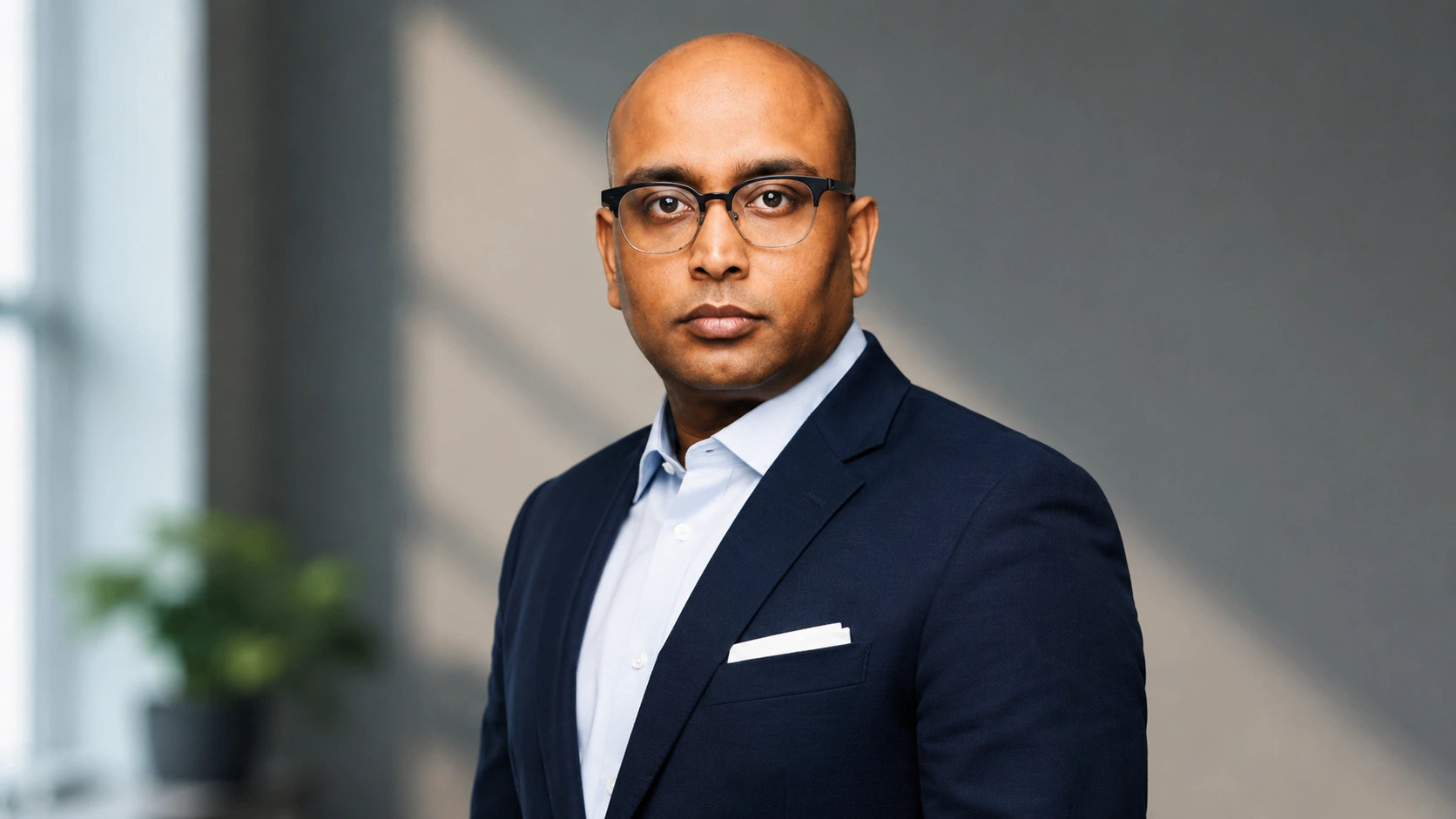
His name is Shankh Mitra, and his path to that figure runs from an engineering classroom in Kolkata to the chief executive’s office of one of America’s largest healthcare-focused real estate investment trusts.
The Number, in Context
To be clear about scale: Mitra’s $821 million is second only to Musk’s reported $158.4 billion package — a gap so vast it almost makes comparison meaningless, since Musk’s figure reflects one of the largest equity awards in corporate history rather than a typical executive pay outcome. What makes Mitra’s number more directly comparable to the rest of corporate America is that it sits among genuinely massive, but not unprecedented, nine-figure-and-above packages that the Journal’s ranking found becoming more common again. According to the report, 2025 saw more CEOs cross the $100 million pay threshold than in any year since 2021, marking a sharp rebound in executive compensation after a quieter stretch.
Mitra’s package is almost entirely stock-based — about 99% of it, according to the Journal’s analysis — including a single award worth $789 million handed out in October. That’s not money sitting in a bank account. It’s an equity grant tied to conditions that will take years, not months, to play out.

The Fine Print Behind the Big Number
Here’s where the headline figure gets more interesting, and more demanding. Half of Mitra’s award is scheduled to vest only in 2031, and only if he remains at Welltower for that entire stretch — a six-year retention clock built directly into the compensation structure. The other half is conditioned on Welltower’s market value rising by 45% and outperforming multiple stock market indexes over a five-year performance window.
In other words, this isn’t a guaranteed $821 million. It’s closer to a long-dated bet on Mitra continuing to do for Welltower what he’s already been doing since taking over: by year-end, the report noted, the shares underlying the award were already valued at just over $1 billion — meaning the position has gained roughly $200 million in value since the grant, even before any of the vesting conditions have been tested.
Who Is Shankh Mitra?
Mitra’s biography reads like a fairly classic immigrant-success arc, until the numbers involved stop being classic at all. Born and educated in India, he earned a Bachelor of Engineering in Instrumentation and Electronics Engineering from Jadavpur University in Kolkata — a public engineering institution known for producing a steady stream of graduates who go on to careers in finance, technology, and consulting far from the classrooms where they started.
After moving to the United States, Mitra pursued an MBA in Applied Value Investing at Columbia Business School, a niche, highly selective program built specifically around the value-investing discipline associated with Benjamin Graham and Warren Buffett. That academic grounding shows up clearly in the career that followed: Mitra started at professional services giant PricewaterhouseCoopers before pivoting into investment management, taking on roles at Fidelity Investments, Citadel Investment Group, and Millennium Partners, where his focus was specifically on real estate securities and portfolio management — the exact skill set that would later define his tenure running an actual real estate company rather than just investing in them.
AI Coding Costs Could Overtake Developer Salaries by 2028—Here’s Why It Matters
The Rise Inside Welltower
Mitra joined Welltower in 2016 as Senior Vice President of Finance and Investments, a mid-level entry point that gave little indication of where the next several years would lead. From there, his rise inside the company was steady and fast: Head of Investments, then Chief Operating Officer, then Chief Investment Officer, before the board appointed him Chief Executive Officer in October 2020 — a promotion that arrived in the middle of the COVID-19 pandemic, just as senior housing, Welltower’s core business, faced one of the most severe operational crises in its history.
That timing matters for understanding why Welltower’s board has been willing to back him with packages of this size. Welltower, headquartered in Toledo, Ohio, is a real estate investment trust focused on senior housing, assisted living, and healthcare real estate across the United States, the United Kingdom, and Canada — a sector the company itself describes as sitting at the center of the “silver economy,” the demographic wave of aging populations driving long-term demand for senior housing. Since Mitra took over, Welltower’s senior housing operating portfolio has posted more than a dozen consecutive quarters of same-store net operating income growth exceeding 20%, and the company’s market capitalisation has grown to roughly $155 billion, making it one of the largest REITs in the world by that measure. Mitra has also pushed the company toward unconventional bets for a real estate firm, including a data science and machine learning platform, Welltower 3.0, that the company has begun licensing to other businesses — a sign of how far Mitra has steered Welltower from a traditional landlord model.
Nikesh Arora: The Other Indian-Origin Name on the List
Mitra wasn’t the only executive of Indian origin to appear in the Journal’s top-10 ranking. Palo Alto Networks CEO Nikesh Arora placed eighth globally, with total compensation of $100 million — a figure that, in any other year, might itself have been the headline, but was overshadowed by Mitra’s package roughly eight times larger.
Arora’s own academic path took him from a B.Tech in Electrical Engineering at the Institute of Technology, Banaras Hindu University, to an M.S. in Business Administration from Northeastern University and an M.S. in Finance from Boston College. His career before Palo Alto Networks included a high-profile stint as President and Chief Operating Officer of SoftBank Group, and nearly a decade at Google, where he rose to Senior Vice President and Chief Business Officer — one of the most senior roles inside the company during its peak advertising-growth years.
Who Else Made the List
Rounding out the Journal’s broader ranking of the highest-paid CEOs were George Kurtz of CrowdStrike Holdings, Hock Tan of Broadcom, David Zaslav of Warner Bros. Discovery, Stephen Schwarzman of Blackstone, and David Solomon of Goldman Sachs — a roster spanning cybersecurity, semiconductors, media, private equity, and investment banking, underscoring that this year’s pay surge wasn’t confined to any single industry.
One notable name was missing entirely, but not because his pay fell short: Figma CEO Dylan Field’s $864 million package — which would have ranked ahead of Mitra’s — was excluded from the ranking because Figma is not a constituent of the S&P 500, the index the Journal’s methodology was built around. Had Field been eligible, Mitra’s position in the global pay rankings would likely have shifted to third rather than second, a reminder that “highest-paid CEO” rankings are usually bounded by index membership rules that can quietly leave bigger numbers off the list.
Why This Story Resonates
Beyond the eye-catching figure, Mitra’s story lands at a moment when conversations about executive pay, equity-heavy compensation structures, and Indian-origin leadership at the top of corporate America are all running simultaneously. His package is also a useful real-world illustration of how modern CEO pay actually works: not as a salary check, but as a multi-year wager, structured around specific performance hurdles, that pays out enormously if the bet succeeds and substantially less if it doesn’t. Whether the remaining vesting conditions on Mitra’s award are ultimately met will depend on whether Welltower’s strong recent run, built on a structural bet on an aging population, can be sustained over the long performance window his pay package is tied to.
Sources: The Wall Street Journal; Storyboard18; ThePrint; McKnight’s Senior Living; Senior Housing News; StockAnalysis.com.

Ruchi Kumar is the associate editor at Entrepreneur News Network and TVW News India, where she leads editorial strategy, brand storytelling, and startup ecosystem coverage. With a strong focus on innovation, business, and marketing insights, he curates impactful narratives that spotlight India’s evolving entrepreneurial landscape. She has written extensively on fintech, AI and emerging startups.