

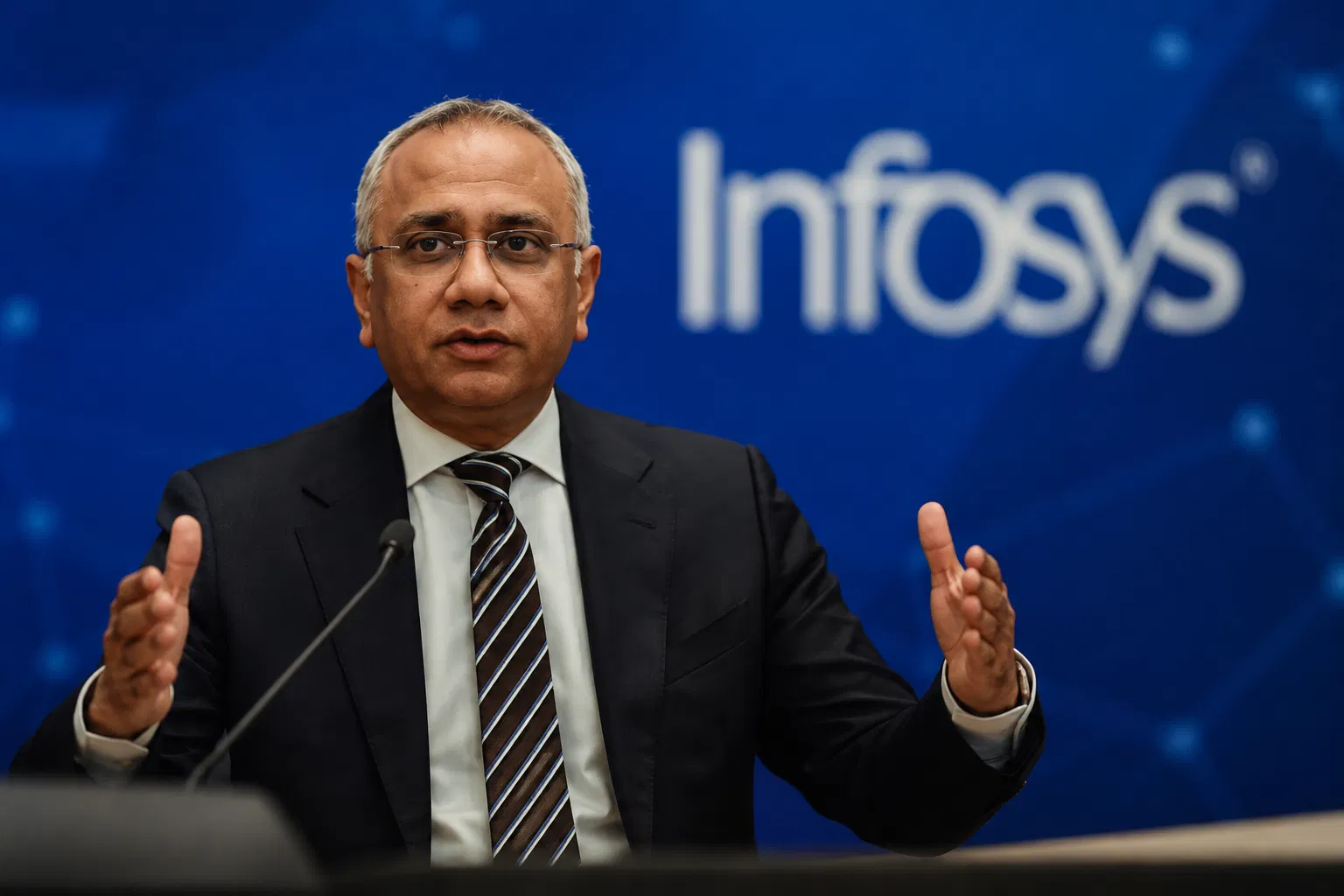
Bengaluru, India, July 31, 2026: Infosys Chief Executive Officer Salil Parekh will step down on March 31, 2027, ending a nine-year tenure that helped restore stability at India’s second-largest IT services company and positioned it for the next phase of artificial intelligence-driven growth.
Parekh will hand over the role to Ashiss Kumar Dash on April 1, 2027, following a planned leadership transition. Speaking to Moneycontrol, the outgoing CEO said Infosys is entering its next chapter from a position of strength after doubling revenue, expanding its workforce, and building one of the industry’s strongest large-deal pipelines.
His departure marks the end of the longest tenure by a non-founder CEO in Infosys’ 45-year history.
A Leadership Transition After Nine Years
Parekh joined Infosys in January 2018 during one of the company’s most challenging periods. His appointment followed the resignation of former CEO Vishal Sikka and a prolonged governance dispute between the company’s founders and board.
Under the leadership of Chairman Nandan Nilekani, who returned to the company in 2017 to restore stability, Parekh was tasked with rebuilding investor confidence, strengthening customer relationships and accelerating Infosys’ digital transformation strategy.
Over the past nine years, Infosys has emerged as one of the strongest performers in the global IT services sector, supported by steady revenue growth, expansion into digital technologies and disciplined execution.
Revenue Doubled as Digital Business Expanded
Reflecting on his tenure, Parekh said Infosys had achieved significant operational and financial milestones.
The company’s annual revenue increased from approximately $10 billion to $20 billion, while its global workforce expanded from around 200,000 employees to more than 300,000.
Digital services, once accounting for roughly one-fifth of the business, now contribute more than 60% of overall revenue, reflecting the industry’s rapid shift toward cloud computing, data analytics and digital transformation.
Infosys also secured approximately $100 billion in large deals during Parekh’s leadership, strengthening long-term revenue visibility despite a volatile macroeconomic environment.
“We’ve had a good outcome over the many years,” Parekh told Moneycontrol.
Artificial Intelligence Becomes the Next Growth Driver
Parekh said artificial intelligence now represents the company’s next major growth engine following its successful digital transformation journey.
AI-related services currently contribute around 8% of Infosys’ revenue, up from approximately 5% previously, and continue to grow at double-digit rates quarter after quarter.
The company has invested heavily in its AI platform, Topaz Fabric, which supports integration across 15 different foundation models, enabling enterprises to deploy AI solutions tailored to specific business needs.
According to Parekh, the competitive advantage for IT services firms lies not in access to AI models alone but in combining those technologies with deep industry expertise and business consulting capabilities.
Infosys has also accelerated internal AI adoption, with around 80,000 employees already using AI-powered coding assistants across client engagements and internal development projects.
Macroeconomic Uncertainty Continues to Impact IT Spending
Despite expressing confidence in Infosys’ long-term prospects, Parekh acknowledged that global economic uncertainty has remained the biggest challenge facing the technology services industry.
Many enterprise customers continue to prioritize cost optimization, delaying discretionary technology investments and slowing overall IT spending.
However, Parekh said demand is expected to improve as macroeconomic conditions stabilize and AI adoption accelerates across industries.
He added that Infosys has maintained pricing discipline on major contracts, choosing not to pursue large deals where commercial terms did not meet the company’s expectations.
Confidence in the Next Generation of Leadership
Parekh expressed confidence in incoming CEO Ashiss Kumar Dash, who will work alongside him during the transition period before formally assuming leadership in April 2027.
He described Dash as a seasoned executive with strong client relationships and extensive experience across Infosys’ global operations.
Parekh also acknowledged the role played by Chairman Nandan Nilekani throughout his tenure, describing him as a visionary leader whose insights on technology and artificial intelligence helped shape Infosys’ long-term strategy.
A Planned Exit
Asked why he chose not to seek another term as CEO, Parekh said the company had reached a natural point for leadership renewal.
“My sense is we’ve had really an incredible set of run in the impact that we’ve created here over the last few years. So, this was, to me, a phenomenal way to complete what I had started out on when I joined,” he told Moneycontrol.
For the remainder of his tenure, Parekh said his priority will be ensuring a smooth leadership transition before deciding on his next professional chapter.
Looking back on nearly a decade leading Infosys, he said he was proud of the company’s progress and optimistic about its future.
“I’m really happy. In many ways, I’m leaving Infosys in a better place than I found it. And maybe Infosys is leaving me in a better place than they found me,” he said.
ENN Take
Salil Parekh’s tenure is widely regarded as one of the most stable and transformative periods in Infosys’ recent history. By strengthening the company’s digital capabilities, expanding its global workforce, winning large strategic contracts and positioning artificial intelligence as the next growth engine, he leaves behind an organisation that is entering the AI era with considerable momentum. The transition to Ashiss Kumar Dash comes at a time when enterprise AI spending is accelerating globally, making leadership continuity a critical factor for Infosys as it competes with global IT services giants.

Ruchi Kumar is the associate editor at Entrepreneur News Network and TVW News India, where she leads editorial strategy, brand storytelling, and startup ecosystem coverage. With a strong focus on innovation, business, and marketing insights, he curates impactful narratives that spotlight India’s evolving entrepreneurial landscape. She has written extensively on fintech, AI and emerging startups.