
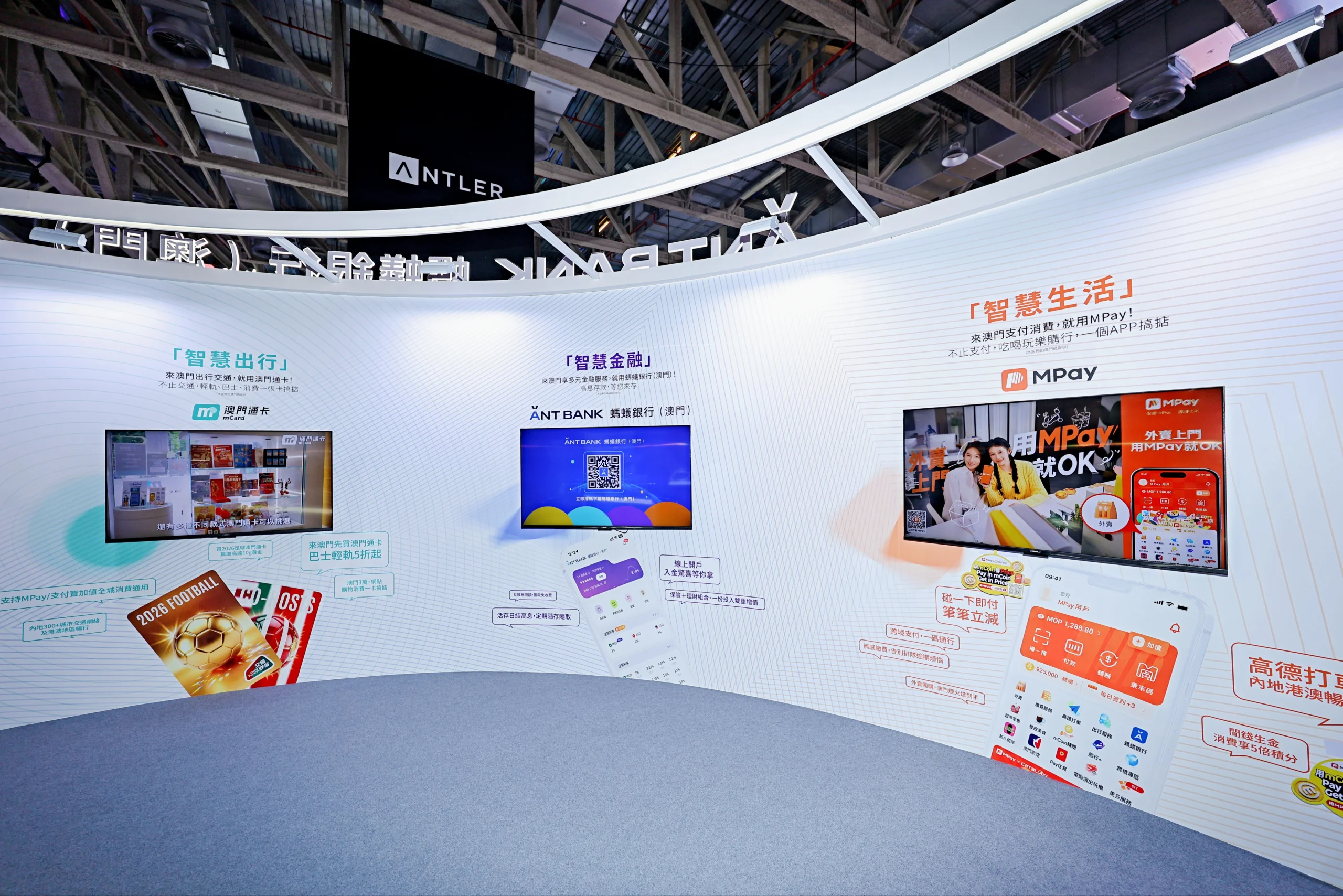
Exclusive Interview | Beyond Expo 2026 | Macao – Twenty years ago, a simple transit card changed how Macau moved. Today, that same company is helping redefine how an entire city lives, pays, connects, and grows. At Beyond Expo 2026 — held at The Venetian Macao under the landmark theme “AI: Coexistence of the Digital and Physical Worlds” — Macau Pass took centre stage alongside Ant Bank (Macau) and a powerful cluster of Alibaba ecosystem companies, including Alibaba Cloud, Qwen AI Glasses, Wuying, and Wukong.
Together, they painted a vivid picture of what a truly smart city looks like — not as a distant concept, but as a living, breathing urban reality being built right now in Macau.
ENN sat down exclusively with May, a representative from Macau Pass, on the expo floor to unpack the company’s remarkable evolution — from pioneering Macau’s first transit card to operating one of Asia’s most comprehensive digital lifestyle super apps — and what the future holds for this quietly influential fintech powerhouse.
Q: Macau Pass has been around for over two decades. For readers who may not be familiar, how would you describe the company’s journey?
May: We started 20 years ago with a very simple mission — to make getting around Macau easier. We introduced the city’s very first transit card, the MCard, and back then, it was purely about helping people take buses. That was it. But over two decades, the needs of the city evolved, and so did we.
Today, we have issued over 6 million MCards across Macau — and when you consider that almost every resident holds between 6 to 7 cards, you begin to understand just how deeply embedded we are in daily life here. The MCard is no longer just a transit tool. It is a lifestyle product.
Q: A lifestyle product — that’s an interesting way to put it. What does that mean in practice?
May: Think about it this way. When we started, the card got you on a bus. Now, with our partnership with China UnionPay, that same card lets you travel seamlessly across more than 300 cities on the Chinese mainland. It works in Hong Kong. It works in Zhuhai. We have co-branded products like the Zhuhai-Macau Transit Card and the Wuhan-Macau One Card Pass that are helping Macau integrate more deeply into the Greater Bay Area and China’s national transportation network.
But beyond transportation, we have also thought carefully about the design. We collaborate with different intellectual property brands to create limited-edition cards — collectibles, really — that people want to own beyond their utility. We have done NBA editions, Beyond Expo special editions. The card becomes a piece of culture, not just a payment tool.
Q: Let’s talk about MPay, because that seems to be where the real transformation is happening.
May: MPay is the heartbeat of Macau’s digital economy today. We serve approximately 90% of Macau residents — so when people wake up in the morning, MPay is genuinely the first financial interaction most of them have. It has grown into a true super app, supporting over 100 lifestyle scenarios — dining, retail, group purchasing, ride-hailing, utility bills, entertainment, and cross-border payments.
What makes this significant is that it is not just convenient — it is deeply connected. Through the Alipay+ global payment network, MPay users can make cross-border payments in 62 countries and regions worldwide. And on the inbound side, tourists from over 10 countries and regions can walk into any of the roughly 90% of Macau’s merchants that we cover and pay with their own home digital wallets. So the ecosystem works in both directions — for residents going out into the world, and for the world coming into Macau.
Q: In April 2026, Macau Pass launched an AI Payment Assistant. What problem does that solve?
May: Small and medium-sized businesses are the backbone of Macau’s economy — the neighbourhood restaurants, the long-established local shops, the community merchants. These businesses often lack the resources to navigate digital transformation on their own. Our AI Payment Assistant is designed specifically for them.
We also partnered with Amap to launch the “Vibrant Macau Support Program”, which creates AI-powered digital storefronts for these businesses and drives meaningful traffic to them. It is about ensuring that the benefits of the AI era do not just flow to large corporations — that every merchant in Macau has a fair opportunity to thrive in the digital economy.
Q: Ant Bank (Macau) was also part of your showcase at Beyond Expo. How does it complement the MPass ecosystem?
May: Ant Bank and MPass serve distinct but complementary roles. While MPay handles your everyday digital wallet needs — payments, lifestyle services, cross-border transactions — Ant Bank (Macau) is a fully licensed digital bank that goes deeper into financial services. It offers savings and wealth management, lending and financing, cross-border foreign exchange, and investment solutions.
What makes Ant Bank remarkable is its infrastructure. In October 2025, it launched Macau’s first 24/7 self-service branch — fully equipped with intelligent technologies for cash deposits and withdrawals, cheque submissions, and account inquiries. This is smart banking made accessible, not just for tech-savvy users, but for everyone.
Q: Alibaba Cloud, Qwen AI Glasses, Wukong — the Alibaba ecosystem had a significant presence. How does all of this connect to Macau’s smart city ambitions?
May: This goes back to 2017, when the Macau SAR Government signed a Strategic Cooperation Framework Agreement on Smart City Development with Alibaba, with Alibaba Cloud as the core technology partner. What we showcased at Beyond Expo 2026 is the maturation of that vision.
Alibaba Cloud brings world-class AI infrastructure and the Qwen model family — open-source and proprietary AI models that balance performance, affordability, and localisation. On top of that, the Qwen AI Glasses were a real highlight at the expo — a wearable device powered by Alibaba’s most advanced AI, offering proactive assistance, spatial 3D display, real-time voice cloning, simultaneous translation, and direct integration with shopping, payments, and ride-hailing services.
Then there are enterprise productivity tools like Wukong AI Assistant and DingTalk AI, which are helping businesses accelerate digital transformation through intelligent meeting assistance, content creation, and workflow management. Together, these tools complete the picture — from city infrastructure all the way down to the individual user’s daily experience.
Q: What is the bigger vision that ties all of this together?
May: Sun Hao, our Chairman and General Manager, said it best during the exhibition. Macau is entering a strategic period where the digital economy and artificial intelligence must integrate — not separately, but as one unified force for urban growth.
For us at Macau Pass, that means continuing to use AI as a growth engine — one that benefits merchants, residents, and the city as a whole. We are aligning with China’s 15th Five-Year Plan and Macau’s economic diversification goals. The widespread adoption of mobile payments has already built a strong digital foundation. Now, we are building the intelligence layer on top of that foundation.
The goal is simple but ambitious: a Macau where AI and the real economy don’t just coexist — they actively make life better for everyone who lives here, works here, or visits.
This exclusive interview was conducted at Beyond Expo 2026, where Entrepreneur News Network (ENN) served as the Official Media Partner.

Ruchi Kumar is the associate editor at Entrepreneur News Network and TVW News India, where she leads editorial strategy, brand storytelling, and startup ecosystem coverage. With a strong focus on innovation, business, and marketing insights, he curates impactful narratives that spotlight India’s evolving entrepreneurial landscape. She has written extensively on fintech, AI and emerging startups.