

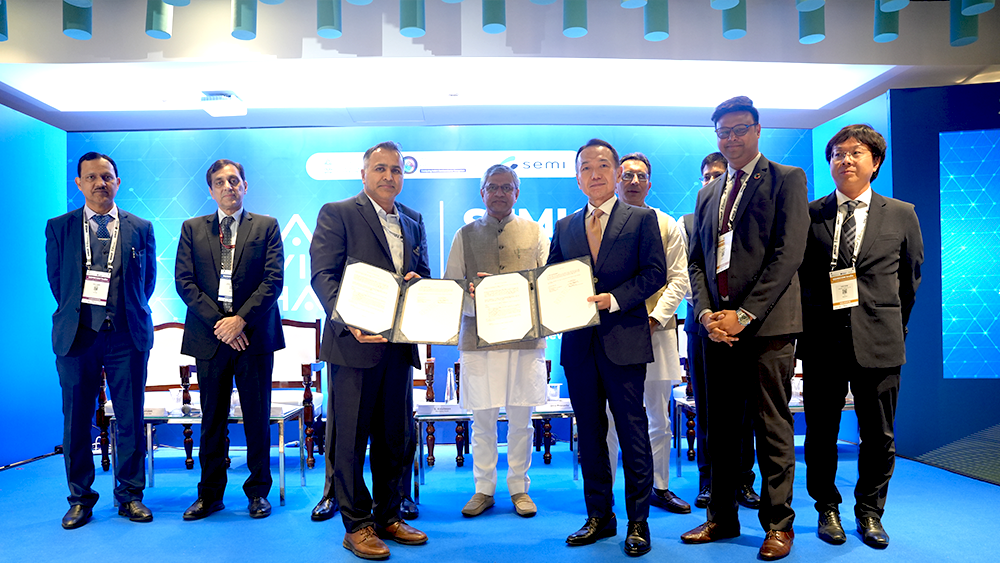
New Delhi, September 19, 2026
Tata Electronics is expanding its semiconductor ecosystem through strategic partnerships with Enomoto Co., Ltd., Kelington Engineering Pte Ltd and Sumitomo Chemical, targeting critical areas including semiconductor packaging, fab infrastructure, materials, localisation and supply-chain resilience.
The collaborations cover Tata Electronics’ two major semiconductor projects — its 300mm semiconductor fab in Dholera, Gujarat, and its high-volume packaging facility in Jagiroad, Assam.
Together, the partnerships reflect Tata Electronics’ strategy of building a broader domestic semiconductor ecosystem rather than relying solely on chip manufacturing capacity.
Enomoto Partnership Targets Semiconductor Packaging
Tata Electronics and Japan-based Enomoto Co., Ltd. have signed a Memorandum of Understanding to advance semiconductor packaging capabilities in India and support Tata Electronics’ packaging facility in Jagiroad, Assam.
Under the partnership, Enomoto will contribute its R&D capabilities, technical expertise and next-generation solutions to accelerate packaging readiness at the Jagiroad facility.
The companies will also explore the localisation of leadframe manufacturing in India.
Leadframes are critical components used in semiconductor packaging, and local production could help strengthen the domestic supply chain for packaging materials.
The collaboration will also examine opportunities around:
- Technology transfer
- Engineering collaboration
- Leadframe manufacturing localisation
- Capability development
- Semiconductor packaging readiness
Tata Electronics CEO and Managing Director Dr. Randhir Thakur said developing a globally competitive semiconductor ecosystem requires deeper localisation across materials, components, manufacturing and packaging.
Enomoto CEO Homare Shirotori said the partnership would combine the company’s precision component manufacturing capabilities with Tata Electronics’ OSAT capabilities.
Tata Electronics is developing the Jagiroad facility with a planned investment of $3 billion, positioning it as a major component of India’s semiconductor packaging ambitions.
Kelington Partnership Focuses on Dholera Fab Infrastructure
Separately, Tata Electronics has partnered with Malaysia-based Kelington Engineering to support the development of its semiconductor fabrication facility in Dholera, Gujarat.
Kelington will support critical infrastructure and systems required for semiconductor manufacturing, with the collaboration aimed at accelerating the facility’s operational readiness for silicon wafer production.
The partnership covers areas including:
- Gas distribution systems
- High-purity piping
- Process-tool hook-up
- Fab infrastructure
- Engineering capabilities
- Local talent development
Tool hook-up is an important part of semiconductor fab construction because it connects sophisticated manufacturing equipment to the infrastructure and utilities required for production.
Tata Electronics said the partnership will also explore the development of local talent and advanced design-and-build engineering capabilities in India.
Kelington Group CEO Lim Seng Chuan said the company would support the development of critical infrastructure required for the Dholera facility.
Dholera Fab Represents $11 Billion Investment
The Dholera facility is central to Tata Electronics’ semiconductor manufacturing strategy.
The company is developing a 12-inch (300mm) fab with a planned investment of approximately $11 billion.
The facility is intended to manufacture semiconductor products for applications including:
- Automotive
- Mobile devices
- Artificial intelligence
- Other domestic and global applications
Tata Electronics has also partnered with Taiwan’s Powerchip Semiconductor Manufacturing Corporation (PSMC) to access semiconductor technologies spanning 28nm to 110nm process nodes, according to the company.
The construction of the Dholera fab is progressing alongside efforts to establish the supplier ecosystem required to support high-volume semiconductor manufacturing.
Sumitomo Chemical to Support Semiconductor Materials Supply
Tata Electronics has also signed an MoU with Sumitomo Chemical aimed at strengthening India’s semiconductor materials supply chain.
Under the proposed collaboration, Sumitomo Chemical will explore supplying Tata Electronics’ Dholera fab with semiconductor materials including:
- Photoresists
- Functional chemicals
- Hydrogen peroxide
- Isopropyl alcohol
- Ammonia water
- Sulfuric acid
- Other high-purity chemicals
The companies will also explore opportunities for manufacturing semiconductor materials and high-purity chemicals in India.
This could support greater localisation of materials required for semiconductor manufacturing while diversifying the supply chain.
Sumitomo Chemical said its existing expertise in semiconductor materials and high-purity chemicals could contribute to India’s efforts to develop a more resilient semiconductor manufacturing base.
Building a Local Semiconductor Supply Chain
The three partnerships address different layers of Tata Electronics’ semiconductor strategy.
Enomoto is focused on packaging components and leadframes.
Kelington Engineering is supporting fab infrastructure, engineering systems and equipment hook-up.
Sumitomo Chemical is focused on semiconductor materials and high-purity chemicals.
The combined approach highlights the importance of building suppliers around semiconductor fabs and packaging facilities.
For India, the development of domestic capabilities in materials, precision engineering, packaging components, infrastructure and process technologies could reduce dependence on imported inputs and create opportunities for Indian manufacturers.
From Semiconductor Manufacturing to a Broader Ecosystem
Tata Electronics’ semiconductor investments are part of a wider effort to establish an integrated electronics and semiconductor manufacturing ecosystem in India.
The company’s Dholera fab and Jagiroad packaging facility are being supported by partnerships with international technology, engineering and materials companies.
The partnerships with Enomoto, Kelington and Sumitomo Chemical also create potential avenues for technology transfer, localisation, engineering capability development and workforce training.
As semiconductor manufacturing becomes increasingly important to industries such as AI, automotive, mobile devices and advanced electronics, the availability of reliable local suppliers is becoming an important part of manufacturing competitiveness.
For Tata Electronics, the strategy increasingly extends beyond building fabs and packaging facilities to developing the ecosystem needed to operate them at scale.
Key Tata Electronics Semiconductor Projects
| Project | Location | Focus | Planned Investment |
|---|---|---|---|
| Semiconductor Fab | Dholera, Gujarat | 300mm wafer fabrication | ~$11 billion |
| Packaging Facility | Jagiroad, Assam | High-volume semiconductor packaging | ~$3 billion |
| Enomoto Partnership | Assam | Leadframes & advanced packaging | — |
| Kelington Partnership | Gujarat | Fab infrastructure & engineering | — |
| Sumitomo Chemical Partnership | Gujarat | Semiconductor materials & chemicals | — |
India’s Semiconductor Ambitions Gain Supply-Chain Depth
Tata Electronics’ latest partnerships show that India’s semiconductor push is increasingly moving beyond the construction of individual manufacturing facilities.
The emerging ecosystem encompasses wafer fabrication, semiconductor packaging, materials, chemicals, precision engineering, equipment infrastructure, leadframes, technology transfer and skilled talent.
The success of these investments will ultimately depend not only on manufacturing capacity, but also on the ability to establish reliable supply chains and achieve the cost, quality and scale required to serve global semiconductor customers.
Tata Electronics’ partnerships with Enomoto, Kelington and Sumitomo Chemical represent steps toward that broader ecosystem.
Beyond the Brand Deal: How India’s Biggest Stars Became Serious Startup Investors

Ruchi Kumar is the associate editor at Entrepreneur News Network and TVW News India, where she leads editorial strategy, brand storytelling, and startup ecosystem coverage. With a strong focus on innovation, business, and marketing insights, he curates impactful narratives that spotlight India’s evolving entrepreneurial landscape. She has written extensively on fintech, AI and emerging startups.